
When defining a Point of Sale (POS) system, you should understand its role in retail and service environments. A POS system combines hardware and software to process customer transactions efficiently, manage inventory, and store customer data. It simplifies payment processing and generates receipts, enhancing overall business operations. Nonetheless, with various types available, from traditional to cloud-based, it is crucial to evaluate which system best fits your business needs. What factors should you weigh when making this decision?
Key Takeaways

- A Point of Sale (POS) system is a technology used to process customer transactions in retail and service environments.
- It consists of both hardware (terminals, scanners, printers) and software (sales, inventory management).
- POS systems can operate online or offline, accommodating various payment methods including credit cards and digital wallets.
- They enhance business operations by automating processes, providing real-time inventory tracking, and generating sales reports.
- Choosing the right POS system involves evaluating business needs, payment options, and deployment methods (cloud-based or traditional).
Understanding the Basics of POS Systems

A Point of Sale (POS) system serves as the central hub for processing customer transactions in various businesses. The point of sale system definition encompasses both hardware and software elements, enabling you to manage sales, track inventory, and process payments efficiently.
So, what’s POS in retail? It’s a modern solution that can operate online or offline, utilizing devices like tablets, smartphones, and traditional cash registers, offering flexibility and convenience.
Key functions of a POS system include calculating total costs, accepting various payment methods such as credit and debit cards, cash, and digital payments, and generating receipts for customers.
As technology has advanced, POS systems have evolved from simple mechanical cash registers to sophisticated platforms that incorporate features like inventory management and sales analytics.
This evolution reflects their growing importance, with the global market projected to reach approximately $33.41 billion by 2024, highlighting their crucial role in retail and service industries.
Key Components of a POS System

Comprehending the key components of a POS system is fundamental for any business looking to streamline its operations. A typical point of sale system includes critical hardware like a POS terminal, barcode scanner, cash drawer, and receipt printer, which work together to facilitate transactions.
The software component, often referred to in discussions of pos software meaning, manages sales, inventory, and customer data, providing features such as reporting and analytics for valuable business insights.
Payment processing capabilities are essential, allowing acceptance of various payment methods, including credit cards, debit cards, and digital wallets. For cloud-based POS systems, a reliable internet connection is necessary to guarantee effective functionality, as they depend on online data storage and processing.
Furthermore, security measures, such as compliance with PCI standards and encryption technology, are integral to protect sensitive customer information during transactions, assuring a safe and efficient sales environment.
Types of POS Systems Available
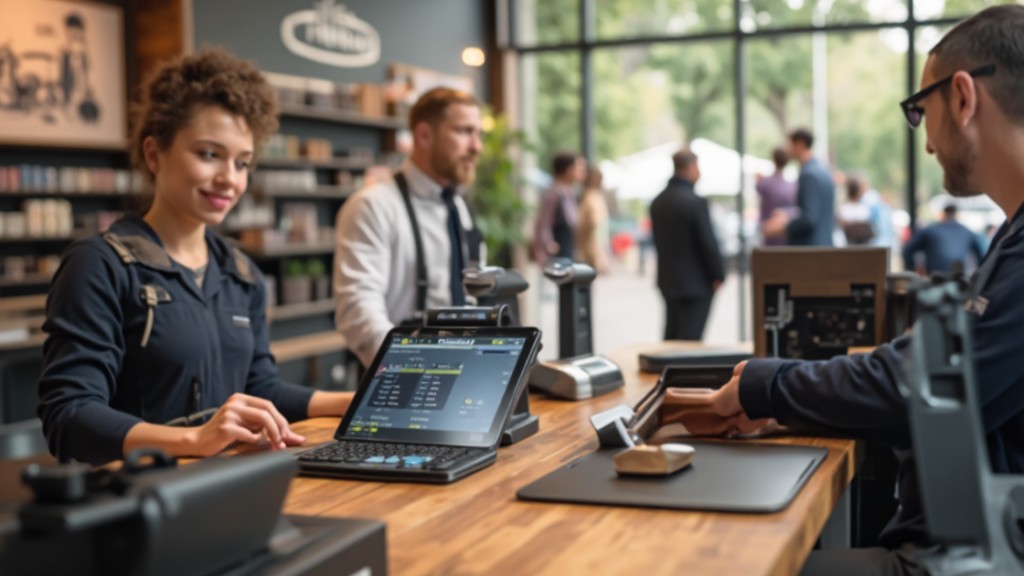
Numerous types of POS systems are available today, each designed to meet specific business needs and operational styles.
Traditional POS systems are fixed setups commonly found in brick-and-mortar stores, utilizing integrated hardware for transaction processing.
If you prefer flexibility, mobile POS systems leverage tablets or smartphones, allowing you to conduct transactions in various locations.
Cloud-based POS systems operate via the internet, offering scalability and remote access, making them ideal for small to medium-sized businesses.
For businesses looking to improve customer experience, self-service POS systems enable customers to scan and pay for items independently, reducing labor costs and increasing checkout efficiency.
Finally, multichannel POS systems integrate both in-store and online sales, providing thorough management capabilities for businesses operating across multiple platforms.
Grasping these options can help you choose the right point of sale operation that aligns with your needs and boosts efficiency.
How POS Systems Enhance Business Operations
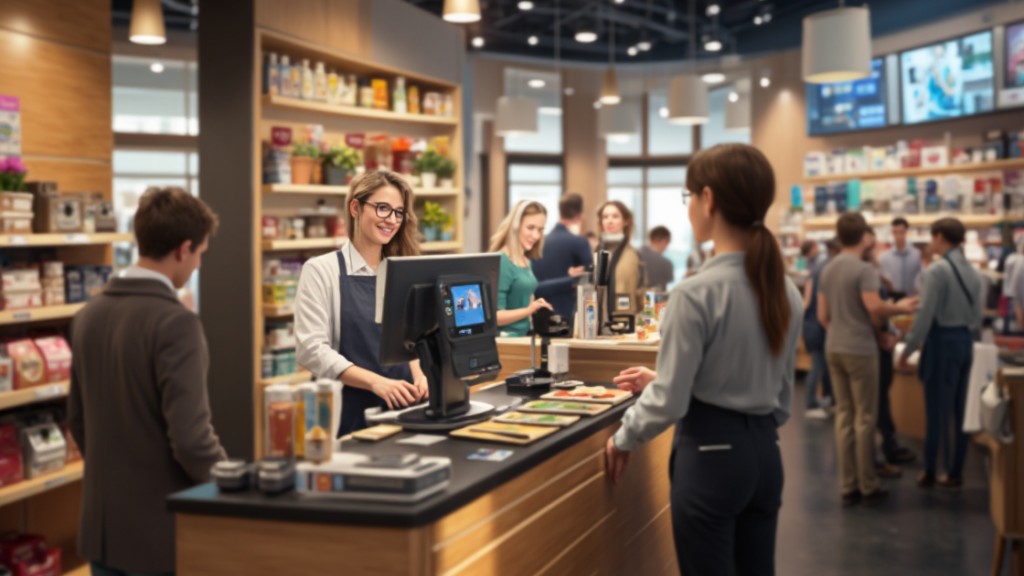
Though you might think of a point of sale (POS) system as just a tool for processing transactions, it plays a far more significant role in improving overall business operations. A well-defined point of sale system streamlines operations by automating payment processing, reducing transaction times, and enriching the point of sale experience for customers.
Real-time inventory management minimizes stock discrepancies, helping you maintain ideal inventory levels to avoid stockouts or overstocking.
Additionally, POS systems come equipped with sales reporting and analytics features that offer valuable insights into trends and customer behaviors, allowing informed decision-making and targeted marketing strategies.
Employee management functionalities let you track work hours and performance, boosting workforce efficiency.
Finally, enhanced security measures, such as EMV chip technology and encryption protocols, protect customer data, cultivating trust necessary for maintaining loyalty and satisfaction.
Selecting the Right POS System for Your Business

Selecting the right POS system for your business can greatly impact your operations and customer satisfaction. Start by evaluating your specific needs, such as whether you require features like inventory management, employee tracking, or customer relationship management tools.
Review the payment acceptance options; a reliable POS system should support credit cards, debit cards, and contactless payments to meet diverse customer preferences.
Next, consider the deployment option that best fits your model—choose between traditional on-premise systems for improved security or cloud-based solutions for flexibility.
Analyze the projected costs, including one-time hardware purchases and ongoing software fees, to confirm the system aligns with your budget.
Lastly, research industry-specific solutions. These customized systems often provide specialized functionalities, increasing efficiency, particularly in sectors like retail or restaurants.
Comprehending the pos system meaning and its relationship with your point of sale database will help streamline your operations and improve customer experiences.
Frequently Asked Questions

What Are the 4 Types of POS Systems?
There are four main types of POS systems you should know about.
Traditional POS systems are fixed setups in physical stores, handling transactions and inventory.
Mobile POS systems use tablets or smartphones, offering flexibility for on-the-go sales.
Cloud-based POS systems operate online, providing remote access and scalability for small to medium businesses.
Finally, self-service POS systems let customers scan and pay for items independently, streamlining the checkout process and reducing labor costs.
How to Explain POS System?
To explain a POS system, start by stating it’s a combination of hardware and software that processes sales transactions.
You can mention its capability to track inventory and manage customer data.
Highlight that it works on various devices, including tablets, and accepts multiple payment methods.
Emphasize key functionalities like sales reporting and customer relationship management.
Finally, note the importance of security features for protecting customer data during transactions.
What Are the Requirements for a Point of Sale System?
To set up a point of sale system, you need several key components.
First, integrate hardware like a cash register, barcode scanner, and card reader. You’ll additionally require software that handles payment processing, sales reporting, and inventory tracking.
A reliable internet connection is crucial for cloud systems, whereas on-premise setups may need dedicated servers.
Finally, guarantee strong security measures are in place to protect customer data and comply with necessary standards.
How to Define POS?
To define a POS system, you need to understand that it’s a combination of hardware and software designed to facilitate transactions and manage sales.
It processes payments, tracks inventory, and generates sales reports, all in real-time. You’ll find POS systems in various settings, from retail stores to online platforms, adapting to different payment methods.
Their features improve operational efficiency, making them crucial for businesses aiming to streamline their sales processes.
Conclusion

In conclusion, a Point of Sale system is vital for modern businesses, as it streamlines transactions and manages sales and inventory efficiently. By comprehending the key components and types of systems available, you can select the right POS solution for your specific needs. Implementing an effective POS system not merely improves operational efficiency but additionally enhances customer experience, making it a valuable investment for any retail or service-oriented business.
Image via Google Gemini