
Funnel development is a structured method that maps out the customer experience, from the moment they first hear about your brand to when they make a purchase. This process is essential as it helps you identify customer needs at various stages, allowing for targeted marketing strategies. Comprehending the specific stages of the funnel can improve engagement and boost conversion rates. So, how do you build an effective sales funnel that truly resonates with your audience?
Key Takeaways

- Funnel development maps the customer journey from awareness to purchase, ensuring a structured approach to marketing strategies.
- It enhances targeted messaging, optimizing marketing spend and improving overall customer engagement and conversion rates.
- The funnel consists of stages: Awareness, Interest, Consideration, Intent, and Retention, each addressing specific customer needs.
- Effective sales funnels prioritize high-intent leads and identify bottlenecks, increasing conversion rates through regular analysis of metrics.
- Implementing best practices like lead scoring and A/B testing enhances adaptability and aligns marketing efforts with customer expectations.
Understanding Funnel Development

When you start to understand funnel development, you’re plunging into a structured approach that maps out the customer path from awareness to purchase. This process involves various stages, including the Top of Funnel (TOFU) for generating awareness, the Middle of Funnel (MOFU) for consideration, and the Bottom of Funnel (BOFU) for decision-making.
Each stage requires specific marketing strategies customized to potential customer needs.
The new product development funnel plays a critical role in this process, helping businesses align their offerings with customer expectations. By recognizing the different types of sales funnels, you can create targeted content that resonates with your audience.
Effective funnel development enables you to identify bottlenecks and optimize your marketing efforts, ensuring better resource allocation and increased return on investment (ROI).
Regular evaluation based on data-driven insights is vital, allowing your strategy to adapt to evolving customer behaviors and market dynamics.
Importance of the Marketing Funnel

The marketing funnel is essential for enhancing targeted messaging throughout the customer experience.
By comprehending each stage, you can optimize your marketing spend and guarantee that your efforts resonate with the right audience at the right time.
This structured approach not just boosts conversions but additionally helps build long-term relationships with customers, nurturing loyalty and retention.
Enhances Targeted Messaging
Grasping how the marketing funnel improves targeted messaging is essential for any effective marketing strategy. By comprehending the stages of the funnel—Awareness, Interest, Consideration, Intent, Action, and Retention—you can craft specific messages that resonate with your audience. This approach boosts engagement and elevates conversion rates considerably.
Here’s how the marketing funnel facilitates targeted messaging:
- Identifies key touchpoints for influence
- Tailors content to match audience needs
- Increases lead-to-customer conversion rates by up to 300%
- Guarantees relevant information is delivered at the right time
- Supports the product development funnel by aligning messaging with customer expectations
Implementing these strategies enables you to connect more effectively with your prospects and reduce the risk of losing potential customers.
Optimizes Marketing Spend
Effective marketing strategies often hinge on how well you manage your budget, and utilizing the marketing funnel can significantly improve this process.
By structuring your marketing efforts into funnel stages, you can target the right audience at the right time, leading to a better return on investment. This approach allows you to identify which strategies work best, enabling informed adjustments to optimize your spend.
Research shows that companies using a structured funnel can boost customer acquisition rates as well as reducing wasted advertising costs. The funnel framework supports data-driven decision-making, helping you prioritize high-performing channels.
Tailoring your messaging and content to specific funnel stages not only increases engagement but additionally minimizes expenses related to broad, untargeted marketing efforts.
Builds Long-Term Relationships
Building long-term relationships with customers is crucial for sustained business success, and the marketing funnel plays an important role in this process.
By nurturing prospects at every stage, you can improve customer loyalty and retention rates. Here’s how effective funnel management contributes to relationship-building:
- Delivers customized content that resonates with customers.
- Establishes trust, positioning your business as an industry leader.
- Increases customer lifetime value (CLV) through repeat purchases.
- Focuses on the entire customer experience, improving satisfaction metrics.
- Engages customers post-sale with loyalty incentives and feedback loops.
Stages of the Funnel: A Deep Dive
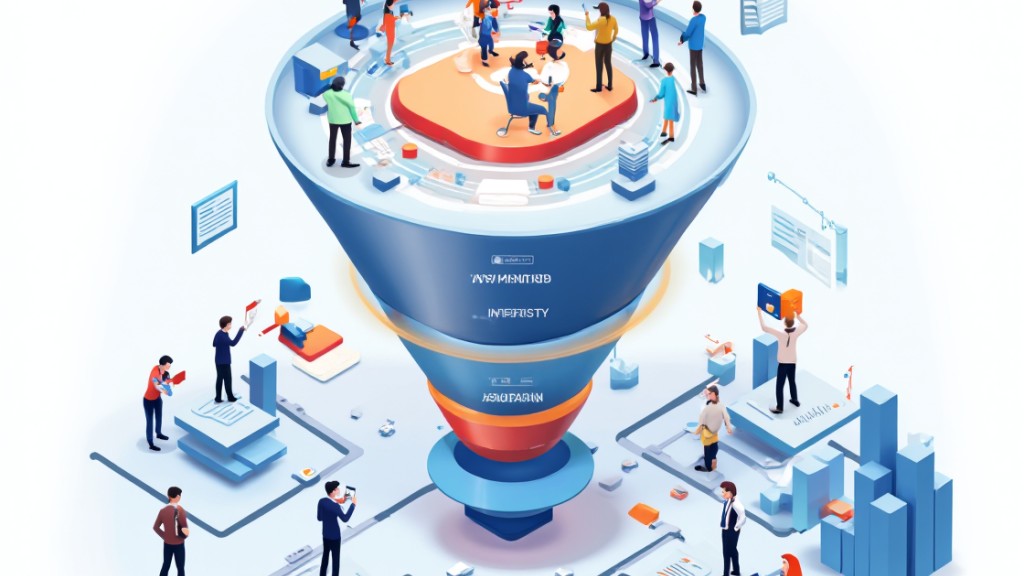
Grasping the stages of the funnel is vital for guiding prospects through their purchasing pathway, as each stage plays a significant role in shaping their decision-making process. The funnel consists of six distinct stages: Awareness, Interest, Consideration, Intent, Action, and Retention.
In the Awareness stage, your marketing efforts attract potential customers through SEO and social media ads, establishing brand visibility.
Next, during the Interest stage, prospects engage with customized content, like blogs and webinars, to nurture their curiosity.
As they move into the Consideration stage, they evaluate options by comparing features and benefits, using materials such as case studies and product demos to build trust.
The Intent stage is critical; here, prospects exhibit readiness to purchase, prompting your sales team to prioritize follow-ups and address objections.
Building an Effective Sales Funnel
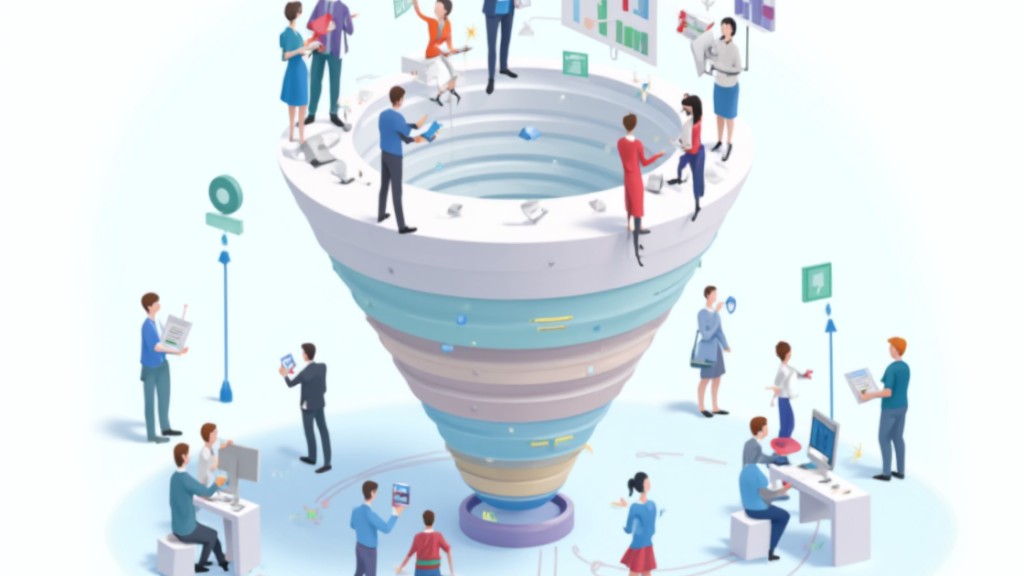
To create a successful sales funnel, it’s vital to have a clear grasp of the customer path and the specific needs at each stage. Comprehending these stages allows you to tailor your marketing strategies effectively. A well-structured funnel increases your conversion rates by nurturing leads and addressing their needs.
Here are key components to take into account:
- Awareness: Attract potential customers through targeted content.
- Interest: Engage leads by providing valuable information that resonates with their needs.
- Evaluation: Offer comparative insights to help prospects assess options.
- Intent: Implement lead scoring to prioritize high-intent prospects.
- Action: Utilize CRM tools to track interactions and streamline communication.
Regularly analyzing funnel metrics, such as conversion rates and customer acquisition costs, is vital. This helps identify bottlenecks and optimize your sales process for greater efficiency.
Best Practices for Funnel Optimization

While optimizing your sales funnel might seem intimidating, grasping the best practices can greatly improve your overall sales effectiveness. Start by regularly analyzing key performance indicators (KPIs) like conversion rates and customer retention metrics; this helps you pinpoint areas needing improvement.
Implementing lead scoring systems allows you to prioritize high-quality leads, ensuring your sales team focuses on prospects most likely to convert.
Utilizing personalized content and targeted messaging throughout the funnel considerably boosts engagement, with studies showing a potential 20% increase in sales through personalized campaigns.
Incorporate A/B testing to experiment with various strategies; this helps you identify which approaches yield the best conversion rates and customer satisfaction.
Finally, maintain continuous feedback loops and customer experience mapping, allowing you to adapt your funnel strategies based on evolving buyer behaviors. This adaptability nurtures long-term customer relationships and improves sales outcomes.
The Future of Funnel Development
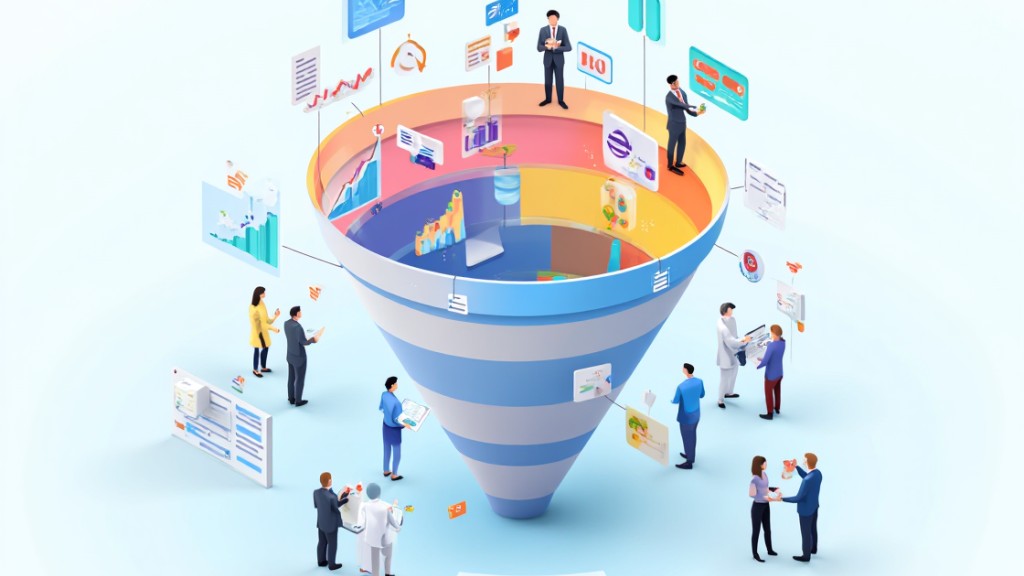
As businesses continue to refine their sales funnels, the focus is shifting in the direction of a more circular model that prioritizes post-sale engagement and customer retention. This approach nurtures loyalty and advocacy among existing customers.
Key trends shaping the future of funnel development include:
- Emphasis on post-sale engagement: Retaining customers is just as important as acquiring them.
- Advanced technologies: AI and automation will create personalized experiences, optimizing sales processes.
- Data-driven insights: Comprehending consumer behaviors helps tailor marketing strategies effectively.
- Non-linear customer paths: Adapting to multiple touchpoints and decision-makers is essential in B2B processes.
- Omnichannel strategies: Consumers expect seamless interactions across various platforms during their purchasing experience.
Frequently Asked Questions
What Is Funnel Development?
Funnel development’s the structured process guiding potential customers from initial awareness to final purchase. You map out their path, identifying key touchpoints that influence decisions.
By comprehending buyer personas, you tailor marketing strategies to address specific needs at each stage. This approach nurtures leads through targeted content, enhancing conversion rates.
Continuous analysis and optimization guarantee your funnel adapts to changing behaviors, ultimately improving sales effectiveness and cultivating customer loyalty.
What Is the Importance of a Funnel?
A funnel is essential since it effectively guides potential customers through their purchasing path, increasing conversion rates.
By tailoring messaging to their specific needs at each stage, you improve engagement and retention.
Furthermore, a well-structured funnel optimizes your marketing spend, ensuring you reach the right audience.
It likewise helps identify bottlenecks in your sales process, leading to improved lead-to-customer ratios and finally contributing to higher revenue and customer loyalty.
What Is Funnel Analysis and Why Is It Important?
Funnel analysis is the process of evaluating each stage in your sales or marketing funnel to measure performance.
It helps you identify conversion rates and drop-off points, allowing for targeted optimizations.
By analyzing metrics like traffic and engagement, you gain insights into customer behavior.
This data-driven approach can improve your conversion rates, address bottlenecks in the customer experience, and boost overall sales performance, ensuring your resources are allocated effectively for maximum impact.
What Is the 3 Funnel Strategy?
The 3 Funnel Strategy divides the marketing process into three distinct stages: Awareness, Consideration, and Decision.
In the Awareness stage, you attract potential customers through engaging content and SEO.
During Consideration, you provide customized information like case studies and testimonials to build trust.
Finally, in the Decision stage, you encourage purchases with clear calls to action and competitive pricing.
This structured approach helps you align your efforts with customer needs, improving conversion rates.
Conclusion

In conclusion, funnel development is an essential process that guides customers from awareness to purchase. By comprehending its stages—TOFU, MOFU, and BOFU—you can tailor your marketing strategies to meet customer needs effectively. Implementing best practices for funnel optimization not just improves engagement but also drives conversion rates. As you adapt to future trends in funnel development, you’ll cultivate stronger customer relationships and improve your overall sales performance, ensuring long-term success for your business.
Image via Google Gemini