When discussing the differences between marketing and sales funnels, it is crucial to recognize their distinct roles in the customer experience. The marketing funnel focuses on attracting a broad audience and generating brand awareness, whereas the sales funnel concentrates on converting interested leads into paying customers. Comprehending these differences can greatly impact how you approach each funnel. Stay with us as we explore the specific stages, strategies, and metrics that define each funnel’s effectiveness.
Key Takeaways
- The marketing funnel focuses on generating brand awareness, while the sales funnel targets converting qualified leads into paying customers.
- Marketing funnels engage a broad audience with less personalized content, whereas sales funnels employ customized communication for specific prospects.
- Performance in marketing funnels is measured by impressions and click-through rates, while sales funnel success is evaluated through conversion rates and closed deals.
- Marketing funnels utilize digital channels like content marketing and social media, whereas sales funnels rely on direct communication methods like emails and phone calls.
- Attribution models differ, with marketing often using first-touch and sales focusing on last-touch or multi-touch to evaluate customer interactions.
What Is a Marketing Funnel?
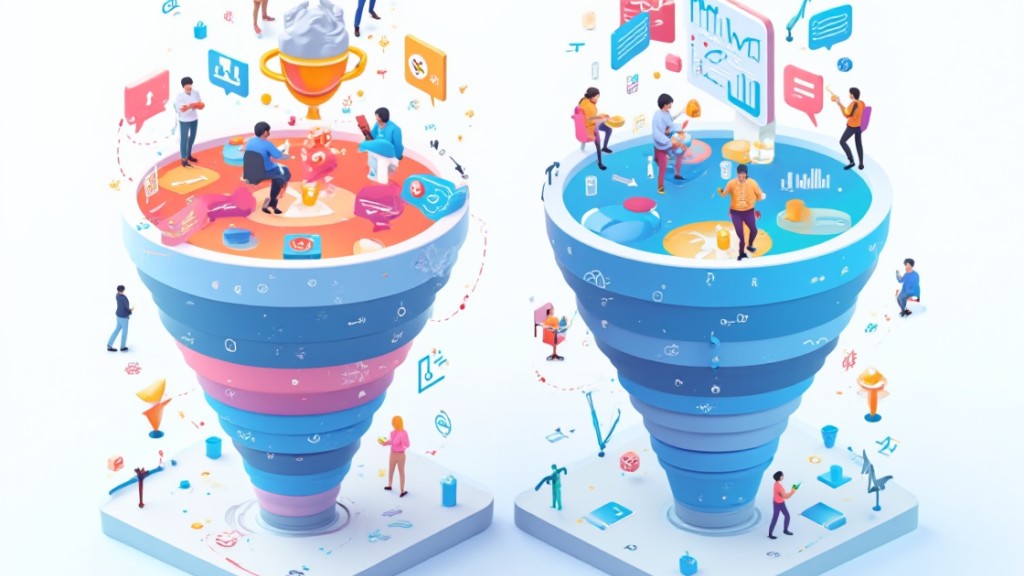
A marketing funnel is a strategic model that maps out the customer path from initial awareness of a brand to the final purchase decision.
This funnel helps you understand how potential customers progress through various stages, including Awareness, Interest, Consideration, Intent, Evaluation, and Purchase.
Each stage requires distinct marketing strategies to effectively engage prospects.
What Is a Sales Funnel?
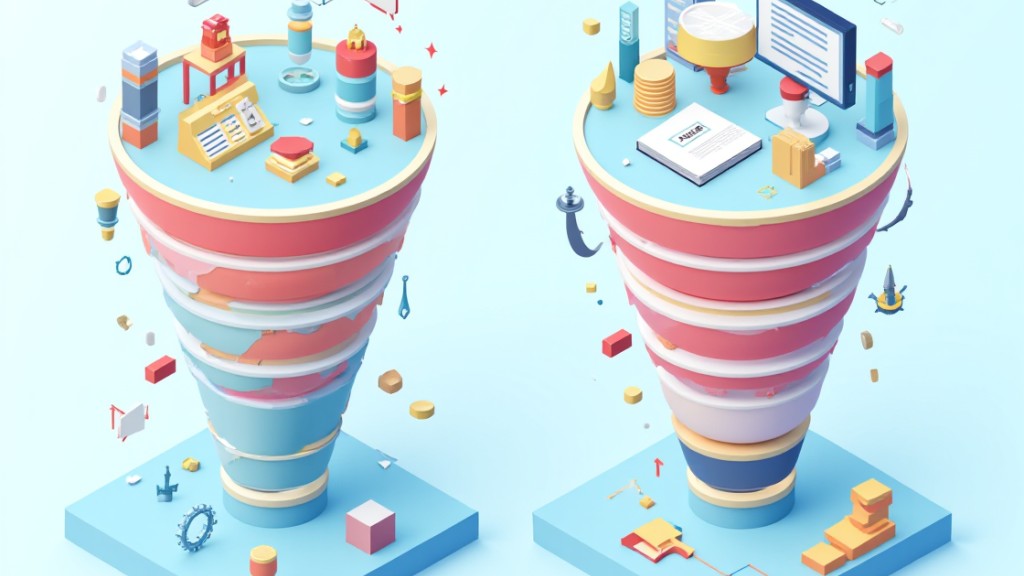
A sales funnel outlines the customer path from discovering a product to making a purchase.
It consists of several stages, including Awareness, Interest, Decision, Action, and Loyalty, each designed to move prospects closer to becoming paying customers.
Comprehending these stages and implementing effective conversion strategies is essential for optimizing your sales process and boosting your overall success.
Stages of Sales Funnel
Understanding the stages of a sales funnel is vital for effectively guiding potential customers from initial awareness to making a purchase. Each stage plays a significant role in moving prospects closer to conversion, and using digital marketing intelligence tools can improve this process.
Here are the key stages:
- Awareness: Prospects discover your brand through marketing efforts.
- Interest: They engage further to learn about your offerings and benefits.
- Decision: At this stage, they evaluate product pricing and testimonials, determining if it meets their needs.
- Action: Finally, they make the purchase, completing the funnel or funnel pathway.
After this, focus on the Loyalty stage to maintain relationships through follow-ups and upselling strategies, ensuring customers remain engaged with your brand.
Conversion Strategies Explained
Comprehending conversion strategies is essential for effectively maneuvering a sales funnel, as it defines how you direct potential customers toward making a purchase.
A sales funnel illustrates the path from awareness to action, with key stages: Awareness, Interest, Decision, Action, and Loyalty. Each stage requires specific strategies to guide prospects effectively.
For instance, during the Decision stage, offering personalized incentives, free trials, or demos can greatly encourage conversions.
To gauge your funnel’s success, monitor metrics like conversion rates, average deal size, and the time spent at each stage.
Furthermore, integrating feedback from sales interactions can refine your marketing strategies, nurturing a cohesive approach that improves your ability to convert leads into paying customers.
Stages of a Marketing Funnel
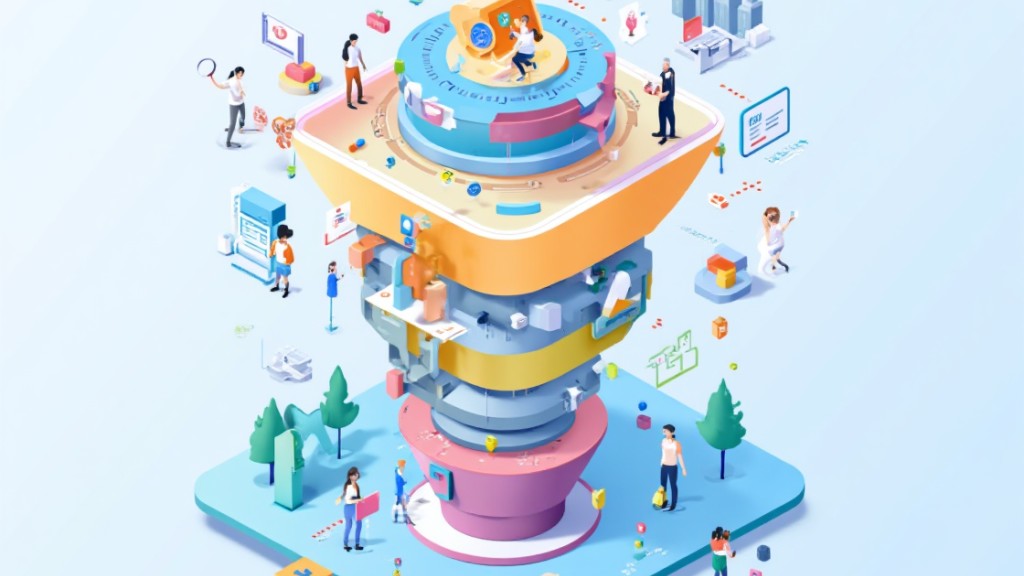
Grasping the stages of a marketing funnel is vital for effectively guiding potential customers from initial awareness to loyal patronage. Each stage requires customized strategies to nurture leads and encourage conversions.
- Awareness: Here, targeted campaigns introduce your brand to potential customers through social media, SEO, and ads.
- Interest: In this stage, you engage leads with valuable content, such as blogs, emails, and webinars, to build trust and keep them informed about your offerings.
- Consideration: Marketers provide reassurance through testimonials, case studies, and lead magnets, helping prospects evaluate their options.
- Conversion: This stage encourages potential customers to take action, moving them from interested leads to paying clients.
Finally, the Loyalty stage nurtures repeat business through ongoing engagement and Loyalty programs, ensuring customers feel valued and connected to your brand.
Grasping these stages helps you create effective marketing strategies.
Stages of a Sales Funnel
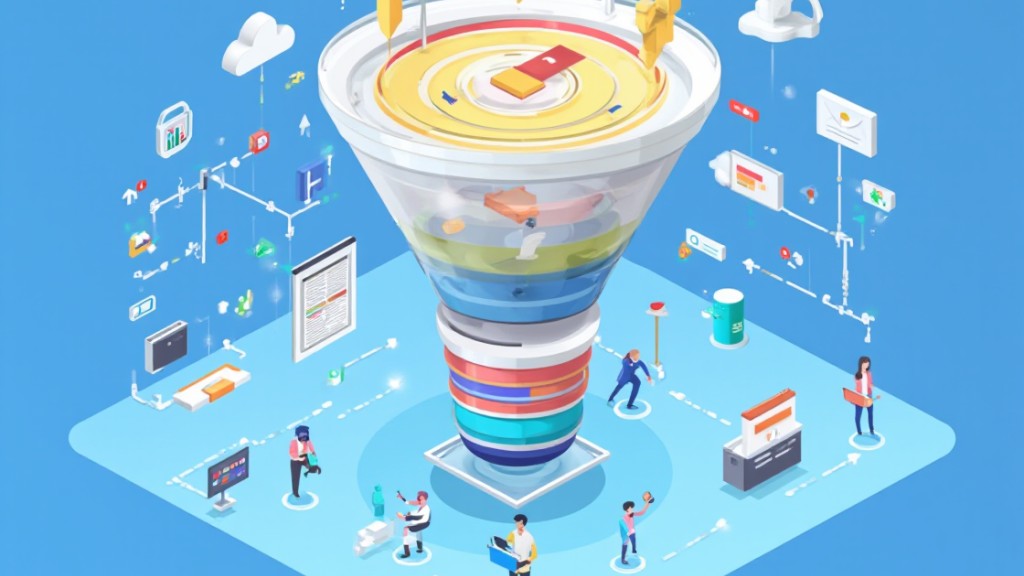
During comprehension of the stages of a marketing funnel sets the foundation for customer engagement, the stages of a sales funnel provide a more focused approach to converting leads into customers.
The sales funnel typically consists of five key stages: Awareness, Interest, Decision, Action, and Loyalty.
In the Awareness stage, leads enter the funnel after being exposed to your marketing efforts.
Next, during the Interest stage, prospects actively seek more information about your brand and offerings through educational content or product demos.
As they move to the Decision stage, prospects evaluate benefits and pricing, often influenced by incentives such as discounts or free trials.
The Action stage is where prospects finalize their purchase, and it’s essential for ensuring a smooth transaction.
Finally, the Loyalty stage focuses on nurturing customers post-sale, encouraging repeat business and referrals to maintain long-term relationships.
Purpose of Each Funnel
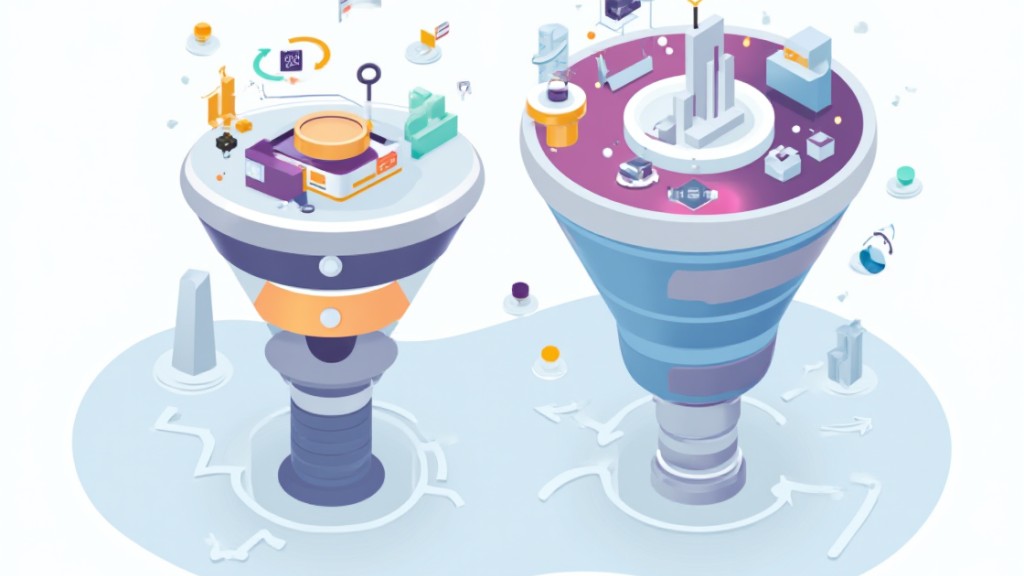
Comprehending the distinct purposes of the marketing and sales funnels is essential for optimizing your overall strategy. Each funnel serves a specific role in guiding potential customers through their path, ensuring they reach the point of purchase.
- The marketing funnel generates brand awareness and attracts potential customers through targeted campaigns and engaging content.
- The sales funnel focuses on converting qualified leads into paying customers using personalized communication and persuasive tactics.
- Stages in the marketing funnel include awareness, interest, and consideration, whereas the sales funnel encompasses decision, action, and retention stages.
- Success in the marketing funnel is measured by impressions and click-through rates, while the sales funnel evaluates conversion rates and closed deals.
Audience Differences
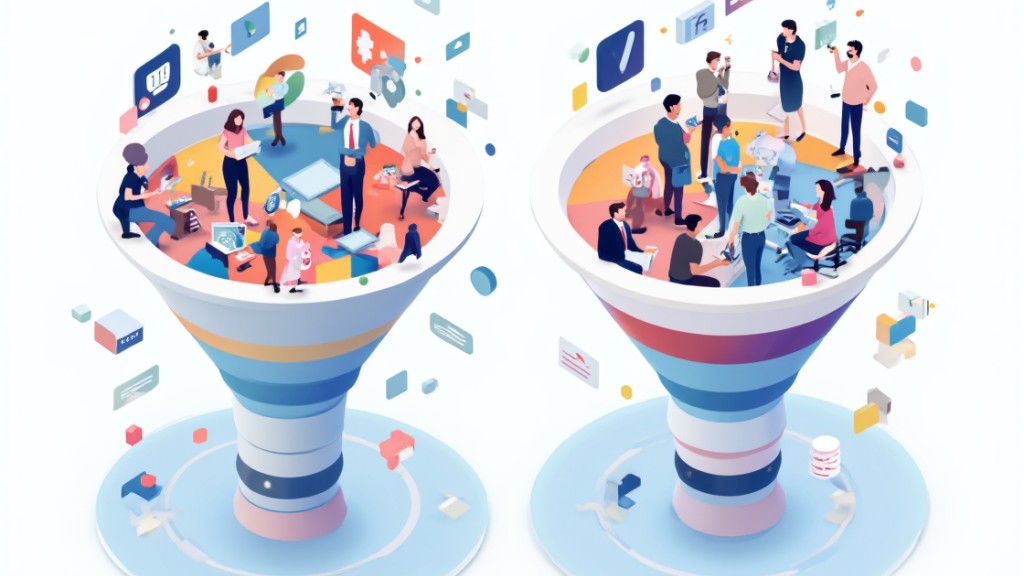
Comprehending the audience differences between the marketing and sales funnels is crucial for your business’s success. The marketing funnel casts a wide net, aiming to generate awareness and interest among a broad audience. Conversely, the sales funnel zeroes in on a narrower group of qualified leads who are ready to make a purchase.
Here’s a quick comparison:
| Funnel Type | Audience Targeting | Engagement Approach |
|---|---|---|
| Marketing Funnel | Broad audience | General messages |
| Sales Funnel | Narrow audience | Customized communication |
| Stages | Awareness, Interest, Consideration | Decision, Action, Retention |
Understanding these differences helps align your marketing and sales efforts, ensuring a smooth shift from lead generation to conversion. By recognizing where your audience stands in each funnel, you can adjust your strategies to meet their specific needs effectively.
Engagement Levels in Each Funnel
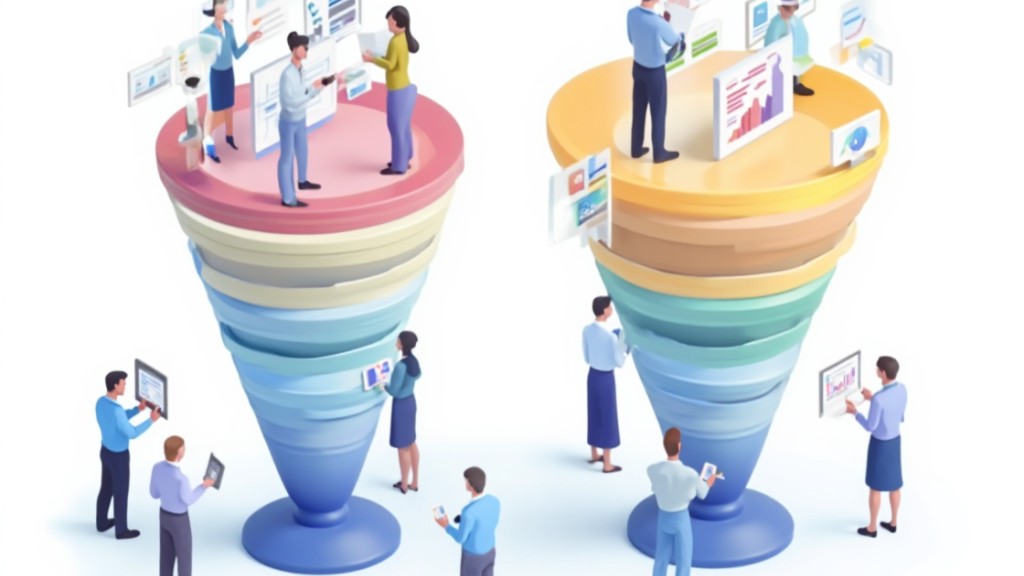
Although comprehending engagement levels in each funnel is essential for optimizing your marketing and sales strategies, it’s important to note that the methods and interactions differ markedly between the two.
- Marketing Funnel: Engages a broader audience with less personalized content through strategies like SEO and social media ads, focusing on creating awareness and interest.
- Sales Funnel: Targets a narrower group of qualified leads, using direct communication and customized solutions to address specific needs and objections.
- Informative Engagement: In the marketing funnel, engagement is primarily informative, nurturing leads with valuable content such as blogs and webinars before they enter the sales funnel.
- Personal Interactions: The sales funnel emphasizes personal interactions, including calls and demos, to effectively guide prospects through decision-making and closing stages.
Understanding these differences helps you customize your approach, ensuring you engage your audience effectively at each stage of their experience.
Metrics and Measurement Techniques
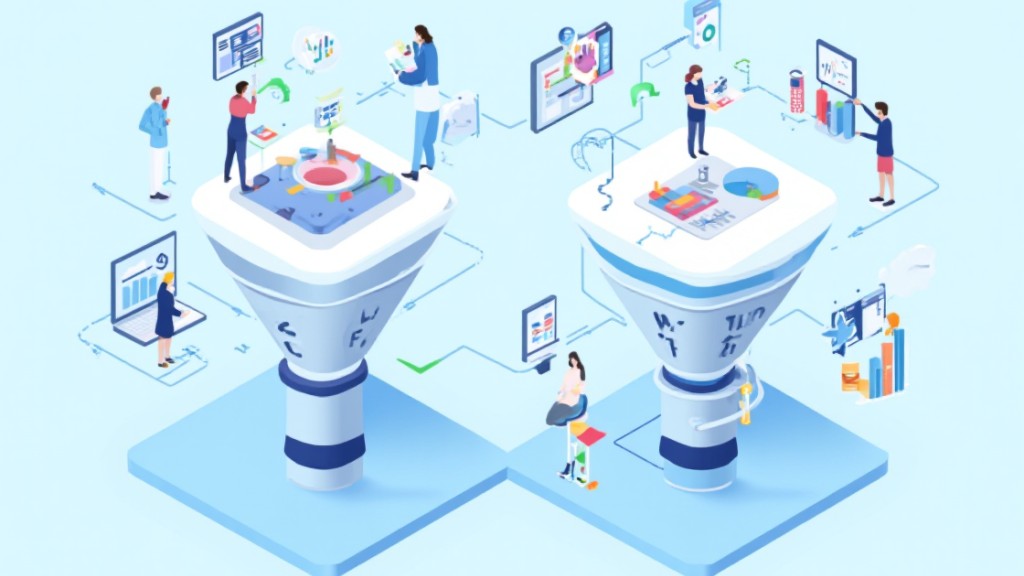
In terms of measuring the success of your funnels, comprehending conversion rate analysis, attribution models, and performance tracking tools is crucial.
Each metric provides unique insights, helping you assess what’s working and what needs improvement in your marketing and sales strategies.
Conversion Rate Analysis
Comprehending conversion rate analysis is crucial for evaluating the effectiveness of your marketing and sales funnels. By calculating conversion rates, you can determine how well your strategies are performing.
Here are four key points to reflect on:
- Calculate Conversion Rates: Divide the number of conversions by total visitors, then express as a percentage.
- Benchmark Performance: Typical e-commerce conversion rates range from 1% to 3%, whereas high-performing funnels can exceed 5.31%.
- Analyze Stage-Specific Rates: Evaluate the percentage of leads moving from awareness to action to pinpoint bottlenecks.
- Utilize A/B Testing: Experiment with different strategies, like landing page designs, to optimize conversion rates and improve overall funnel performance.
Regular analysis enables data-driven decisions for refining your strategies.
Attribution Models Comparison
Attribution models play a significant role in grasping how different marketing efforts contribute to conversions throughout the customer experience.
These models measure effectiveness by assigning credit to various touchpoints, revealing which channels drive conversions. Common models include first-touch, last-touch, and multi-touch.
First-touch attribution highlights the initial interaction, showing how channels create awareness, but it may overlook later influences. Last-touch attribution often overemphasizes the final touchpoint, undervaluing earlier marketing efforts that sparked interest.
Multi-touch models provide a thorough view, crediting multiple interactions. Effective measurement techniques, such as Verified Visits™ Attribution, offer detailed insights into specific campaigns’ impacts on conversions, allowing you to optimize your marketing strategies for better results.
Grasping these models is essential for informed decision-making.
Performance Tracking Tools
Tracking the performance of your marketing and sales funnels is vital for grasping how well your strategies are working. By analyzing key metrics, you can pinpoint areas that need improvement.
Here are four important performance tracking tools to take into account:
- Google Analytics: Monitor impressions, click-through rates, and landing page conversions to assess your marketing efforts.
- CRM Systems: Track customer interactions and feedback, helping you understand lead progression and conversion rates.
- Sales Automation Tools: Analyze time spent in each funnel stage and average deal size to improve your sales strategies.
- Customer Acquisition Cost Metrics: Evaluate the cost-effectiveness of your campaigns to optimize spending.
Regularly measuring these metrics helps you identify bottlenecks and boost overall conversion rates, leading to better customer retention.
Tools and Channels Used
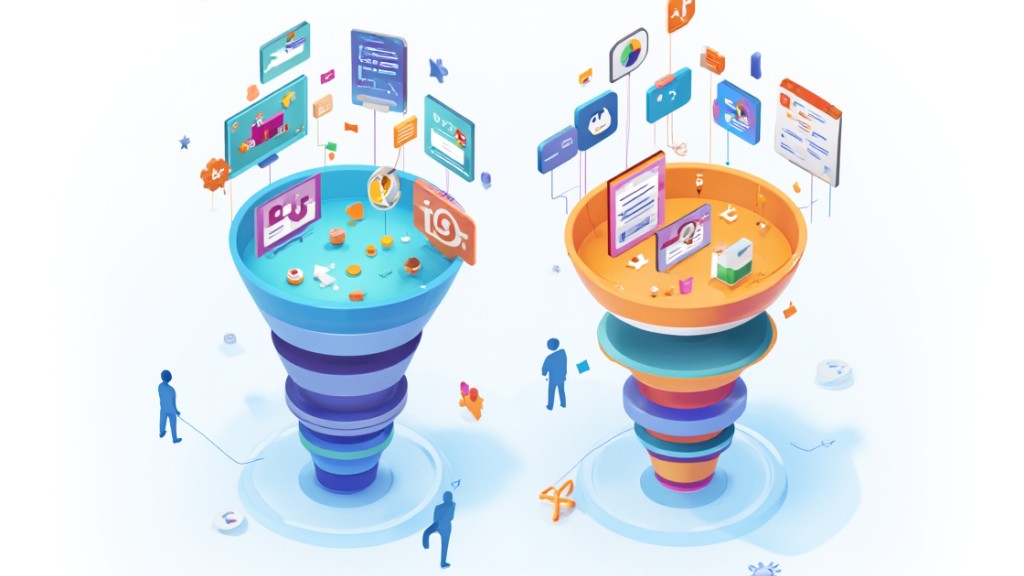
Comprehending the tools and channels used in marketing and sales funnels is essential for anyone looking to improve their business strategy.
Marketing funnels typically leverage digital marketing channels like content marketing, social media campaigns, and SEO to raise awareness and attract a wide audience. Conversely, sales funnels utilize direct communication tools, including email, phone calls, and CRM systems, to engage prospects who are already interested in purchasing.
Marketing funnel tools often involve analytics software for tracking impressions and click-through rates, whereas sales funnels focus on sales automation and pipeline management software to monitor conversions and manage leads.
Moreover, integrated digital advertising platforms, such as Connected TV advertising, boost brand visibility during the marketing phase, while providing valuable data for targeted sales efforts. Aligning these tools across both funnels can lead to more effective strategies and improved customer conversion rates, ultimately benefiting your business.
Strategies for Aligning Both Funnels
To effectively align marketing and sales funnels, it’s crucial to establish clear communication channels between both teams. This ongoing dialogue guarantees a seamless shift of leads, which can increase conversion rates markedly.
Here are some strategies to reflect on:
- Shared Metrics: Use common KPIs like lead conversion rates and customer acquisition costs to track performance and align efforts.
- Feedback Loops: Implement systems where sales teams provide insights on lead quality, allowing marketing to adjust targeting strategies accordingly.
- Unified Messaging: Create consistent messaging across both funnels to build customer trust and improve engagement throughout the buying process.
- Leverage Technology: Utilize CRM systems to integrate data from both funnels, enabling better tracking of customer interactions and supporting data-driven decision-making.
Frequently Asked Questions
Why Are People Leaving Clickfunnels?
People are leaving ClickFunnels primarily because of its high pricing, which can be a barrier for small businesses.
Many find the interface complex, leading to a steep learning curve that discourages beginners.
Furthermore, customer support often receives complaints about slow response times.
Limited customization options and insufficient integrations with other marketing tools hinder users’ ability to effectively market their products, pushing them to seek more flexible and cost-effective alternatives.
Is It Funnel or Funnel?
When you hear “funnel,” it typically refers to two different concepts in marketing and sales. A marketing funnel guides potential customers from awareness to interest, whereas a sales funnel focuses on converting those interested leads into paying customers.
Comprehending these distinctions helps you tailor your strategies effectively. You’ll want to optimize each funnel stage for better engagement and conversion rates, ensuring you meet potential customers’ needs at every step of their expedition.
How Many Types of Funnels Are There?
There are several types of funnels, each designed to guide potential customers through different stages of their expedition.
You’ll find Lead Generation Funnels, which capture leads by offering valuable resources.
Content Marketing Funnels educate through blogs and videos, whereas Facebook and Instagram engage audiences on platforms like Facebook and Instagram.
Furthermore, Email Nurture Funnels maintain engagement with automated messages, and Webinar Marketing Funnels provide insights through live or recorded sessions, encouraging conversions.
What Is the Difference Between Sales Funnel and Marketing Funnel?
The sales funnel and marketing funnel serve distinct purposes in the customer experience.
The marketing funnel focuses on creating awareness and generating interest through broader strategies like content marketing and social media.
On the other hand, the sales funnel emphasizes converting leads into customers with targeted tactics such as direct calls and proposals.
Each funnel has specific stages, and aligning them effectively improves conversion rates, ensuring a smoother change from potential interest to actual sales.
Conclusion
In conclusion, comprehending the differences between marketing and sales funnels is crucial for optimizing both strategies. The marketing funnel focuses on generating awareness and attracting a broad audience, whereas the sales funnel emphasizes converting qualified leads into customers through personalized communication. By recognizing the distinct stages, purposes, and measurement techniques of each funnel, you can align your marketing and sales efforts effectively, eventually leading to improved performance and greater success in achieving your business objectives.
Image via Google Gemini