
When it pertains to comprehending the standard format for an accounting profit and loss account, it is vital to recognize its key components. This statement begins with total revenue, followed by the cost of goods sold, which helps calculate gross profit. Then, you’ll see operating expenses outlined, leading to operating income. Finally, interest and taxes are deducted to find net income. Each section plays an important role in reflecting the company’s financial health, but there’s more to uncover about how these elements interact.
Key Takeaways

- The standard format begins with Total Revenue, showcasing all sales generated during the reporting period.
- Cost of Goods Sold (COGS) follows, detailing direct production costs to calculate gross profit.
- Operating Expenses, including salaries and rent, are listed next, leading to the calculation of operating income (EBIT).
- Net Income is presented at the bottom, representing profit or loss after deducting taxes and interest from operating income.
- Clear headings and organized sections enhance readability and facilitate thorough financial analysis in the Profit and Loss statement.
Understanding the Profit and Loss Statement

The Profit and Loss (P&L) statement serves as a crucial financial document that summarizes a company’s revenues, costs, and expenses over a specific period.
This statement, often crafted using an accounting profit and loss account format, illustrates the company’s profitability. It typically includes categories like Revenue, Cost of Goods Sold (COGS), and Selling, General & Administrative (SG&A) Expenses.
You can prepare P&L statements using either the cash method or the accrual method, depending on your accounting practices. A contribution margin income statement template can help you analyze gross profit and operating income, providing deeper insights into financial performance.
Key Components of a Profit and Loss Statement
When analyzing a Profit and Loss (P&L) statement, it’s important to recognize its key components, which provide a clear picture of a company’s financial performance over a specific period. Comprehending these elements can help you evaluate a business’s profitability effectively.
Here are the main components to focus on:
- Total Revenue: This reflects all sales generated during the reporting period.
- Cost of Goods Sold (COGS): This accounts for the direct costs involved in producing goods sold.
- Operating Expenses: These include significant costs like salaries, rent, and utilities, which help calculate operating profit.
- Net Income: This represents the profit or loss after deducting taxes and interest from operating income.
Each of these components plays a fundamental role in determining the overall financial health of a company, helping you make informed decisions based on its performance.
Revenue Recognition and Its Importance

Revenue recognition plays a crucial role in how businesses report their financial performance. It dictates when revenue should be recorded in financial statements, typically when it’s earned and realizable. Under the accrual accounting method, revenue is recognized when goods or services are delivered to customers, in line with the FASB’s ASC 606 guidelines.
Here’s a quick overview of key aspects of revenue recognition:
| Aspect | Description |
|---|---|
| Timing | Recognized when earned, rather than when cash is received |
| Compliance | Guarantees adherence to GAAP |
| Impact on Financials | Affects net income and earnings per share (EPS) |
| Risks of Improper Recognition | Can lead to financial restatements and loss of trust |
Proper revenue recognition not only provides stakeholders with accurate insights into a company’s financial health but additionally underscores its operational effectiveness. Inadequate recognition can lead to regulatory scrutiny and damage investor confidence.
Cost of Goods Sold (COGS) Explained

Cost of Goods Sold (COGS) is vital for comprehending your company’s profitability, as it reflects the direct costs tied to producing goods sold.
To calculate COGS, you start with your inventory at the beginning of the period, add any purchases made, and then subtract the inventory left at the end.
Accurate reporting of COGS not just affects gross profit margins but furthermore plays a significant role in tax deductions, impacting your overall financial health.
Definition and Importance
Grasping the Cost of Goods Sold (COGS) is essential for any business looking to gauge its financial health. COGS represents the direct costs associated with producing goods sold during a specific period, including materials and labor.
Comprehending COGS is important due to:
- It directly affects gross profit, calculated by subtracting COGS from total revenue.
- Accurate reporting of COGS guarantees compliance with accounting principles and impacts tax calculations.
- Analyzing COGS allows you to assess operational efficiency and refine pricing strategies.
- COGS varies by industry, with manufacturing companies typically incurring higher costs compared to service sectors.
Calculation and Reporting
Comprehending how to calculate and report Cost of Goods Sold (COGS) is vital for accurately evaluating a business’s financial performance. COGS reflects the direct costs tied to producing goods sold, including materials and labor.
You can calculate COGS by adding your beginning inventory to purchases made during the period and then subtracting the ending inventory. This calculation provides clarity on the costs incurred in generating sales.
Reporting COGS accurately is important, as it directly influences gross profit on the Profit and Loss Statement. Additionally, analyzing COGS helps you identify production cost trends, allowing for informed decisions about pricing strategies and inventory management.
Operating Expenses Breakdown

When you look at operating expenses, you’re examining essential costs that keep your business running smoothly, such as salaries, rent, and utilities.
Comprehending the types of operating expenses is imperative, as managing these costs effectively can greatly affect your company’s profitability.
Types of Operating Expenses
Operating expenses play a fundamental role in the financial health of a business, as they encompass the costs necessary for day-to-day operations. Comprehending the types of operating expenses is vital for effective financial management.
Here are four key components:
- Salaries and Wages: Employee compensation is a significant part of operating expenses.
- Rent or Lease Payments: Costs associated with the use of physical space for business operations.
- Utilities: Expenses for electricity, water, and other important services.
- Marketing and Advertising Costs: Investments in promoting your products or services.
Furthermore, depreciation and R&D expenses are likewise included, reflecting the wear and tear on assets and funds allocated for innovation, respectively.
These expenses are deducted from gross profit to evaluate operational efficiency.
Importance of Expense Management
Expense management is essential for any business aiming to maintain financial stability and improve profitability. By closely monitoring operating expenses, which include Selling, General, and Administrative (SG&A) costs, you can assess your company’s operational efficiency.
Effective management of these expenses directly boosts your profit margins, as controlling costs increases your gross profit margin. Key components like salaries, rent, utilities, and marketing should be regularly analyzed for potential savings.
A detailed operating expenses breakdown in your Profit and Loss Statement allows you to pinpoint overspending and take corrective actions. Additionally, benchmarking your expenses against industry standards helps evaluate your competitiveness and align with best practices, enabling you to implement strategic planning and cost management initiatives effectively.
Calculating Net Income

Calculating net income is essential for comprehending a company’s financial health, as it reflects profitability after all expenses are accounted for.
To determine net income, you can follow these steps:
- Calculate Total Revenue: Sum up all revenues generated from sales and services during the period.
- Determine Total Expenses: Add up all costs, including Cost of Goods Sold (COGS), operating expenses, interest, and taxes.
- Apply the Formula: Use the formula Net Income = Total Revenue – Total Expenses to find your net income.
- Adjust for Non-Operating Items: Consider any gains or losses from asset sales, as these can influence the final net income reported.
Accurate calculation of net income is important for investors and analysts, as it serves as a key indicator of a company’s financial performance and overall profitability.
This figure, often presented at the bottom of a Profit and Loss statement, offers significant insights into business viability.
Example of a Profit and Loss Statement Format
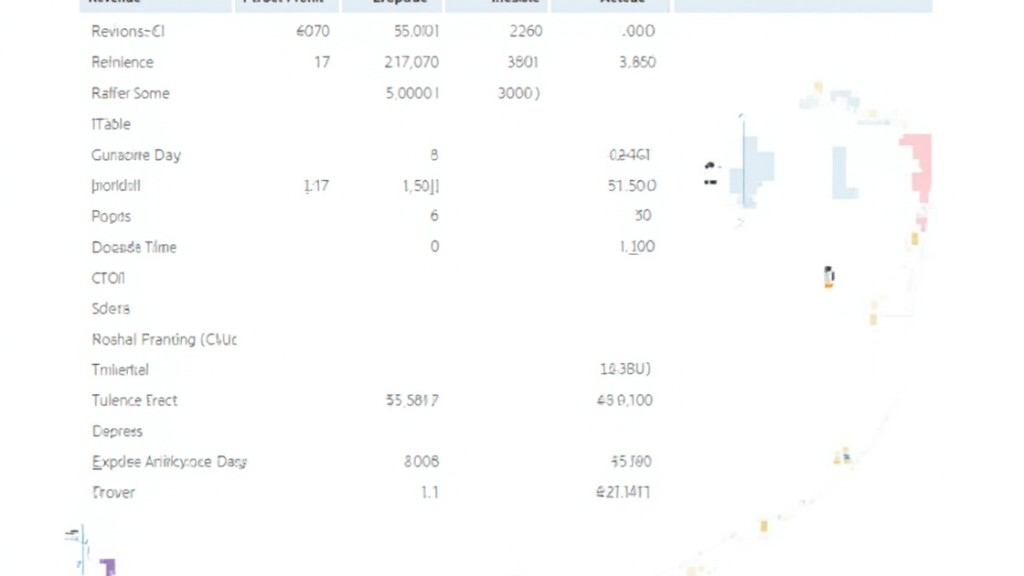
A typical profit and loss statement format is structured to provide a clear overview of a company’s financial performance over a specific period.
It begins with the revenue section, where you’ll list total sales generated during the reporting period. Next, you’ll include the cost of goods sold (COGS), allowing you to calculate gross profit, which is the difference between revenue and COGS.
Following that, detail your operating expenses, such as Selling, General & Administrative (SG&A) costs. This leads to the calculation of operating income (EBIT).
https://www.youtube.com/watch?v=02hkI7RcFeM
The statement may likewise incorporate non-operating income or expenses, including interest and taxes, to arrive at the final net income figure.
Common formatting conventions involve using clear headings, subtotal calculations, and organized sections to improve readability.
This structured approach not just helps you present financial data effectively but additionally facilitates thorough financial analysis for anyone reviewing the statement.
Importance of P&L Statements for Stakeholders

Though many financial documents exist, P&L statements stand out as vital tools for stakeholders seeking to understand a company’s profitability over time.
These statements provide valuable insights that can influence decisions and assessments regarding financial health. Here are four key reasons why P&L statements are important for stakeholders:
- Profitability Insight: They offer a clear view of revenues and expenses, helping you gauge a company’s financial performance.
- Trend Identification: By analyzing P&L statements, you can spot trends that reveal operational efficiency, guiding strategic choices.
- Performance Metrics: They enable you to calculate key financial metrics, like gross profit margin and net income, facilitating comparisons with industry peers.
- Transparency and Trust: P&L statements improve accountability, especially for publicly traded companies, nurturing trust among stakeholders and adhering to regulatory standards.
Understanding these elements can greatly impact your investment and management decisions.
Frequently Asked Questions

What Is the Format of a Profit and Loss Account?
The format of a profit and loss account typically includes several key sections.
You’ll start with revenue, followed by the cost of goods sold to calculate the gross profit.
Next, you’ll detail operating expenses, leading to operating income.
After that, you’ll include other income and expenses, culminating in net income.
Depending on your needs, you can use a single-step or multi-step format, which affects how these elements are presented for analysis.
What Is the Basic Structure of the P&L?
The basic structure of a Profit and Loss (P&L) statement starts with total revenue at the top, followed by the Cost of Goods Sold (COGS) to calculate gross profit.
Next, you list operating expenses, including Selling, General, and Administrative (SG&A) costs.
After determining operating income, you account for non-operating items like interest and taxes.
Finally, the statement concludes with net income, reflecting the company’s overall profitability after all expenses are deducted.
What Is the Standard Profit and Loss Account?
A standard profit and loss account summarizes a company’s financial performance over a specific period.
It typically includes revenues, costs associated with goods sold, gross profit, operating expenses, and net income.
You might encounter it in either a single-step or multi-step format. The single-step format consolidates revenues and expenses broadly, whereas the multi-step format offers detailed subtotals, enhancing your analysis of the organization’s financial health.
It adheres to accounting standards like GAAP or IFRS.
What Are Common P&L Mistakes?
Common P&L mistakes include misclassifying expenses, which can distort profit reports.
You might likewise recognize revenue too early, inflating profits inaccurately.
Omitting non-operating income or expenses can skew net income figures, misleading stakeholders about financial health.
Not comparing year-over-year performance or industry benchmarks may prevent you from spotting trends.
Furthermore, relying on cash basis accounting when accrual accounting is needed can create a distorted view of your financial performance, especially with significant receivables.
Conclusion
In conclusion, the profit and loss statement is vital for comprehending a company’s financial performance. By clearly outlining revenue, COGS, operating expenses, and net income, it provides valuable insights for stakeholders. Recognizing the importance of each component helps you assess profitability and operational efficiency. Utilizing a standardized format improves readability and accuracy, allowing you to make informed decisions. In the end, mastering the P&L statement is critical for effective financial management and strategic planning.
Image via Google Gemini