A balance sheet cheat sheet is a practical tool that condenses crucial information about a company’s financial position. It highlights key components like assets, liabilities, and shareholder equity, allowing you to quickly assess financial health. This resource is particularly beneficial for startup founders and business owners, as it simplifies complex financial metrics and ratios. Comprehending how to effectively utilize this cheat sheet can greatly improve your decision-making process. So, how can you maximize its potential?
Key Takeaways
- A balance sheet cheat sheet summarizes key components like assets, liabilities, and shareholder equity for quick reference.
- It simplifies financial ratio analysis, aiding in the assessment of liquidity and financial health.
- The cheat sheet helps avoid common mistakes, ensuring accurate classification of assets and liabilities.
- It enhances communication with stakeholders by providing a clear overview of the company’s financial status.
- Regular use promotes financial literacy and informed decision-making for business owners and entrepreneurs.
Understanding the Balance Sheet

Comprehending the balance sheet is crucial for anyone looking to grasp a company’s financial position, as it provides a snapshot of assets, liabilities, and shareholder equity at a specific point in time.
A balance sheet cheat sheet can be an invaluable tool in this comprehension. It helps you categorize assets into current—like cash and inventory—and non-current, such as property and long-term investments.
Likewise, liabilities are divided into current obligations, due within a year, and long-term debts, which extend beyond that timeframe.
Shareholder equity represents what’s left after subtracting liabilities from assets, highlighting the company’s net worth available to investors.
Regularly reviewing the balance sheet allows you to track financial health, manage risks, and make informed strategic decisions.
Key Components of a Balance Sheet

Grasping the balance sheet‘s key components is crucial for analyzing a company’s financial health. A balance sheet consists of three main elements: assets, liabilities, and shareholder equity, represented by the accounting equation cheat sheet: Assets = Liabilities + Shareholder Equity.
Assets include current assets, like cash and accounts receivable, and non-current assets, such as property and equipment. These reflect what the company owns.
Conversely, liabilities are divided into current liabilities, like accounts payable and short-term loans, and long-term liabilities, such as long-term debt, which indicate what the company owes.
Lastly, shareholder equity represents the owners’ residual interest after subtracting liabilities from assets, including retained earnings and paid-in capital.
Together, these components provide a snapshot of a company’s financial position at a specific time, critical for evaluating its liquidity and overall financial health.
Importance of a Balance Sheet Cheat Sheet

A balance sheet cheat sheet serves as a valuable tool for anyone looking to understand a company’s financial environment quickly. This resource provides a quick reference to crucial components, including definitions of assets, liabilities, and equity, which helps you grasp intricacies faster.
It summarizes key financial ratios, like the current ratio and debt-to-equity ratio, allowing you to assess a company’s financial health and risk efficiently. By highlighting the accounting equation (Assets = Liabilities + Equity), this cheat sheet reinforces the fundamental relationship between these components, making it easier for you to understand the financial structure.
For startup founders and business owners, an accounting 101 cheat sheet simplifies the learning process, enabling informed financial decisions. Moreover, it aids in preparing for financial discussions or audits by offering a concise overview that improves communication with stakeholders about the company’s financial status.
How to Use a Balance Sheet Cheat Sheet

To effectively use a balance sheet cheat sheet, start by familiarizing yourself with its key components, such as assets, liabilities, and shareholder equity.
This overview helps you quickly categorize items and understand their implications for liquidity and financial health.
Moreover, the cheat sheet simplifies ratio analysis, enabling you to assess important metrics like the current ratio and debt-to-equity ratio, which are essential for evaluating a company’s overall financial position.
Key Components Overview
Comprehending the key components of a balance sheet is essential for evaluating a company’s financial health. An accounting formulas cheat sheet can help you grasp these components effectively.
Here are three important elements:
- Assets: This includes current assets like cash and accounts receivable, as well as non-current assets such as property and equipment. They indicate liquidity and long-term stability.
- Liabilities: Current liabilities are obligations due within a year, whereas non-current liabilities are due after a year. This differentiation is vital for evaluating financial obligations.
- Equity: This represents the owner’s stake in the company and is calculated using the balance sheet equation: Assets = Liabilities + Equity.
Grasping these components can streamline your financial analysis.
Ratio Analysis Simplified
Comprehending ratio analysis is crucial for making sense of a balance sheet and evaluating a company’s financial standing. An accounting cheat sheet can simplify this process by providing quick references for key financial ratios.
For instance, you can calculate the current ratio by dividing current assets by current liabilities, helping you assess liquidity. The debt-to-equity ratio, obtained by dividing total liabilities by shareholders’ equity, shows financial leverage. By tracking these ratios over time, you can identify trends in asset and liability management.
Moreover, it can help evaluate profitability through ratios like net profit margin and return on assets. This clarity allows you to make informed decisions based on the company’s financial health and resource availability.
Common Mistakes to Avoid
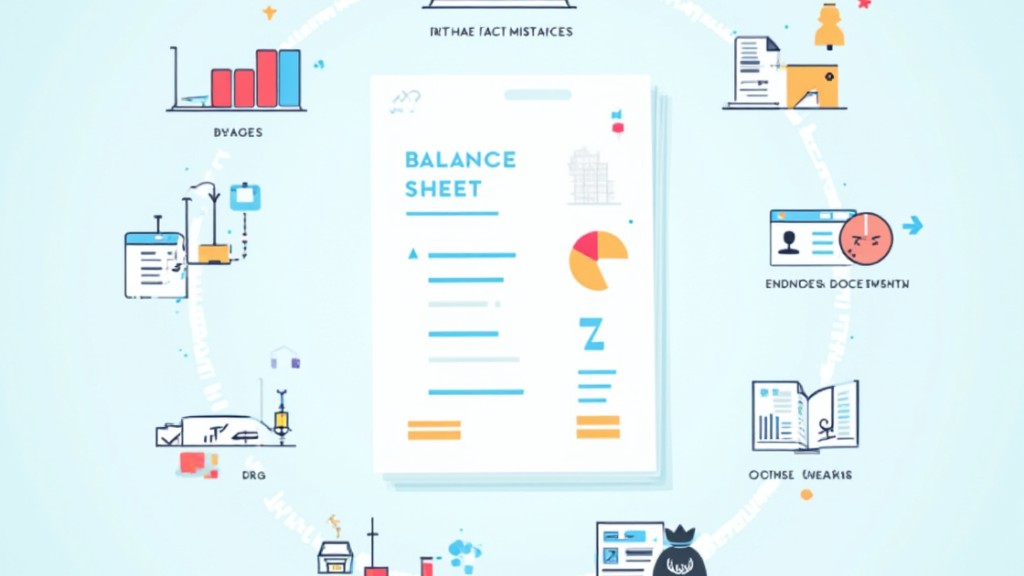
In the process of managing a balance sheet, it’s crucial to avoid common mistakes that can distort your financial picture. By steering clear of these pitfalls, you can guarantee a more accurate representation of your financial health.
Here are three key mistakes to avoid:
- Misclassifying Assets and Liabilities: Failing to categorize items as current or non-current can mislead your assessment of liquidity.
- Ignoring Off-Balance-Sheet Liabilities: Overlooking elements like operating leases can hide potential financial risks, affecting your overall evaluation.
- Neglecting Regular Updates: Not updating your balance sheet can result in decisions based on outdated information, leading to misinterpretations of your company’s stability.
Additionally, using a debits and credits cheat sheet can help clarify these classifications.
Enhancing Financial Literacy With a Cheat Sheet

A balance sheet cheat sheet lays out key components like assets, liabilities, and equity, making it easier for you to comprehend the balance sheet equation.
Grasping these elements is essential for effective decision-making, whether in personal finance or business contexts.
Regularly using this tool not just improves your financial literacy but also sharpens your ability to analyze and interpret financial statements accurately.
Key Balance Sheet Components
Grasping the key components of a balance sheet is essential for evaluating a company’s financial standing. Comprehending these elements allows you to assess financial health effectively. Here are the three primary components:
- Assets: These include current assets like cash and accounts receivable, along with non-current assets such as property and equipment. They reflect what the company owns.
- Liabilities: Divided into current liabilities due within a year and long-term liabilities due later, they indicate what the company owes.
- Shareholders’ Equity: This represents the net worth of the business, calculated as total assets minus total liabilities, encompassing retained earnings and paid-in capital.
Using an accounting t accounts cheat sheet can simplify comprehending these components, enhancing your financial literacy.
Importance for Decision-Making
Comprehending the importance of a balance sheet cheat sheet can considerably improve your decision-making process in financial matters.
This financial accounting cheat sheet provides a quick overview of balance sheet components like assets, liabilities, and shareholder equity, allowing you to grasp fundamental information swiftly.
It highlights critical ratios such as the current ratio and debt-to-equity ratio, which are crucial for evaluating a company’s financial health.
By summarizing the accounting equation—Assets = Liabilities + Shareholder Equity—you reinforce foundational concepts.
Moreover, this cheat sheet helps you compare balance sheets across periods, enabling trend identification in financial stability.
Enhancing Financial Understanding
When you use a balance sheet cheat sheet, it becomes easier to improve your financial awareness and literacy. This tool simplifies complex concepts in accounting, making them accessible.
Here are three key benefits:
- Clarifies Components: You’ll quickly grasp definitions and classifications of assets, liabilities, and equity.
- Reinforces Key Equations: Comprehending the balance sheet equation (Assets = Liabilities + Equity) helps you calculate important financial ratios.
- Real-World Examples: The cheat sheet often includes common current and non-current assets and liabilities, aiding in recognition and categorization.
Frequently Asked Questions
What Does a Balance Sheet Help With?
A balance sheet helps you assess a company’s financial health by showing its assets, liabilities, and equity at a specific time.
It’s crucial for evaluating liquidity through ratios like the current and quick ratios, revealing the ability to meet short-term obligations.
Moreover, it informs you about the capital structure, indicating the balance between debt and equity financing.
What Are the Three Most Important Things on a Balance Sheet?
The three most important components of a balance sheet are assets, liabilities, and shareholder equity.
Assets include resources like cash and property, showing what the company owns.
Liabilities represent financial obligations, such as loans and payables, indicating what the company owes.
Shareholder equity reflects the owners’ stake, calculated as total assets minus total liabilities.
Comprehending these components helps you assess a company’s financial health, risk, and potential for growth effectively.
How to Understand Balance Sheet for Beginners?
To understand a balance sheet as a beginner, start by identifying its main components: assets, liabilities, and shareholder equity.
Assets are what the company owns, whereas liabilities are what it owes. Shareholder equity reflects the owners’ interest in the company.
Familiarize yourself with the balance sheet equation: Assets = Liabilities + Shareholder Equity.
Additionally, look at key financial ratios like the current ratio for insights on liquidity and debt management.
Why Is It Important to Know How the Balance Sheet Is Used?
Knowing how to use a balance sheet is essential for evaluating a company’s financial health. It allows you to analyze assets, liabilities, and shareholder equity at a specific time.
Comprehending liquidity through ratios, like the current ratio, helps you assess short-term obligations. By reviewing trends in asset management and financial risk, you can make informed decisions.
This knowledge likewise aids in securing funding, as it demonstrates financial stability to potential investors and lenders.
Conclusion

In conclusion, a balance sheet cheat sheet serves as a crucial tool for comprehending a company’s financial position. By breaking down assets, liabilities, and equity, it allows you to quickly assess financial health and make informed decisions. Utilizing this resource can improve your financial literacy, helping you communicate effectively with stakeholders. Remember to avoid common pitfalls, and with practice, you’ll gain confidence in analyzing balance sheets, eventually supporting your business’s growth and success.
Image via Google Gemini