
Team building activities are crucial for promoting employee engagement and collaboration in the workplace. These activities, ranging from musical challenges to community service, help break down barriers and build trust among team members. They encourage communication and creativity as they enhance problem-solving skills. By participating in these exercises, employees can strengthen their bonds and improve overall productivity. The following sections will explore seven effective team building activities that can transform your workplace culture and boost morale.
Key Takeaways

- Engage in “Name That Tune” to foster collaboration and enhance creativity through music-themed team bonding activities.
- Use “Show and Tell” to break down barriers and increase empathy by sharing personal stories among team members.
- Implement “The Human Knot” to promote problem-solving and communication through a fun physical challenge that strengthens team relationships.
- Organize “Pictionary” to unleash creativity and encourage laughter, fostering interpersonal relationships in both in-person and virtual settings.
- Participate in community volunteering to boost morale and teamwork while improving company reputation and employee satisfaction.
Name That Tune: a Musical Challenge for Team Bonding

“Name That Tune” is an engaging and interactive game intended to improve team bonding through a musical challenge. This activity invites participants to guess song titles from short clips or lyrics, promoting friendly competition among team members.
As a cheap group activity, it requires minimal resources during nurturing collaboration and communication. You’ll find that tracking scores throughout the game boosts motivation and engagement, allowing for recognition of winners.
By incorporating a diverse range of music genres, “Name That Tune” guarantees inclusivity, catering to various interests and backgrounds within your team. Engaging in such motivational activities can lead to increased workplace morale and creativity, contributing to a more lively team culture.
This game stands out as one of the effective team building activities for employee engagement, as it entertains as well as strengthens interpersonal relationships, eventually benefiting the overall work environment.
Show and Tell: Sharing Personal Stories

After enjoying a lively round of “Name That Tune,” teams can benefit from a different kind of connection through “Show and Tell.” This activity encourages team members to bring in personal items or share stories that reflect their interests, experiences, or backgrounds.
By engaging in this practice, you help break down communication barriers, nurturing a relaxed environment where everyone feels valued and connected. This sense of comprehension and empathy can lead to stronger workplace relationships.
Additionally, Show and Tell boosts morale, as team members appreciate learning more about each other’s lives outside of work, contributing to a more inclusive culture. It can likewise uncover hidden talents and strengths within the team, enhancing collaboration and innovation.
Studies show that sharing personal stories increases engagement levels, leading to heightened job satisfaction and reduced turnover rates among employees. Overall, this activity is a valuable tool for enhancing team dynamics and employee engagement.
The Human Knot: A Physical Team-Building Exercise

The Human Knot is an engaging physical team-building exercise that promotes communication and teamwork among participants. In this activity, you’ll stand in a circle, reach across, and grab hands with two different people. Your goal is to untangle yourselves without releasing hands, which requires collaboration and strategic thinking.
As you work together to solve this puzzle, you’ll improve critical thinking and problem-solving skills within your team. The exercise can be completed in 15 to 30 minutes, making it easy to integrate into team meetings or retreats. Furthermore, engaging in the Human Knot nurtures trust among team members, as everyone relies on each other’s input and support to successfully untangle.
This versatile activity accommodates groups of 6 to 20 participants, making it suitable for various team dynamics. By participating, you’ll strengthen relationships and improve overall communication within your team.
Pictionary: Unleashing Creativity Through Drawing

Pictionary serves as an engaging drawing game that not solely nurtures creativity but also improves teamwork among participants. In this game, players illustrate words or phrases for their teammates to guess, which promotes collaboration and boosts communication skills.
Pictionary can be played in-person or virtually, making it adaptable for various team settings, including remote or hybrid teams. This activity stimulates imaginative thinking during the creation of a relaxed atmosphere that encourages laughter and camaraderie.
As a result, overall morale improves, and employees feel more connected through shared fun experiences. Incorporating Pictionary into team-building activities strengthens interpersonal relationships and increases employee engagement.
Research indicates that creative activities like Pictionary can improve problem-solving skills and innovative thinking among employees, leading to better workplace dynamics and productivity.
The Amazing Race: A Competitive Team Adventure

In The Amazing Race, you’ll engage in a series of physical and mental challenges that require teamwork and collaboration.
This competitive activity not merely encourages goal-oriented competition but additionally improves communication and trust among team members.
As you race against the clock to complete tasks, you’ll experience firsthand how collaboration can lead to greater problem-solving and camaraderie within your group.
Teamwork and Collaboration
Engaging in a competitive team adventure like The Amazing Race offers a unique opportunity to improve teamwork and collaboration among employees. This activity combines physical and mental challenges, pushing teams to communicate effectively and solve problems under time constraints. The friendly rivalry encourages motivation and engagement, whereas it also serves as a fun stress-reliever.
The Amazing Race can be customized for various group sizes and settings, making it suitable for both in-person and hybrid environments. As teams navigate tasks, they develop strategic planning skills and strengthen relationships, leading to a more cohesive workplace culture.
| Team Dynamics | Skills Developed | Benefits |
|---|---|---|
| Enhanced Communication | Problem-Solving | Improved Engagement |
| Strategic Planning | Collaboration | Stronger Camaraderie |
| Friendly Rivalry | Time Management | Stress Relief |
Physical and Mental Challenges
Participating in The Amazing Race presents a unique blend of physical and mental challenges that require teams to work together effectively. This competitive activity involves racing to complete various tasks, which often test skills like navigation, teamwork, and quick thinking.
By tackling these challenges, you’ll improve collaboration and problem-solving among team members. The need to rely on each other’s strengths promotes increased communication and trust, vital for a cohesive team.
Studies indicate that engaging in activities like The Amazing Race can greatly uplift employee morale and overall engagement, creating a more positive workplace culture.
Moreover, the friendly competition encourages a sense of achievement, further boosting motivation and contributing to stronger team cohesion.
Goal-Oriented Competition
Goal-oriented competition in team-building activities, like The Amazing Race, offers a structured environment where employees can sharpen their collaborative skills as they aim for a common objective. This engaging activity includes physical and mental challenges that promote teamwork, as participants strategize and work together to solve problems. You can customize The Amazing Race to incorporate local landmarks or company-specific themes, making it relevant and exciting for everyone involved. Studies show that such competitive adventures can lead to a 25% increase in team effectiveness and communication, eventually boosting workplace productivity.
| Challenge Type | Skill Required | Time Limit |
|---|---|---|
| Physical Challenge | Strength and Agility | 30 minutes |
| Mental Puzzle | Critical Thinking | 20 minutes |
| Team Strategy | Collaboration | 15 minutes |
| Navigation Task | Problem Solving | 25 minutes |
| Final Challenge | All Skills Combined | 45 minutes |
Community Volunteering: Giving Back Together
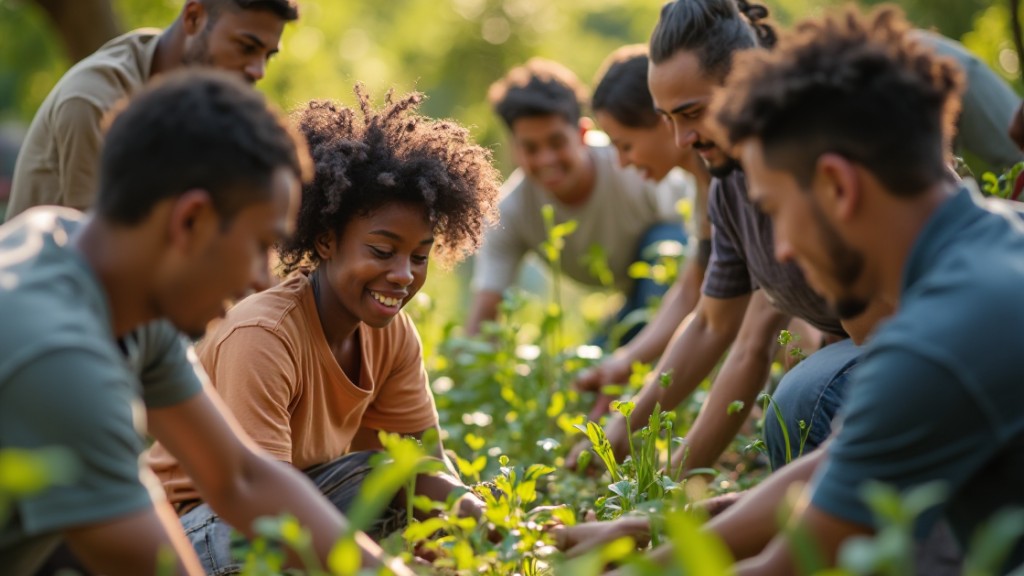
Community volunteering offers a unique opportunity for you and your team to strengthen bonds during making a positive impact in your local area.
By working together on projects that benefit the community, you not only improve your company’s reputation but likewise cultivate a deeper connection among team members.
Engaging in these initiatives can lead to improved employee satisfaction and retention, as many feel a sense of fulfillment and pride in contributing to meaningful causes.
Strengthening Team Bonds
When employees come together for volunteer initiatives, they’ve the opportunity to strengthen team bonds as they make a positive impact in their communities. Participating in these activities encourages teamwork, improving communication skills and trust among team members.
Shared experiences in volunteering lead to a sense of fulfillment, boosting morale and job satisfaction. Research indicates that teams engaged in volunteer work report higher levels of engagement and stronger connections, which contribute to a more cohesive work environment.
Furthermore, volunteering allows employees to develop new skills as they work collaboratively outside of their usual tasks. By giving back together, your team not only improves its internal dynamics but also elevates the company’s image and employee pride through social responsibility efforts.
Enhancing Community Connection
Engaging in community volunteering can greatly improve your team’s connection to both each other and the community at large. Participating in local charitable activities promotes teamwork and boosts employees’ sense of purpose. Studies show that 70% of employees feel more engaged during these initiatives. Volunteering elevates morale, contributing to a healthier workplace culture and increased productivity. Team service projects encourage communication, strengthening relationships among coworkers. Furthermore, these experiences create lasting bonds, improving collaboration and problem-solving skills in everyday interactions.
| Benefits of Community Volunteering | Impact on Workplace Culture |
|---|---|
| Promotes teamwork | Improves employee morale |
| Boosts sense of purpose | Reduces turnover rates |
| Strengthens relationships | Increases overall productivity |
Building Company Reputation
Participating in community volunteering not just strengthens internal relationships among employees but furthermore improves a company’s reputation.
When your team engages in volunteer activities, it showcases social responsibility and positively influences public perception. This can attract potential customers and employees alike.
Consider these benefits of community volunteering:
- Enhanced Company Reputation: Demonstrates a commitment to social causes.
- Improved Employee Morale: Increases job satisfaction and fulfillment.
- Stronger Internal Relationships: Cultivates teamwork and collaboration.
- Higher Employee Retention: Engaged employees are 87% less likely to leave.
Virtual Engagement Games: Connecting Remotely

Virtual engagement games serve as an important tool for connecting remote teams, especially as traditional office interactions have become less frequent. These activities, like online trivia and escape rooms, promote teamwork and problem-solving during nurturing camaraderie. Platforms such as Zoom and Slack enable friendly competition, boosting morale and productivity.
Incorporating these games into regular meetings breaks the monotony of remote work, enhancing employee satisfaction. Engaging in activities like “Decode the Emoji” and “Online Office Games” encourages critical thinking and creativity, vital for a dynamic work environment. Research indicates that these virtual team-building activities greatly reduce feelings of isolation, creating a more cohesive workforce.
| Game Type | Benefits | Recommended Tools |
|---|---|---|
| Online Trivia | Team bonding, knowledge sharing | Zoom, Kahoot |
| Escape Rooms | Problem-solving, collaboration | Virtual Escape Room Platforms |
| Emoji Decoding | Creativity, communication | Slack, Zoom |
Frequently Asked Questions

How Often Should Team Building Activities Be Scheduled?
You should schedule team building activities regularly to maintain engagement and encourage collaboration. Aim for quarterly events, as they provide a consistent opportunity for team members to bond without overwhelming their schedules.
Furthermore, consider shorter, informal activities monthly to keep the team connected. Balance is key; too few events may lead to disengagement, whereas too many can cause burnout.
Tailor the frequency based on your team’s needs and dynamics for best results.
What Are the Benefits of Outdoor Team Building Activities?
Outdoor team building activities offer several benefits. They improve communication skills, as participants must collaborate in a different environment.
These activities promote physical health, encouraging exercise and reducing stress. Being outdoors can boost creativity and problem-solving skills, as fresh air stimulates the mind.
Furthermore, they cultivate stronger relationships among team members, increasing trust and camaraderie. Eventually, engaging in outdoor activities can greatly enhance team dynamics and overall workplace morale.
How Do I Measure the Success of Team Building Events?
To measure the success of team building events, you should assess participant feedback through surveys, focusing on their experiences and perceived value.
Consider tracking engagement levels during activities, such as participation rates and interactions among team members.
Furthermore, monitor performance metrics before and after the event to evaluate any changes in teamwork and communication.
Comparing these indicators can provide valuable insights into the effectiveness of your team building initiatives and areas for improvement.
Can Team Building Activities Be Adapted for Remote Teams?
Yes, you can adapt team building activities for remote teams.
Utilize online platforms for virtual games, quizzes, or collaborative projects. Video conferencing tools allow for real-time interaction, nurturing connection.
You can likewise implement breakout sessions for smaller group discussions, enhancing teamwork.
Consider scheduling regular check-ins and informal catch-ups to maintain engagement.
What Budget Should I Allocate for Team Building Activities?
When determining your budget for team building activities, consider factors like team size, activity types, and frequency.
Typically, allocate 1-3% of your overall budget for these activities. For small teams, a few hundred dollars might suffice, whereas larger teams might require thousands.
Factor in costs for materials, venues, and facilitators. Don’t forget to include any remote options, as these can likewise incur costs.
Prioritize activities that align with your team’s goals and needs.
Conclusion

Incorporating team-building activities, like “Name That Tune” and “The Amazing Race,” can profoundly improve employee engagement and collaboration. By nurturing communication through exercises like “Show and Tell” and creative problem-solving with games like “Pictionary,” teams can build stronger connections. Physical challenges, such as “The Human Knot,” encourage teamwork, whereas community volunteering helps create a positive company image. Finally, virtual engagement games allow remote teams to connect, ensuring that all employees feel included and valued in the workplace.
Image via Google Gemini