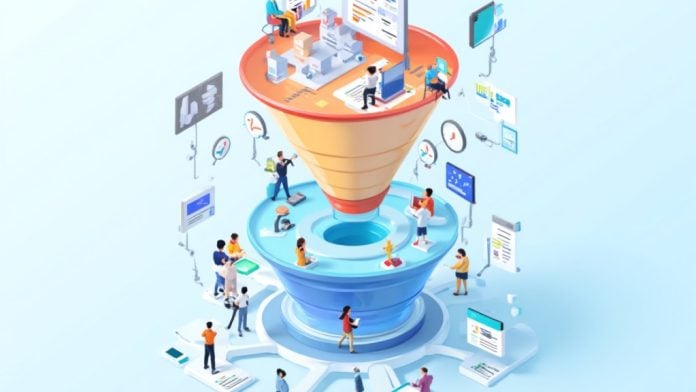
Funnels in marketing outline the path your customers take, from first hearing about your brand to making a purchase. They consist of three main stages: TOFU, MOFU, and BOFU, each serving a unique purpose in guiding potential buyers. Comprehending these stages is vital as they help you tailor your strategies to meet customer needs effectively. By optimizing your funnel, you can improve engagement and boost conversion rates. But how do you create a funnel that truly works?
Key Takeaways
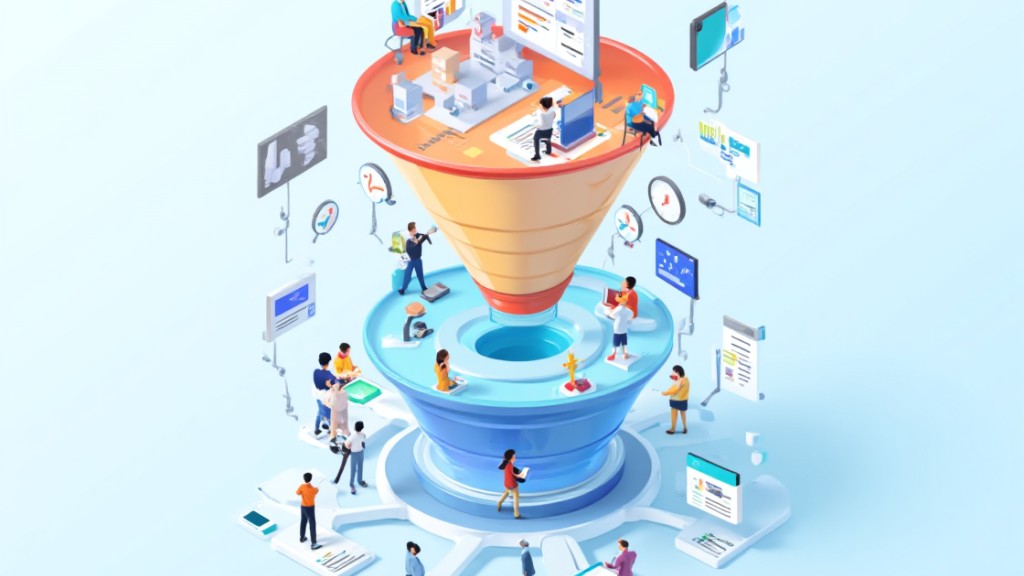
- Marketing funnels visualize the customer journey, guiding potential buyers from awareness to conversion through structured stages: TOFU, MOFU, and BOFU.
- They help identify customer drop-off points, allowing businesses to optimize strategies and improve engagement at each stage.
- Personalized content tailored to each funnel stage significantly enhances conversion rates and builds customer trust.
- Effective funnel management leads to better sales forecasting and increased efficiency, generating more sales-ready leads at lower costs.
- Measuring success through KPIs at each funnel stage provides insights into customer behavior and overall marketing effectiveness.
Understanding the Marketing Funnel

When you think about the customer pathway, it’s helpful to visualize it as a marketing funnel, which breaks down the process into clear stages.
The marketing funnel consists of three primary levels: Top of Funnel (TOFU), Middle of Funnel (MOFU), and Bottom of Funnel (BOFU).
Top of funnel marketing focuses on generating awareness among potential customers, whereas MOFU emphasizes nurturing leads and encouraging consideration.
Finally, BOFU drives conversion and assists in making purchase decisions.
A well-structured funnel strategy helps identify customer drop-off points, allowing you to optimize your approach.
By tailoring content to each stage of the consumer purchase funnel, you can improve conversion rates considerably.
Studies show that companies excelling in lead nurturing can generate 50% more sales-ready leads at 33% lower costs, highlighting the funnel’s vital role in aligning marketing efforts with customer behavior and preferences, eventually boosting your marketing ROI by 15-20%.
Stages of the Marketing Funnel
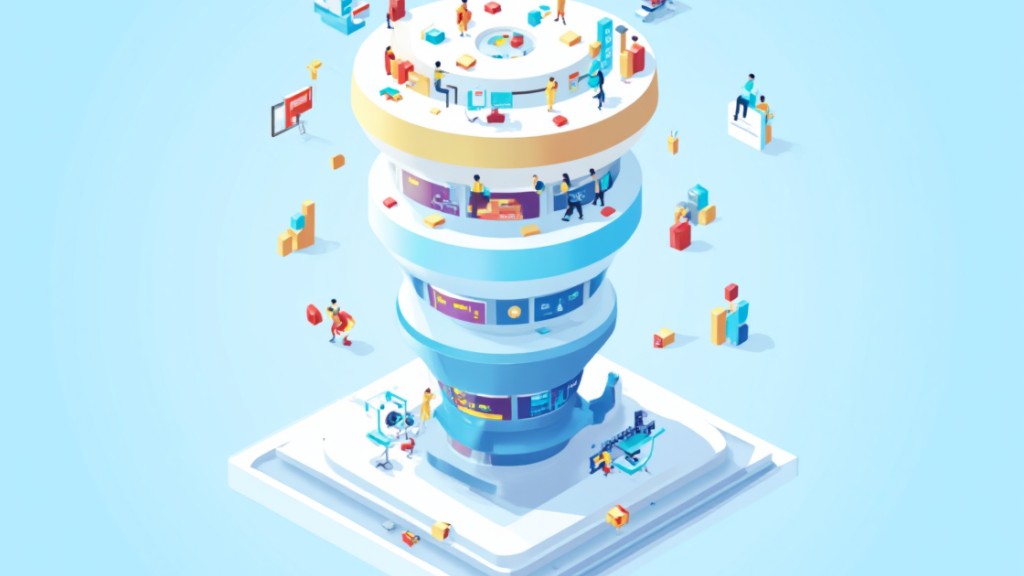
In the marketing funnel, comprehension of the stages is essential for effective strategy development.
You’ll start with the awareness stage, where your goal is to attract a broad audience and inform them about your brand.
As you move toward conversion strategies, you’ll focus on removing obstacles and encouraging potential customers to make a purchase, ensuring a smooth changeover through the funnel.
Awareness Stage Overview
The awareness stage of the marketing funnel marks the significant first interaction potential customers have with a brand, where the primary goal is to educate them about available products or services during piquing their interest.
In this stage, effective top of funnel marketing tactics are vital. Consider these key strategies:
- Search Engine Optimization (SEO): Improves visibility on search engines.
- Content Creation: Offers informative articles, which 70% of buyers prefer over ads.
- Social Media Marketing: Engages a broad audience and drives traffic.
Conversion Stage Strategies
As you move into the conversion stage of the marketing funnel, it’s important to focus on strategies that not just encourage prospects to finalize their purchases but also address any lingering objections they may have.
Implement marketing funnel tactics like limited-time offers and free trials to create urgency, persuading prospects to act. Clear and persuasive content that showcases your product’s unique value propositions is significant.
Personalized follow-up communications, such as customized emails or targeted ads, can effectively remind prospects of their interest and reinforce their decision-making.
Benefits of Utilizing a Marketing Funnel
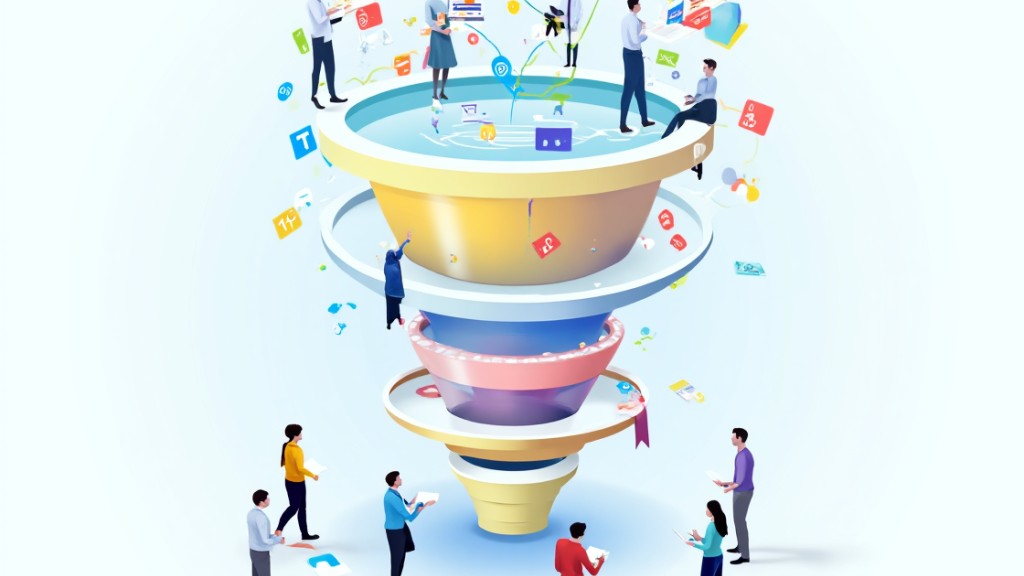
Utilizing a marketing funnel improves your targeted marketing efforts and boosts conversion rates.
By structuring the customer path, you can tailor content that resonates with your audience at every stage, which eventually increases engagement.
With better insights into customer behavior, you can identify drop-off points and adjust your strategies, leading to more effective campaigns and higher returns on investment.
Enhanced Targeted Marketing
Marketing funnels greatly improve targeted marketing efforts by breaking down the customer experience into distinct stages, which allows you to customize your messaging and strategies to match specific customer needs and behaviors.
Comprehending the marketing funnel meaning helps you develop effective campaigns. Here are some key benefits of utilizing a brand funnel:
- Improved personalization: You can deliver customized content at each stage of the awareness funnel, nurturing deeper customer relationships.
- Identifying drop-off points: By analyzing the content marketing funnel, you can pinpoint areas where customers lose interest, enabling targeted improvements.
- Predictive sales forecasting: A structured approach provides insight into potential revenue based on audience engagement at each funnel stage, optimizing your overall strategy.
Utilizing these insights can greatly improve your marketing ROI.
Improved Conversion Rates
Creating an effective marketing funnel can greatly boost your conversion rates by guiding potential customers through a structured decision-making process.
Comprehending what’s the awareness stage of the marketing funnel helps you tailor your approach. By addressing the needs of prospects at the top of funnel, middle funnel, and low funnel stages, you improve engagement and drive sales.
Companies excelling in funnel performance marketing see a 15-20% increase in ROI, while personalized content can lead to a 760% revenue increase.
Furthermore, focusing on lead nurturing generates 50% more sales-ready leads and shortens sales cycles.
In the end, using a marketing purchase funnel not only converts prospects efficiently but also promotes customer retention, increasing their lifetime value.
How to Build an Effective Marketing Funnel
Building an effective marketing funnel involves several key steps that align with your business goals and customer needs. Start by defining clear objectives for each stage:
- Top of the Funnel (TOFU): Attract potential customers with engaging content that addresses their pain points.
- Middle of the Funnel (MOFU): Utilize mid-funnel marketing tactics such as lead nurturing campaigns and personalized emails to build relationships.
- Bottom of the Funnel (BOFU): Focus on conversion strategies, guaranteeing your sales team targets high-quality leads.
To make a marketing funnel work, implement marketing automation tools to track leads efficiently.
Use lead scoring systems to prioritize prospects based on their engagement levels. Regularly analyze performance metrics like conversion rates and customer feedback to identify bottlenecks.
Tailor your content marketing sales funnel to specific customer needs, as segmented campaigns can greatly improve revenue.
This structured approach guarantees a streamlined funnel marketing strategy, driving better results.
Common Challenges in Marketing Funnels

During traversing the intricacies of marketing funnels, many businesses encounter a range of common challenges that can hinder their success.
One major issue is high drop-off rates, with nearly 70% of leads failing to convert at various stages. This indicates a pressing need for improved engagement strategies.
Furthermore, the lack of personalized content can deter potential customers, as 71% of consumers expect individualized experiences, leading to decreased interest and trust in your brand.
Ineffective lead scoring also plays an essential role; businesses that implement lead scoring can see a 20% increase in sales opportunities.
In addition, many marketers struggle with integrating tools for tracking and analyzing funnel performance, which can result in missed optimization opportunities.
Finally, neglecting the post-purchase experience can lead to customer churn, as retaining existing customers is often more cost-effective than acquiring new ones, greatly impacting overall profitability.
Measuring Success in Your Marketing Funnel
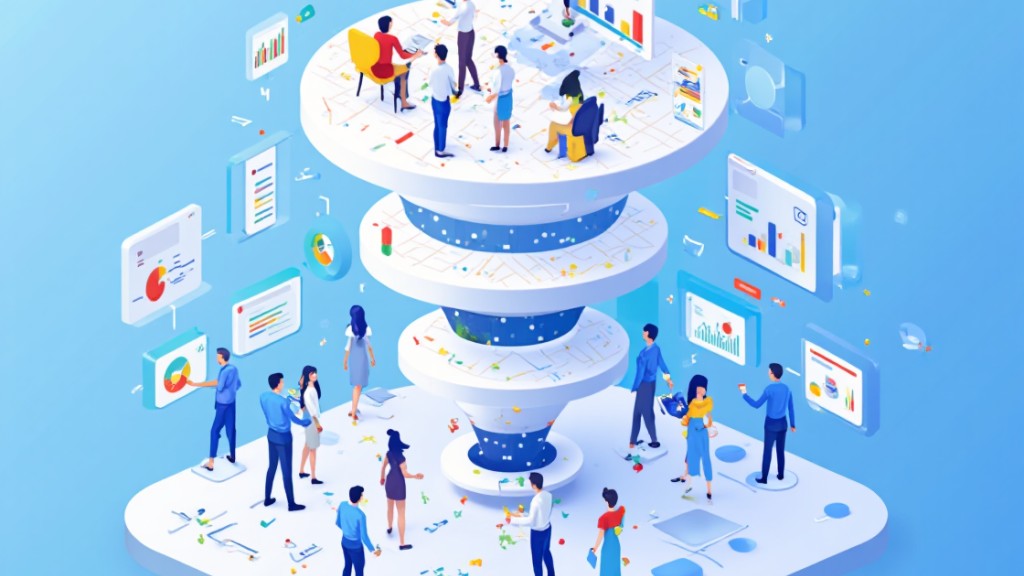
To effectively measure success in your marketing funnel, you need to track key performance indicators (KPIs) at each stage of the customer experience. This funnel approach helps you understand how well your strategies are working.
Focus on these crucial metrics:
- Traffic and Engagement: Measure awareness and initial interest, especially through marketing funnel social media.
- Conversion Rates: Analyze mid-funnel marketing efforts to see how many leads move to decision-making.
- Customer Lifetime Value (CLV): Assess retention by calculating the total revenue generated from a customer over time.
Regularly reviewing these KPIs allows you to identify drop-off points and areas for improvement.
Companies that excel at lead nurturing generate 50% more sales-ready leads at 33% lower costs, which demonstrates the significance of measuring success in your marketing funnel.
Frequently Asked Questions

What Is a Marketing Funnel and Why Is It Important?
A marketing funnel is a model that illustrates a customer’s path from initial awareness to making a purchase and beyond.
It’s essential as it helps you understand how potential customers interact with your brand at each stage. By analyzing the funnel, you can identify where you’re losing prospects and implement strategies to improve engagement.
This optimization not just increases conversions but likewise boosts customer loyalty, in the end driving growth for your business.
What Is the Main Idea Behind the Marketing Funnel?
The main idea behind the marketing funnel is to visualize and understand the customer experience from initial awareness to final purchase.
Each stage—awareness, consideration, and decision—represents a different phase in a prospect’s path. By analyzing this process, you can tailor your marketing strategies to meet specific customer needs at each stage.
This approach helps identify where potential customers drop off, allowing you to optimize efforts and improve conversion rates effectively.
What Is the 3 Funnel Strategy?
The 3 Funnel Strategy consists of three key stages: Top of Funnel (TOFU), Middle of Funnel (MOFU), and Bottom of Funnel (BOFU).
In TOFU, you generate awareness through SEO and content marketing.
During MOFU, you nurture leads with personalized content to build trust.
Finally, in BOFU, you focus on conversions using direct sales tactics like free trials or discounts.
This structured approach can improve your marketing effectiveness and boost ROI considerably.
What Is Funnel Analysis and Why Is It Important?
Funnel analysis involves evaluating each stage of your marketing funnel to identify where potential customers drop off.
It’s crucial since it helps you optimize the customer experience, from initial awareness to final conversion.
By tracking key performance indicators, you can discover effective marketing strategies and allocate resources more efficiently.
Regularly reviewing funnel performance as well allows you to improve customer retention, increase lifetime value, and in the end drive long-term growth for your business.
Conclusion

In summary, grasping marketing funnels is crucial for optimizing your customer pathway from awareness to conversion. By recognizing the stages—TOFU, MOFU, and BOFU—you can tailor your strategies to meet the specific needs of potential customers. This approach not just boosts engagement but additionally improves conversion rates and drives revenue growth. By effectively building and managing your marketing funnel, you can overcome common challenges and measure success, ensuring your business thrives in a competitive environment.
Image via Google Gemini