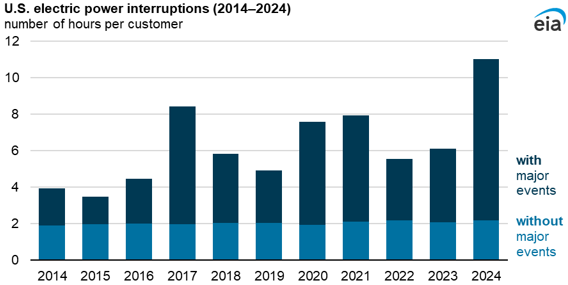
U.S. electricity customers faced significant disruptions in 2024, experiencing an average of 11 hours of power interruptions—nearly double the annual average of the preceding decade. Major weather events, including Hurricanes Beryl, Helene, and Milton, were responsible for approximately 80% of these outages. As small business owners, it’s essential to understand how power reliability impacts operations and what steps you can take to mitigate risks.
According to the latest Electric Power Annual 2024 report from the U.S. Energy Information Administration (EIA), interruptions attributed to severe weather events averaged nearly nine hours in 2024. “Service interruptions caused by these major events have become increasingly frequent. This puts considerable strain on both residential and small business customers,” highlighted an EIA analyst.
While severe storms accounted for the majority of outages, routine interruptions still averaged about two hours per year. Utilities differentiate these interruptions based on their causes, which include extreme weather, vegetation interference, and operational issues. This distinction helps in assessing risks and anticipating future service reliability.
The System Average Interruption Duration Index (SAIDI) and System Average Interruption Frequency Index (SAIFI) are crucial metrics used to evaluate service reliability. SAIDI measures the total duration of non-momentary power interruptions experienced by the average customer over a year, while SAIFI counts the frequency of these interruptions. Understanding these metrics allows small business owners to gauge the reliability of their local power supply.
Regions that suffered most from outages in 2024 primarily faced significant weather challenges. For instance, Hurricane Beryl impacted 2.6 million customers in Texas, while Hurricane Helene left 5.9 million customers across multiple states, with South Carolina alone affected by 1.2 million outages. South Carolina topped the list for the longest service interruptions, averaging nearly 53 hours, predominantly due to damage from the hurricanes. Conversely, businesses in states like Arizona and Massachusetts experienced minimal disruptions, averaging less than two hours of service interruptions.
The impact of these outages is particularly pronounced for small businesses that rely heavily on consistent power supply for daily operations. Business owners need to consider the implications of these statistics. For example, in areas frequently affected by severe weather, it may be prudent to invest in backup power solutions such as generators or uninterruptible power supplies (UPS).
Moreover, proactive measures such as engaging with local utility companies to understand reliability metrics can also be advantageous. Knowing the frequency and duration of outages can help businesses plan effectively—for example, scheduling critical operations during less prone periods.
Challenges also arise from variability in service interruptions across different states. In Hawaii, customers experienced the highest frequency of outages, averaging 4.4 interruptions in 2024. These issues stem from factors like adverse weather conditions and unexpected outages at oil-fired plants. For Hawaii’s small business owners, this means heightened vigilance regarding inventory management, particularly in sectors sensitive to electricity costs or those that rely on electronic systems.
States like Maine and Vermont also reported more frequent outages attributed to tree damage from storms, while others like South Dakota and Illinois recorded fewer than one power interruption annually. Understanding local conditions is vital for small business owners who must devise adaptive strategies suited to their specific circumstances.
The EIA report serves as a critical reminder of the importance of reliable electricity, particularly for small businesses navigating the complexities of operational continuity. As the landscape of power reliability continues to evolve, staying informed and taking proactive steps can help mitigate the risks that power interruptions pose.
For an in-depth exploration of these findings, refer to the original report at EIA. Understanding your local utility’s service reliability metrics could be pivotal in ensuring that your business can weather the storms—figuratively and literally.
Image Via US Energy