Recent data from the U.S. Energy Information Administration (EIA) reveals a significant shift in indoor lighting trends among American households, presenting both opportunities and challenges for small business owners in the residential energy and home improvement sectors.
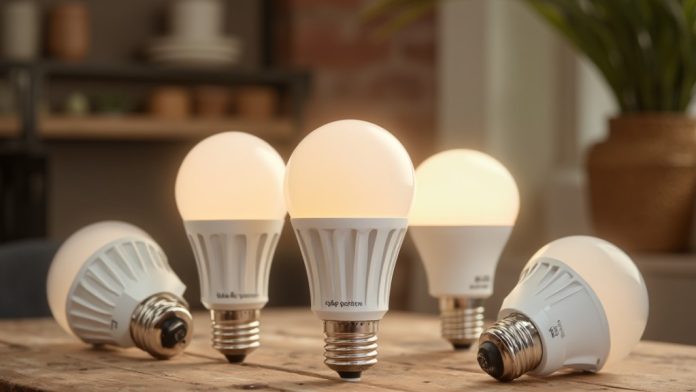
According to the latest Residential Energy Consumption Survey (RECS), a remarkable 90% of U.S. households now utilize light-emitting diode (LED) bulbs for their indoor lighting. More than one-third (37%) of homes rely exclusively on LED bulbs, marking a significant increase from just 4% in 2015. In stark contrast, traditional incandescent and halogen bulbs account for only 5% of households, while compact fluorescent lamps (CFL) are used by a mere 2%.
This shift toward LED bulbs is not merely a passing trend; it reflects a growing consumer preference for energy-efficient solutions. Small business owners should recognize that this increasing adoption of LED technology creates a favorable market for products that complement or utilize advanced LED lighting systems.
As homes evolve with new energy-efficient technologies, the characteristics of the households embracing these changes also vary. Households in single-family detached homes show the highest affinity for LEDs, with 65% using them for most or all their indoor lighting. Meanwhile, apartments and mobile homes lag behind with adoption rates of 57% and 56%, respectively, suggesting a potential target market for businesses looking to promote energy-efficient lighting options in these environments.
LED usage also extends beyond indoor applications. Approximately 77% of the 58 million homes reported using outdoor lighting throughout the night have adopted at least one LED bulb, which underscores the versatility and efficiency that LED technology offers. This presents an opportunity for small businesses engaged in landscaping or outdoor lighting fixtures, as consumers increasingly seek to enhance their outdoor environments with energy-efficient solutions.
Moreover, the intersection of home automation and lighting is growing. About 47 million households—or 36%—have at least one smart speaker, with nearly 14 million utilizing these devices to control their lighting systems. This integration of smart technology into lighting solutions creates additional avenues for small business owners, particularly those in the home automation sector or retailing smart home products.
However, challenges persist. Older homes, particularly those built prior to 2020, are less likely to adopt LED technology, indicating a potential gap in the market for businesses that focus on retrofitting lighting in these residences. While businesses can capitalize on the growing trend, they may face hurdles in changing consumer mindsets and addressing the needs of homeowners resistant to adopting newer technologies.
The continuous trend towards energy efficiency, as highlighted by the declining usage of CFLs from 32% in 2015 to just 7% in 2024, signals a broader shift in consumer attitude towards sustainability and cost-effectiveness. Business owners can leverage this momentum by emphasizing the long-term savings that LED lighting can offer—both in terms of energy costs and lifespan.
Looking ahead, the EIA’s ongoing RECS will continue to deliver vital insights, including information on energy use related to heating, air conditioning, and appliances, which will further inform small business strategies as these reports evolve. Anticipated releases in spring 2027 will provide even deeper insights into consumer preferences and behaviors.
In this rapidly changing landscape of residential energy consumption, small business owners must stay alert to emerging trends and technologies. The rise of LEDs is just one aspect of a larger movement toward energy-efficient solutions, and those who adapt their offerings accordingly will be well-positioned to meet the needs of today’s eco-conscious consumers.
To explore the complete findings of the EIA’s survey, visit the original post here.
Image Via BizSugar