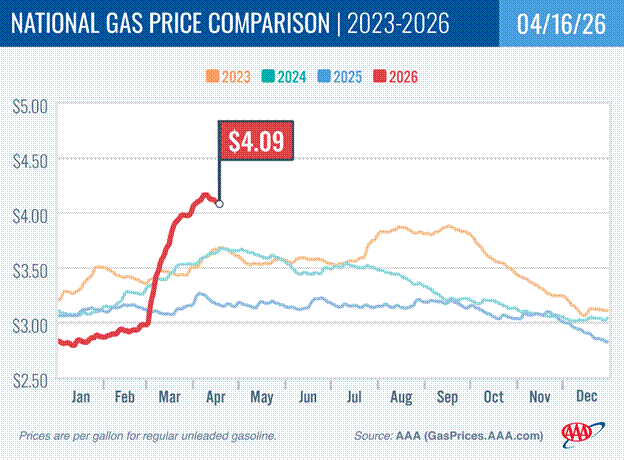
Gas prices have seen a slight dip recently, offering reprieve to small business owners who rely on transportation for their operations. The national average for a gallon of regular gasoline has decreased by 7 cents over the past week, now sitting at $4.09. This decrease comes amid a fragile calm following the announcement of a two-week ceasefire between the U.S. and Iran. However, tensions in the region remain palpable, as maritime traffic in the strategically crucial Strait of Hormuz is subdued.
Year-over-year, this price point reflects a significant increase. Just a year ago, the average was $3.169. In comparison to a month ago, when prices averaged $3.718, this week still marks a notable rise. For small business owners who manage budgets that include transportation costs, these fluctuations can directly impact their bottom line.
Data from the Energy Information Administration (EIA) reveals an uptick in gasoline demand last week, rising from 8.56 million barrels per day to 9.08 million. The total domestic gasoline supply has also contracted, dropping from 239.3 million barrels to 232.9 million. Despite the decline in supply, gasoline production increased to an average of 9.8 million barrels per day, suggesting that local production is responding to rising demand amid constrained supply.
For those considering the broader context, it’s important to note the state of the crude oil market. West Texas Intermediate (WTI) closed at $91.29 per barrel, a slight rise but stable overall. The EIA noted a decrease in crude oil inventories by 0.9 million barrels, currently at 463.8 million barrels—about 1% above the five-year average for this time of year.
Small business owners might find this information essential when planning logistics and transportation strategies. Fluctuating fuel prices can lead to higher operational costs, but they can also offer opportunities. Knowing when prices are decreasing could inform decisions on when to schedule deliveries or make large purchases requiring transportation.
Electric vehicle (EV) enthusiasts will also find consistent pricing at public charging stations, which remains steady at 41 cents per kilowatt hour. However, the dynamics around fuel pricing may influence small businesses considering EV investments for their fleets. Lower gas prices could provide temporary relief but might also delay the transition to greener options.
To put the current fuel landscape into perspective, the most expensive gasoline markets are concentrated in states such as California ($5.86) and Hawaii ($5.65), while more budget-friendly options can be found in states like Oklahoma ($3.43) and Kansas ($3.50). Such regional disparities could encourage small business owners to optimize routes based on fuel costs, especially when operating multi-state expeditions.
The cost differences extend to electric vehicle charging as well. The most expensive states for public charging include West Virginia (53 cents) and Hawaii (51 cents), while Kansas (29 cents) and Missouri (32 cents) offer considerably lower rates. This information is crucial for small businesses assessing the feasibility of incorporating EVs into their fleets, especially in high-cost regions where electricity pricing could further strain budgets.
For small business owners eager to stay informed on evolving fuel prices, a valuable resource is the AAA TripTik Travel planner, which offers real-time insights into gas and electric charging prices along various routes. Staying updated on these costs allows business leaders to make informed decisions about operational logistics.
Ultimately, while the recent drop in gas prices comes as a small relief, the broader landscape remains characterized by volatility. Navigating these changes requires vigilance and proactive planning. Business owners should factor in not only current prices but also the long-term implications of transitioning toward more sustainable fuel options as market conditions shift. Adapting to these changes now can foster resilience in the long run, positioning small businesses to thrive despite external pressures. For further details, you can access the original press release here.
Image Via Gas Price