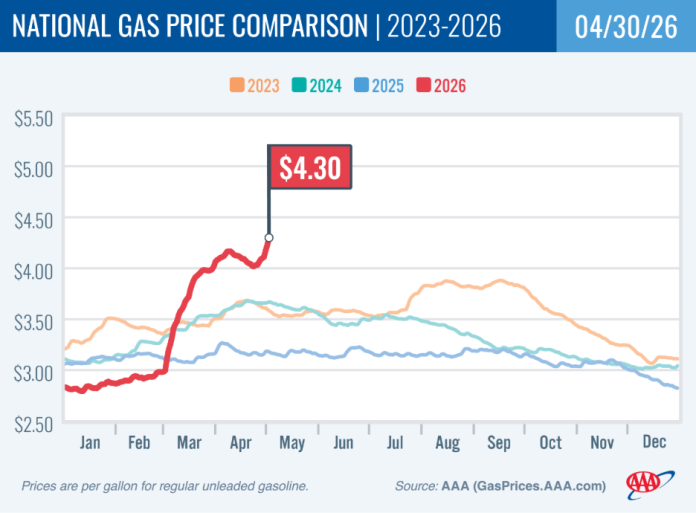
Gas prices are making a significant jump, with the national average rising by 27 cents just last week. Currently sitting at $4.30 per gallon, this spike reflects a broader trend, as prices have surged by $1.12 compared to the same time last year. The increase in the cost of oil, now exceeding $100 per barrel, and the uncertainty surrounding the reopening of the Strait of Hormuz are the driving factors behind this shift, marking the highest gasoline prices seen in four years.
For small business owners, especially those reliant on transportation, the rising costs of gas pose both challenges and opportunities. With gasoline prices expected to remain elevated, companies must adjust their budgeting strategies to mitigate impacts on their bottom lines.
According to the Energy Information Administration (EIA), gasoline demand has risen from 9.05 million barrels per day to 9.10 million, while total domestic gasoline supply decreased from 228.4 million barrels to 222.3 million. This supply-demand imbalance indicates that businesses should prepare for ongoing price fluctuations.
The implications of rising gas prices extend beyond just fuel costs. Increased transportation expenses can drive up operational costs across various sectors, from logistics providers to food delivery services. Business owners will need to evaluate how they pass these costs onto customers or absorb them to remain competitive.
In the oil markets, West Texas Intermediate (WTI) has experienced a notable increase, closing at $106.88 per barrel. This is paired with a decline in U.S. crude oil inventories, which decreased by 6.2 million barrels from the previous week, suggesting further potential price pressures. Small business owners should monitor these developments closely, as they can influence pricing strategies in real time, making adaptability essential.
Electric vehicle (EV) costs are also rising, albeit modestly. The average price per kilowatt-hour at public charging stations has increased by one cent to 41 cents, which could affect businesses transitioning to electric fleets. While this may be a small adjustment, it highlights a larger trend of costs rising across the board, indicating that all vehicle users should remain vigilant and proactive.
Investing in energy-efficient practices can also serve as a long-term strategy for small businesses. For example, adopting technology that optimizes fuel consumption or implementing routing software can ease some financial burdens associated with rising gas prices. Furthermore, supply chain adjustments may help mitigate costs, allowing businesses to explore alternative suppliers or methods of delivery.
However, small businesses must also consider the potential backlash from consumers facing higher prices. While some businesses may find customers willing to pay more for services, others may experience pushback, necessitating a careful balance between pricing and customer loyalty.
Regional disparities add another layer to the complexity of rising costs. Currently, states like California and Hawaii face the highest gas prices, while states such as Oklahoma and Kansas enjoy lower rates. This variance means that businesses operating nationally or across multiple states must adapt their strategies based on local market conditions, possibly leading to differentiated pricing strategies or product offerings.
To aid in planning and budgeting, drivers can utilize the AAA TripTik Travel Planner, which helps find current prices for gas and electric charging stations along their routes. Such tools can prove invaluable for small businesses managing logistics and travel, allowing for more efficient resource allocation.
Business owners must stay informed about these market dynamics as they navigate the evolving landscape of fuel prices. The current situation serves as a reminder of the ongoing volatility in energy markets and the necessity for proactive planning and strategic adjustments in response to rising costs.
Image Via Gas Price