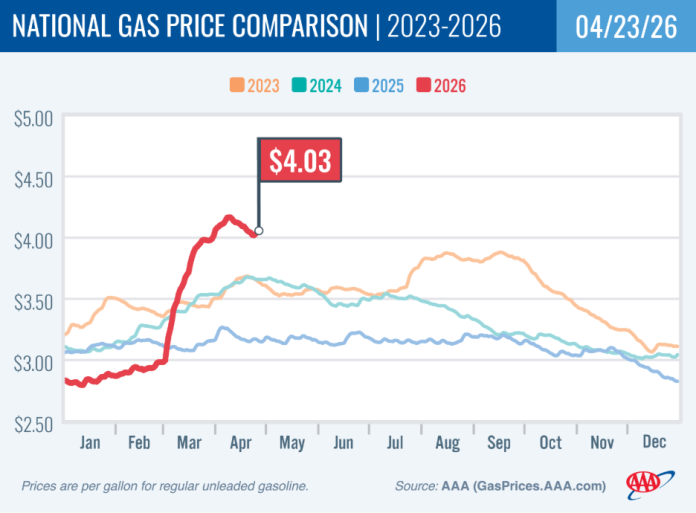
Drivers across the nation are experiencing a slight reprieve at the pump as the national average price for gasoline has dipped by 6 cents, settling at $4.03 per gallon. This decline comes as crude oil prices drop below $100 per barrel, providing some much-needed relief for consumers. However, small business owners, especially those relying heavily on transportation, should remain watchful, as uncertainties loom in the oil market.
For context, today’s average gas price is notable for being the highest recorded on April 23 since 2022, when it was slightly higher at $4.11. This uptick in historical data indicates ongoing volatility in fuel costs, which can directly impact operating expenses for small businesses that depend on transport for deliveries or client services.
Recent data from the Energy Information Administration (EIA) reveals a small decrease in gasoline demand, which has fallen from 9.08 million barrels per day to 9.05 million. Concurrently, domestic gasoline supply has also decreased, with figures dropping from 232.9 million barrels to 228.4 million. Despite this, increased gasoline production averaging 10.1 million barrels per day has kept freight vehicles operational.
Quotes from industry experts highlight the current market’s complexities. As one analyst noted, "The dip in prices is a welcome change, but with the situation in the Strait of Hormuz remaining unstable, we can’t predict how long this will last." This unpredictability can be a significant factor for small business owners, who often operate on tight margins.
One substantial aspect of the current fuel prices is how geographic location affects costs. For example, in areas like California, gasoline is pushing a staggering $5.84 per gallon, whereas states like Oklahoma enjoy much lower prices at around $3.40. This disparity means that local economies could feel the impacts of fluctuating gas prices differently. Depending on the business’s location, owners may need to adjust pricing strategies or budget forecasting to accommodate regional fuel cost variations.
Electric vehicle (EV) users are also experiencing minor changes, as the national average price for public EV charging has dipped to 40 cents per kilowatt hour. Small businesses considering a transition to electric fleets might view this gradual decrease as an encouraging sign, albeit with the understanding that variability in electricity rates also exists across states.
One possible obstacle for small businesses is the broader implications of fuel price volatility. Should oil prices rebound, any cost savings currently enjoyed could quickly evaporate. It’s advisable for business owners to develop contingency plans, accounting for potential fuel increases. Keeping abreast of market trends and diversifying delivery methods—whether through promoting remote services or exploring partnerships with delivery services—might mitigate reliance on fluctuating fuel costs.
Additionally, digital tools such as the AAA TripTik Travel planner can help owners and operators find the best current gas and EV charging prices along their routes. Utilizing technology can yield significant savings and make logistics more efficient.
As businesses gear up for the busy summer season, proactive measures will be crucial. Factoring potential fuel expenses into pricing strategies or utilizing alternative routes will empower small business owners to navigate a landscape rife with uncertainties.
With a careful eye on the market trends and strategic planning in their operations, small business owners can turn this momentary relief into a sustainable advantage, while also preparing for any sudden changes that may arise due to geopolitical tensions or other market dynamics. More detailed analysis and ongoing updates can be found in the original press release here.
Image Via Gas Price