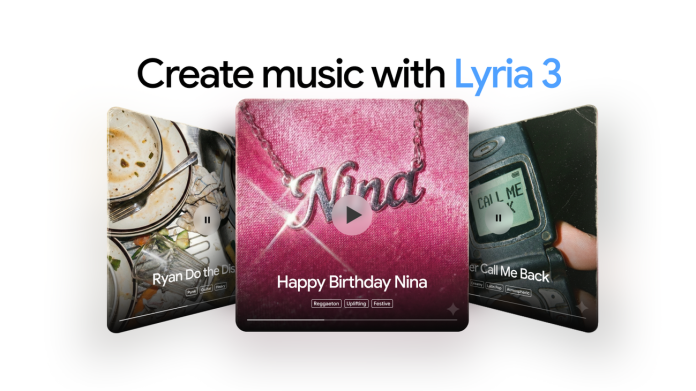
Small business owners continually seek innovative tools to enhance creativity and efficiency, and Google’s recent advancements in its Gemini app may just provide the solution many have been looking for. The company has introduced new audio verification capabilities that not only streamline content creation but also ensure compliance with copyright laws—an essential consideration for entrepreneurs in diverse industries.
Embedded within all tracks generated in the Gemini app is SynthID, a cutting-edge, imperceptible watermark designed to identify Google AI-generated content. Business owners now have added verification capabilities, expanding beyond just images and videos to include audio. With a simple upload of a file, users can inquire whether it was generated using Google AI. The Gemini app checks for SynthID, producing a reliable response to ensure content authenticity.
This feature could prove invaluable for small businesses that incorporate audio into their marketing strategies or content offerings. For instance, a local café might leverage custom audio tracks for social media promotion or create a unique ambiance for their customers. Alternatively, a fitness instructor could utilize custom music for classes, ensuring it aligns perfectly with their brand while sidestepping potential licensing issues.
Moreover, Lyria 3, the latest iteration of music generation technology in Gemini, emphasizes original expression rather than imitation. If a user provides a prompt referencing a specific artist, Gemini interprets this as creative inspiration and generates music that reflects a similar style or mood, rather than directly copying the artist’s work. This level of creative output allows small business owners to produce unique content tailored to their brand identity without the fear of intellectual property infringements.
“Since we first launched Lyria in 2023, we’ve sought to develop this technology responsibly in collaboration with the music community,” said a Google representative. “We’ve learned a lot through these collaborations and our experiments, and have been very mindful of copyright and partner agreements as we’ve trained Lyria 3.” This commitment to responsible development is crucial for small businesses that aim to cultivate a trustworthy brand image.
However, with innovation often comes challenges. While Google has established filters to check generated content against existing works, the company acknowledges that these measures may not be foolproof. Small business owners should remain vigilant and proactive in monitoring any output from the Gemini app, especially if they are leveraging generated music or audio. If a user suspects that a produced track could potentially violate intellectual property rights, Google provides a mechanism to report such content. Being proactive in this regard can save businesses from legal entanglements.
Access to Lyria 3 is available for users aged 18 and older in several languages, including English, German, Spanish, French, Hindi, Japanese, Korean, and Portuguese, with plans for broader language support. This feature rollout on desktop is complemented by mobile app availability in the coming days. Additionally, Google AI Plus, Pro, and Ultra subscribers enjoy higher usage limits, which may be of particular interest to businesses that rely heavily on audio content.
The overarching goal of this new functionality is to help entrepreneurs add a dynamic and personalized touch to their everyday operations. With creative tools that foster originality and compliance, small business owners can explore fresh opportunities, enhance customer engagement, and differentiate themselves in increasingly competitive markets.
As small business owners gear up to harness the creative spark of the Gemini app, it’s crucial to stay informed about best practices in content generation and rights management. For more information about these new features and to begin utilizing the Gemini app, visit gemini.google.com or check the original announcement here.
Image Via Gemini