In an era where remote work has reshaped the landscape of business communication, ensuring all team members feel included in discussions remains a significant challenge. Google has stepped up to tackle this issue with its innovative Google Beam platform, designed to enhance the quality and inclusivity of virtual meetings. The recent updates promise to transform how small business owners conduct meetings, making them more engaging and productive.
Google Beam combines cutting-edge technology with a user-friendly interface, addressing the common frustrations remote workers face. Traditional video conferencing often reduces participants to small boxes on a screen, which can create a disconnected atmosphere that stifles effective communication. According to Google, “Trying to read subtle emotions in a sea of tiny boxes may leave remote participants feeling like observers rather than engaged participants.” Google Beam aims to eradicate this disconnect by providing a more immersive experience.
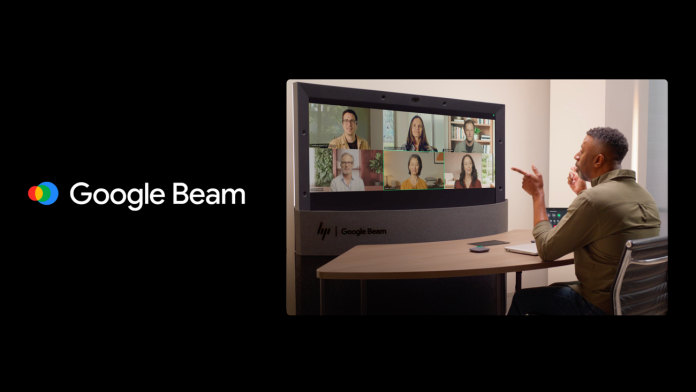
A key enhancement is the integration of HP Dimension’s immersive display, which allows participants joining from non-Beam devices to appear in their true size. This feature effectively simulates a real-world setting, positioning attendees as if they were physically gathered around a table. The result? A more natural and collaborative meeting environment that reflects traditional face-to-face interactions. Furthermore, spatial audio technology anchors each voice to the speaker’s position, making it easier to track who is contributing to the discussion—a feature that can significantly reduce confusion during group conversations.
The potential benefits for small business owners are substantial. Enhanced inclusivity can lead to a “50% stronger sense of social connection” and a “21% increase in reported ability to contribute to conversations,” as indicated by Google’s research findings. This transformation could be crucial for small teams that thrive on collaborative ideas and discussions. By ensuring that every team member feels engaged, Google Beam paves the way for richer exchanges and more innovative problem-solving.
In practical terms, small business owners could leverage these advancements to improve team dynamics and productivity. For example, a marketing team brainstorming a campaign could utilize Google Beam to interact more fluidly, giving everyone an equal opportunity to share ideas without the barriers posed by conventional video conferencing tools. This could potentially lead to more robust and diverse marketing strategies that resonate with a broader audience.
However, implementing new technology often comes with its share of challenges. Small business owners should consider a few critical factors before fully adopting Google Beam. First, they need to assess whether their current tech ecosystem, particularly if they primarily use Zoom or Google Workspace, can support the new platform seamlessly. The integration appears beneficial, yet the readiness of existing hardware and software should be evaluated to avoid disruptions.
Additionally, adopting a new platform requires staff training to maximize its features. While the technology itself is designed to be user-friendly, ensuring all team members are comfortable navigating the system will be pivotal for achieving the intended level of engagement and productivity. Business leaders should prepare to dedicate time and resources to facilitate this onboarding process.
Moreover, as with any new tool, there will be a period of adjustment. Some employees might prefer conventional methods while they acclimate to the immersive experience. Therefore, small business owners might want to implement a gradual transition plan, integrating Google Beam into their regular meetings alongside existing platforms until their teams feel fully confident in using the new system.
In summary, Google Beam represents a significant advancement in how businesses can engage their remote team members, promising a more connected and interactive meeting experience. As small business owners explore this innovative tool, understanding both the potential benefits and the necessary adjustments will be crucial in navigating the shift towards more dynamic virtual collaboration.
For further insights into the advancements of the Google Beam platform, visit the original blog post here.
Image Via Google Workspace