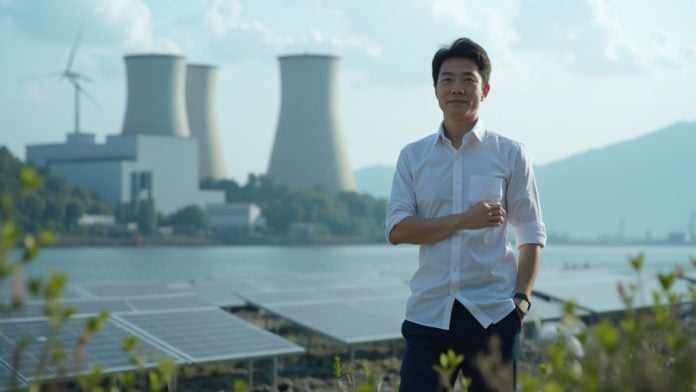
On February 9, 2026, Japan marked a significant milestone in its energy landscape by restarting Unit 6 of the Kashiwazaki-Kariwa Nuclear Power Station, the country’s largest nuclear facility. This development comes more than a decade after the unit was shut down following the catastrophic Fukushima disaster in 2011. As Unit 6 ramps up its operations, small business owners in Japan and beyond should take note of the potential implications for energy pricing, sustainability efforts, and market dynamics.
The restart of Unit 6, with a robust capacity of 1,356 megawatts (MW), is expected to diminish reliance on fossil fuels, primarily natural gas, which represented 33% of Japan’s electricity generation in 2024. According to Japanese government estimates, the operational unit could displace around 1.3 million tons of liquefied natural gas (LNG) annually, roughly equivalent to 62 billion cubic feet (Bcf) of natural gas imports. This shift could offer more stable pricing and energy availability for small business owners reliant on electricity.
With this positive trajectory, Japan now has 15 functioning nuclear reactors with a combined capacity of 33 gigawatts (GW). In 2024, the nation’s nuclear fleet produced approximately 83 terawatt-hours of electricity—accounting for around 9% of all power generated. As Unit 6 ramps up, it is projected to generate about 9,500 gigawatt-hours of electricity each year by mid-March. This consistent energy supply could alleviate some of the challenges small businesses face related to fluctuating electricity costs.
"By reintegrating nuclear power into our energy mix, we are not only advancing our fuel security but also addressing climate change," said Slade Johnson, a contributing analyst. The implications for small businesses looking to adopt more sustainable practices are immense. Increased nuclear output may allow businesses to transition to greener energy sources and potentially reduce their carbon footprints.
However, while the news is undoubtedly encouraging, there are potential challenges that small business owners should consider. Historically, nuclear energy has been fraught with public concern and regulatory hurdles following the Fukushima incident. Maintaining the public’s confidence in nuclear safety remains crucial for the successful expansion of Japan’s nuclear capabilities. Small business owners engaged in energy-intensive industries may need to navigate additional scrutiny or regulatory requirements in regions close to nuclear facilities, particularly regarding safety compliance.
In recent years, Japan’s import of LNG has decreased annually since 2017, thanks to the gradual return of nuclear power and growing contributions from renewable energy sources, particularly solar. For small businesses reliant on natural gas for heating or production, this evolving landscape may present both volatility and opportunity. While total LNG imports saw a slight decline—9 billion cubic feet per day (Bcf/d) in 2025, down from 11 Bcf/d in 2018—Japan continues to be one of the world’s largest LNG importers, second only to China.
Australia, Malaysia, Russia, and the United States led LNG exports to Japan from 2022 to 2025. Notably, imports from the United States dipped from 0.9 Bcf/d in 2024 to 0.6 Bcf/d in 2025, now comprising just 7% of total imports. Small businesses engaged in international trade should keep an eye on energy prices influenced by these changing supplier dynamics.
Looking ahead, Japan’s long-term energy policy anticipates that nuclear power will supply approximately 20% of total electricity generation by 2040, which would necessitate the operation of up to 30 reactors. Presently, Japan has 32 operable reactors, of which 15 are active, with the potential for more to be added as public sentiment evolves and regulatory approvals are secured.
For small business owners, these developments signify a dual opportunity and challenge: while nuclear energy can provide a more stable and cleaner energy source, the regulatory, safety, and supplier landscape will be critical to monitor closely. Engaging with these trends can empower business leaders to make informed decisions about energy usage and sustainability strategies that will ultimately serve their bottom line.
As Japan navigates its energy transition, small businesses must remain proactive, adapting their operations to leverage the increasing reliability of nuclear power while being mindful of the inherent risks. To stay updated, business leaders can refer back to insights from the U.S. Energy Information Administration’s detailed report at EIA’s Today in Energy.
Image Via BizSugar