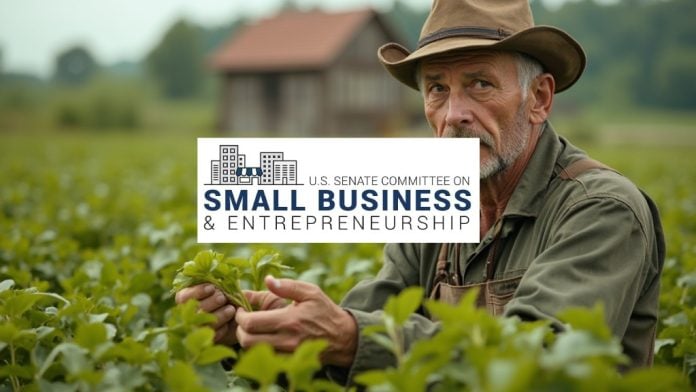
At a recent Small Business Committee hearing titled “Growing the Small Business Agricultural Economy,” Ranking Member Edward J. Markey (D-Mass.) spotlighted the precarious position of small agricultural businesses amid rising costs and regulatory challenges. The hearing featured critical testimony from local agricultural advocates who detailed not only the immediate threats posed by policy decisions but also the long-term implications for rural economies and small food producers.
Markey’s remarks reflected mounting concern over the Trump administration’s impacts on rural communities, emphasizing the detrimental effects of cuts to essential programs like SNAP and Local Food Purchase Assistance. He argued that these cuts exacerbate the already challenging conditions for small business owners in rural America, noting that many have been struggling with rising costs across health care, energy, and tariffs.
“Food is more than what we see on our plate—it is the labor of farmers and farmworkers, the health of our environment, and the cornerstone of growth for many rural economies,” Markey stated. His comments underscore a growing consensus that policy reform is necessary to prioritize small agricultural businesses that are crucial to maintaining local economies.
Erbin Crowell, Executive Director of Neighboring Food Co-op Association in Shelburne Falls, highlighted the broader impact of SNAP cuts, noting, “People with limited incomes have less money to spend on healthy food and groceries, which also means sales go down for food co-ops and local farmers.” His perspective offers a reminder that small businesses rely heavily on local support systems; when these systems falter, the ripple effects can threaten their viability.
Maria Moreira, Founder and Board President of World Farmers in Lancaster, echoed these sentiments, expressing urgency for reform. “Our farmers are aging, our shifting climate is imposing increasing threats… If we make smart investments in local and regional food purchasing, we can bring much-needed economic stability.” Moreira’s call for targeted investments highlights a powerful opportunity for small business owners to advocate for sustainable practices that not only aid their operations but also strengthen community welfare.
One legislative measure discussed during the hearing, the EFFECTIVE Food Procurement Act, recently introduced by Markey, aims to directly address these issues by urging the U.S. Department of Agriculture to make federal food purchasing more accessible to small and underserved producers. Currently, the government’s food purchasing programs are heavily influenced by large agricultural entities, leaving smaller operations at a competitive disadvantage. This act could serve as a pivotal reform for small business owners, offering them new pathways to secure contracts and bolster their customer base.
However, the benefits of this act are accompanied by practical considerations that small business owners should keep in mind. First, navigating federal programs often requires both time and knowledge, as regulatory environments can be complex and challenging to decode. Owners may need to invest in training or seek mentorship to effectively capitalize on new opportunities. Additionally, while the idea of prioritizing local and sustainable food procurement is appealing, potential increases in competition within local markets could lead to heightened pressure on prices.
In light of these challenges, small business owners can adopt a proactive approach by connecting with local advocacy groups and policymakers. Engaging with networks that focus on rural business affairs can provide crucial insights and support, enabling owners to navigate the evolving landscape more effectively.
Markey’s commitment to supporting small agricultural businesses has resonated well with local stakeholders. “We must address these issues by ensuring that small businesses are prioritized in federal programs,” he stated, echoing the sentiments of many small business owners who expect action from their representatives to mitigate growing pressures.
As small farmers and food businesses face uncertain futures due to policy changes, initiatives like the EFFECTIVE Food Procurement Act offer hope. With a concerted effort from various stakeholders, there is potential for revitalizing rural economies and ensuring that small agricultural operations not only survive but thrive.
For further details, you can view the original release from the Senate Committee on Small Business at this link.
Image Via BizSugar