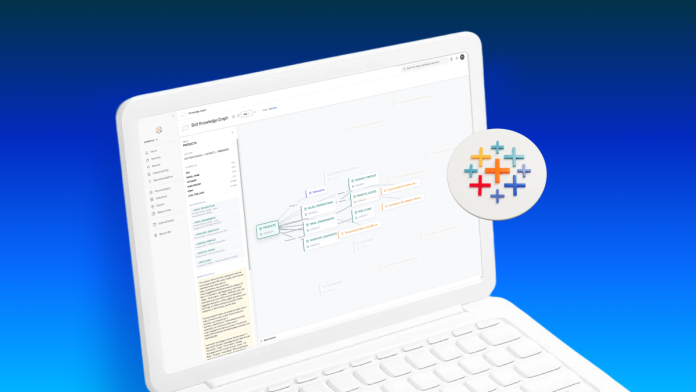
In an era where data is abundant but actionable insights remain elusive, Tableau is stepping up to redefine how small businesses can leverage analytics. The company recently introduced its Agentic Analytics Platform, a significant evolution that transforms raw data into contextual knowledge, enabling small business owners to drive autonomous decision-making with greater confidence and efficiency.
For over 20 years, Tableau has set the standard in data visualization, allowing organizations to interpret data through dashboards. However, as business environments grow more complex, the need to move beyond mere interpretation to proactive action has become essential. With the launch of this new platform, Tableau aims to shift how analytics serves small businesses, facilitating a more robust interaction with data through AI.
Mark Recher, General Manager of Tableau at Salesforce, states, "Seeing the truth is no longer enough. Organizations need to act on it instantly.” Central to this transformation is the platform’s Knowledge Engine, designed to integrate a decade of proven human-driven intelligence into a structured AI framework. Rather than relying on raw data alone, the platform draws upon 33 million semantic models, ensuring that AI agents understand "what it means" in the context of individual businesses.
This shift illuminates several key benefits for small business owners.
The Conversational Analytics feature enables users to interact with data using everyday language rather than complex queries. For instance, a supply chain manager can simply ask about fulfillment times and receive an immediate, detailed response—no technical expertise required. This democratization of data access makes it easier for teams across various functions to extract insights without burdening data specialists.
Moreover, the Headless Analytics functionality ensures that insights are embedded directly into the tools teams already use, such as Slack and Microsoft Teams, enhancing real-time decision-making. Imagine a regional sales director receiving proactive alerts about pipeline risks in their territory via a Slack notification, complete with actionable recommendations—all without needing to switch to another app.
However, with every advancement come potential challenges. Smaller businesses often operate with limited resources and may grapple with the implementation of such a comprehensive analytics system. Ensuring that staff are adequately trained to utilize the platform to its fullest potential is essential for maximizing its benefits. Furthermore, as businesses rely more on AI-driven insights, governance becomes increasingly critical. The Agentic Analytics Command Center serves as a centralized hub for monitoring AI activity, helping ensure compliance with company policies and protecting sensitive information while providing the flexibility and speed needed for agile business decisions.
The evolution of Tableau positions analysts not merely as data visualizers but as architects of knowledge, with a role that is more strategic than ever. Tableau’s decision engine closes the loop between insights and action, automating responses to potential issues. For instance, if customer satisfaction declines, Tableau can automatically create a case in Salesforce and assign it to the relevant team member—preemptively addressing potential crises.
Tableau’s new platform is reportedly already helping various organizations reclaim thousands of hours previously lost to manual processes. Demetri Salvaggio, VP of Customer Experience & Operations at Engine, notes, "Tableau is the observability layer for our agents… giving us instant, governed visibility into what our agents are doing and what they’re driving."
Real-world implications abound, especially for small business sectors like retail, healthcare, and customer service, where timely decisions can significantly impact outcomes. With features slated to roll out—such as enhanced conversational analytics and new integrations for commonly used platforms—the timing is ripe for consideration.
Available now, the Agentic Analytics Platform positions Tableau to be not just another analytics tool, but a transformative approach to enterprise decision-making. As small business owners navigate a landscape increasingly influenced by AI, adapting to these innovations could be a game-changer in achieving sustainable growth.
For more insights on this new platform, visit the original news release at Salesforce.
Ultimately, as small business owners evaluate their analytics capabilities, the shift towards an agentic approach represents both a beneficial opportunity and a call to adapt in a changing digital landscape.
Image Via Salesforce