
In today’s competitive manufacturing environment, implementing innovative process improvements is crucial for success. By adopting strategies like lean manufacturing, Six Sigma, and Just-In-Time production, you can streamline workflows, improve quality, and align supply with demand. Furthermore, integrating automation and digital tools can greatly boost efficiency and collaboration. These methods not merely reduce costs but also cultivate a culture of continuous improvement. Explore how these approaches can transform your operations and position you for future growth.
Key Takeaways

- Implement value stream mapping to visualize workflows and identify areas to eliminate waste, enhancing efficiency and reducing lead times.
- Adopt Six Sigma methodologies to systematically reduce defects and improve product quality using the DMAIC framework.
- Utilize Just-In-Time (JIT) production to minimize inventory costs and enhance cash flow by producing goods only as needed.
- Incorporate IoT sensors for real-time monitoring of processes, enabling quick identification of bottlenecks and inefficiencies.
- Leverage 3D printing technology for customized production, reducing material waste and enabling innovative designs that enhance product functionality.
Lean Manufacturing: Streamlining Workflows and Eliminating Waste
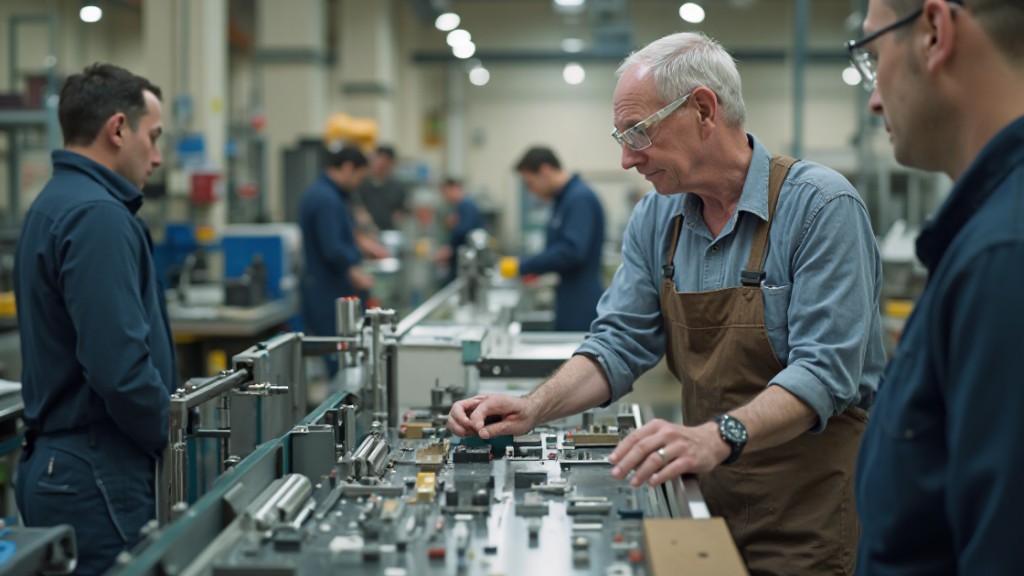
Lean manufacturing is a systematic approach intended to improve efficiency by streamlining workflows and eliminating waste. By focusing on seven categories of waste—overproduction, waiting, transport, over-processing, inventory, motion, and defects—you can improve productivity and customer value.
One effective method to achieve manufacturing process improvement is value stream mapping, which helps visualize and analyze waste in your operations. This leads to more efficient workflows and shorter lead times.
Embracing continuous improvement in manufacturing, or Kaizen, encourages all employees to participate in daily problem-solving, nurturing a culture of incremental enhancements.
Furthermore, Just-In-Time (JIT) production aligns your manufacturing schedules with actual customer demand, reducing excess inventory and improving cash flow.
Lean principles likewise promote a respectful workplace culture, empowering employees to share insights and suggest manufacturing improvement ideas, ultimately driving operational excellence and employee satisfaction throughout your organization.
Six Sigma: Reducing Defects and Enhancing Quality

In today’s competitive manufacturing environment, organizations are increasingly turning to Six Sigma as a method to improve quality and minimize defects.
This data-driven approach aims to reduce defects to fewer than 3.4 per million opportunities, ensuring high product quality and consistency.
Utilizing the DMAIC framework—Define, Measure, Analyze, Improve, Control—Six Sigma helps you systematically identify and eliminate causes of defects, providing numerous manufacturing process improvement examples.
Just-In-Time (JIT) Production: Aligning Supply With Demand

Just-In-Time (JIT) production focuses on demand-driven inventory management, producing goods only as they’re needed.
By minimizing holding costs and reducing excess stock, you can improve operational efficiency and response times.
This approach not only streamlines workflows but additionally improves cash flow, allowing you to invest in other areas of your business.
Demand-Driven Inventory Management
To effectively align supply with demand, many manufacturers adopt a Demand-Driven Inventory Management approach known as Just-In-Time (JIT) production.
JIT minimizes inventory costs by synchronizing production schedules with actual customer demand, which greatly reduces excess stock and waste. By implementing JIT, you can boost cash flow since funds aren’t tied up in surplus inventory.
This approach often leads to reduced lead times, improving your responsiveness to market fluctuations. Furthermore, JIT encourages collaboration with suppliers, ensuring timely deliveries and avoiding production delays.
As you focus on continuous improvement ideas for manufacturing, consider how JIT can facilitate smaller production runs, allowing for rapid identification and correction of defects, ultimately driving manufacturing enhancements throughout your operations.
Reduced Holding Costs
Implementing a Demand-Driven Inventory Management strategy can greatly reduce holding costs for manufacturers.
Just-In-Time (JIT) production aligns your inventory levels with actual customer demand, minimizing excess stock and reducing storage expenses. Companies using JIT often see up to a 30% decrease in inventory costs, as they no longer need large warehouses filled with unsold goods.
This approach furthermore cultivates stronger relationships with suppliers, resulting in lead times cut by 50%. With funds freed from unnecessary inventory, you can reinvest in growth opportunities.
In addition, leveraging technology like IoT and real-time data analytics can improve overall operational efficiency by 20%, streamlining processes as well as further reducing waste.
Adopting JIT is a smart move for improving your bottom line.
Automation and Robotics: Increasing Efficiency and Reducing Errors
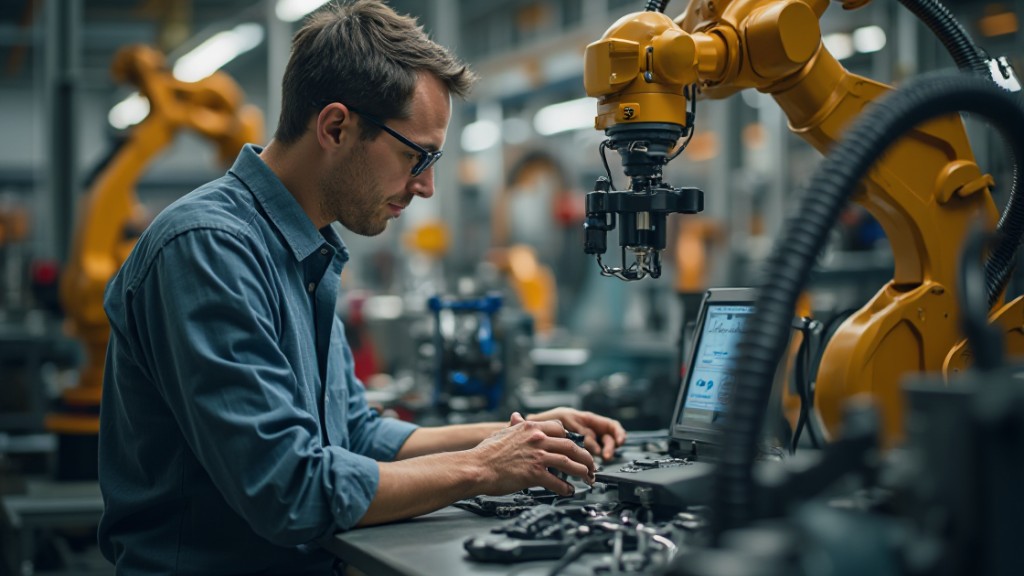
In today’s manufacturing environment, automation and robotics play an essential role in streamlining repetitive tasks, greatly reducing human error and enhancing overall efficiency.
By implementing robotic process automation, you can free up valuable human resources for more strategic roles as well as improving production flexibility.
With tools like collaborative robots and IoT devices, you’re not just boosting productivity but furthermore ensuring a safer and more effective working environment.
Streamlining Repetitive Tasks
As companies look for ways to improve productivity, streamlining repetitive tasks through automation and robotics has emerged as a crucial strategy.
Implementing robotic process automation (RPA) can reduce the time spent on these tasks by up to 70%, allowing you to focus on higher-value activities. Automating data entry and transaction processing improves accuracy, achieving error rates as low as 0.1%.
Collaborative robots, or cobots, facilitate safe interactions in manufacturing, improving task efficiency and reducing cycle times by 20-50%. By incorporating automation technologies, you can lower operational costs by up to 30% and streamline workflows.
Furthermore, smart manufacturing systems utilizing IoT devices improve real-time monitoring, resulting in faster response times and reducing production downtime by up to 25%.
Reducing Human Error
Many manufacturers find that reducing human error is a key factor in enhancing overall efficiency and productivity. Implementing robotic process automation (RPA) can greatly minimize mistakes by automating repetitive tasks, leading to increased accuracy.
Automation technologies perform with precision, reducing the errors that can account for up to 70% of production issues. Collaborative robots, or cobots, work alongside human operators, handling precise tasks that require high accuracy, thereby improving productivity and lowering error risks.
Utilizing machine learning algorithms helps predict maintenance needs, potentially reducing equipment failures and downtime by up to 30%. Moreover, IoT devices enable real-time monitoring, allowing you to make timely adjustments based on accurate data, further preventing human error in your manufacturing processes.
Enhancing Production Flexibility
To improve production flexibility, manufacturers increasingly rely on automation and robotics, which not only streamline operations but also allow for rapid adaptation to changing demands.
Here are three ways you can improve your production flexibility:
- Implement Robotic Process Automation (RPA): By automating repetitive tasks, you can reduce execution time by up to 90% and lower human error, improving overall efficiency.
- Utilize Collaborative Robots (Cobots): These systems work alongside humans, enabling quick reconfiguration for various tasks without extensive downtime.
- Integrate IoT Devices: Combining IoT with robotics enables real-time monitoring, increasing accuracy and allowing predictive maintenance, potentially reducing downtime by 30%.
3D Printing: Customization and Cost Reduction in Manufacturing
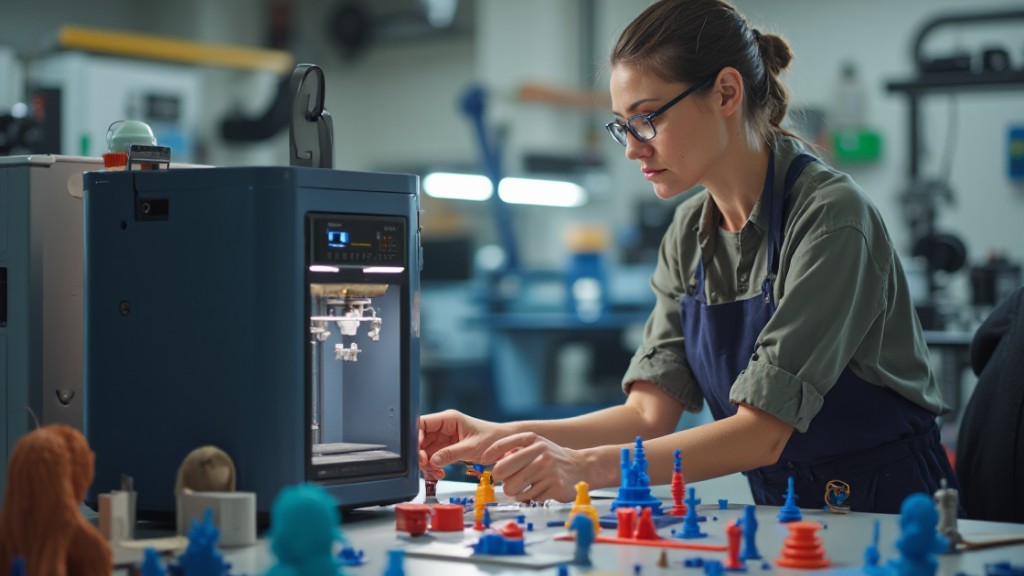
Even though traditional manufacturing methods often limit customization and lead to significant material waste, 3D printing, or additive manufacturing, offers a revolutionary alternative.
This technology allows you to create highly customized products by building them layer-by-layer from digital designs, greatly reducing material waste compared to conventional methods.
With 3D printing, you can produce complex geometries that are often impossible or cost-prohibitive to achieve with traditional techniques, enhancing product functionality.
Kaizen: Fostering a Culture of Continuous Improvement

Kaizen, rooted in Japanese philosophy, focuses on nurturing a culture of continuous improvement within organizations. By empowering all employees to identify and solve minor problems daily, you can promote a proactive approach to enhancing processes.
Implementing Kaizen can lead to significant operational gains, as seen in Toyota‘s success. Here’s how you can start:
- Encourage Employee Participation: Invite everyone to contribute ideas for small improvements. This promotes ownership and accountability among your workforce.
- Focus on Incremental Changes: Make small, consistent adjustments rather than overwhelming shifts. These can lead to substantial long-term benefits like reduced waste and improved efficiency.
- Evaluate and Adapt: Regularly assess processes and be open to changes. This mindset helps your organization respond swiftly to market demands and align with customer needs.
Digital Tools: Enhancing Process Visibility and Collaboration

In today’s fast-paced manufacturing environment, leveraging digital tools is essential for improving process visibility and collaboration. By utilizing IoT sensors and data analytics platforms, you can gain real-time insights into your manufacturing processes, helping you quickly identify bottlenecks and inefficiencies. Collaborative software platforms also facilitate seamless communication among your teams, promoting instant information sharing that boosts problem-solving and decision-making.
You can visualize your key performance indicators through dashboards and project tracking tools, allowing you to monitor improvement initiatives effectively. Furthermore, digital twin technology enables you to create virtual models of your processes for simulation and optimization without risking physical assets. Integrating ERP systems streamlines workflows by automating data sharing, reducing manual errors, and enhancing coordination across departments.
| Digital Tool | Benefits | Application |
|---|---|---|
| IoT Sensors | Real-time visibility | Monitor equipment performance |
| Collaborative Software | Improved communication | Encourage teamwork |
| Dashboards | Visualize KPIs | Track performance |
| Digital Twin Technology | Optimize processes without risk | Simulate changes before implementation |
Frequently Asked Questions

What Are Some Examples of Innovative Manufacturing?
Innovative manufacturing includes techniques like 3D printing, which allows for rapid prototyping and greatly reduces material waste.
Companies employ advanced robotics to improve production efficiency and minimize human error.
The integration of IoT devices for real-time equipment monitoring facilitates predictive maintenance, cutting downtime.
Furthermore, lean manufacturing principles streamline processes and improve quality, as mass customization meets individual customer needs, boosting satisfaction without sacrificing efficiency.
These methods collectively transform manufacturing practices for the better.
Can You Give Us an Example of a Process Improvement Initiative?
An effective process improvement initiative you can implement is adopting Lean Manufacturing techniques.
By utilizing value stream mapping, you can identify and eliminate waste in your production processes, potentially reducing lead times considerably.
Furthermore, integrating Just-In-Time production can minimize inventory costs and improve responsiveness to customer demand.
Encouraging employee participation through Kaizen principles can further lead to continuous improvements, boosting productivity and efficiency across your operations.
Could You Give Me an Example of Process Improvement?
A practical example of process improvement is implementing value stream mapping.
This technique helps you identify and eliminate waste within your manufacturing processes, which can lead to up to a 30% efficiency increase. By streamlining workflows and removing unnecessary steps, you boost productivity.
Furthermore, adopting just-in-time production can further minimize inventory costs, allowing you to respond better to customer demands as you reduce excess inventory by 20-50%.
What Are the Latest Innovations in Manufacturing Sector?
In the manufacturing sector, recent innovations include the integration of Industry 4.0 technologies like IoT and AI, which improve real-time data analytics and predictive maintenance.
Additive manufacturing, or 3D printing, allows for quick prototyping and greatly reduces material waste.
Digital twin technology creates virtual models for process optimization, whereas smart robotics streamline workflows, cutting cycle times considerably.
Furthermore, mass customization strategies enable efficient production customized to individual customer needs, enhancing overall efficiency.
Conclusion
By implementing these innovative process improvements, you can greatly improve your manufacturing operations. Lean manufacturing and Six Sigma will help you streamline workflows and reduce defects, as Just-In-Time production aligns supply with demand. Automation and 3D printing boost efficiency and customization, respectively. Embracing a Kaizen mindset promotes continuous improvement, and digital tools provide valuable insights for better collaboration. Together, these strategies enable you to optimize processes and increase overall operational performance, ensuring your business stays competitive in today’s market.
Image via Google Gemini