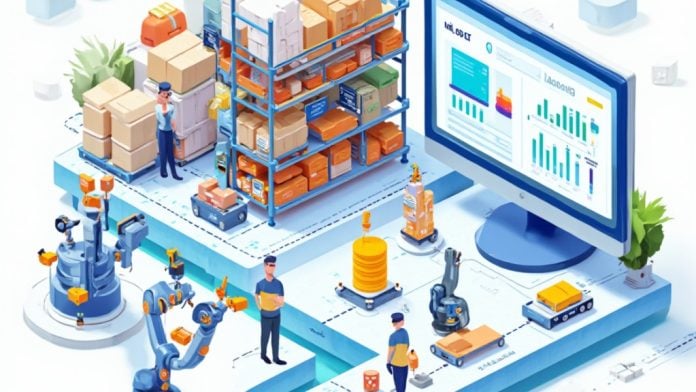
Automating inventory management can streamline your operations and boost accuracy. To get started, assess your current processes for inefficiencies. Then, select the right inventory management software that offers real-time tracking. By integrating scanning technologies, you can reduce manual errors and maintain accurate stock levels. Data analytics can help forecast demand effectively, whereas automated reorder points guarantee you never run out of vital items. Want to learn how to implement these steps effectively?
Key Takeaways

- Assess current inventory processes to identify manual tasks and inefficiencies that can be automated.
- Choose user-friendly inventory management software that allows for flexibility and scalability.
- Integrate real-time tracking technologies like cloud systems and barcodes for accurate inventory updates.
- Utilize data analytics for demand forecasting to optimize inventory levels and reduce holding costs.
- Establish automated reorder points to trigger notifications when stock levels fall below defined thresholds.
Assess Your Current Inventory Processes

To improve your inventory management, it’s essential to start by evaluating your current processes critically.
Begin by mapping out existing inventory methods to pinpoint manual tasks that create inefficiencies, like manual counts and record-keeping. Analyze the frequency and types of errors you encounter; after all, 34% of businesses have sold unavailable items because of poor tracking. Review your inventory turnover rates and stock discrepancies, as these factors greatly impact profitability and customer satisfaction.
Next, conduct a thorough assessment of your storage and receiving procedures. Recognizing delays in these areas can help you address costly inefficiencies.
Finally, utilize data analytics to evaluate historical sales data, which can aid in predicting demand trends. By incorporating automated inventory management, automated inventory tracking, and automated inventory control, you can develop a more responsive inventory strategy that improves overall efficiency and accuracy.
Choose the Right Inventory Management Software

Once you’ve assessed your current inventory processes, the next step is choosing the right inventory management software.
Look for automated inventory management software that prioritizes ease of use, enabling your team to complete tasks efficiently without extensive training. Flexibility is crucial; the software should adapt to your specific operations and scale as your business grows. Mobile capabilities are important too, allowing for productivity and real-time updates from anywhere.
Evaluate customizable features that align with your organizational needs, such as personalized reporting metrics or integration with existing systems.
Robust integration options with other platforms, like ERP and CRM systems, improve operational efficiency and guarantee seamless data flow.
Integrate Real-Time Tracking Technologies

Integrating real-time tracking technologies can greatly improve your inventory management processes. By utilizing cloud-based systems, you can receive continuous updates on inventory levels, enhancing visibility across all your locations.
Implementing barcodes and QR codes allows for instant scanning and logging of inventory movements, which notably reduces manual entry errors. With an automated inventory management system, you can instantly synchronize stock levels across multiple platforms, ensuring your data is always current and accurate.
Additionally, integrating APIs with your Order Management System (OMS) facilitates seamless communication between different sales channels and inventory databases. This integration supports automated stock monitoring, providing real-time alerts for low stock levels.
As a result, you can proactively reorder supplies, preventing stockouts and ensuring that customer demand is met without any delays. Embracing these technologies is an essential step in automating and optimizing your inventory management.
Utilize Data Analytics for Demand Forecasting

Using data analytics for demand forecasting allows businesses to make informed decisions about inventory management by analyzing historical sales data and market trends. This process helps you predict future demand with high accuracy, considerably reducing the risks of overstock and stockouts.
By utilizing automated inventory software, you can analyze vast datasets to identify patterns, enabling you to adjust inventory levels dynamically based on anticipated demand fluctuations.
Effective demand forecasting through data analytics can lead to a 10-30% reduction in inventory holding costs, ensuring ideal stock levels are maintained.
Furthermore, implementing data-driven forecasting improves your inventory turnover rates by aligning stock availability with actual customer demand, finally enhancing sales performance.
Businesses that adopt these techniques are better equipped to manage seasonal trends and unexpected market changes, allowing you to meet customer needs swiftly.
Essentially, data analytics is crucial for efficient inventory automation and effective inventory management.
Establish Automated Reorder Points

Effective inventory management relies not just on accurate demand forecasting but likewise on establishing automated reorder points. By setting specific stock level thresholds, you can trigger automatic reorder notifications when inventory dips below these levels.
An automated inventory system or an automated stock control system can help you define these critical reorder points based on historical sales data and demand patterns. This approach considerably reduces the risk of stock-outs, ensuring that your products are consistently available for purchase, which improves customer satisfaction.
Integrating real-time inventory tracking with automated reorder solutions allows you to maintain accurate stock levels across multiple sales channels. This minimizes discrepancies and boosts operational efficiency.
Additionally, implementing automated reorder points streamlines procurement processes, enabling quicker responses to demand fluctuations. Ultimately, this leads to optimized inventory management, keeping your business running smoothly and effectively addressing customer needs.
Frequently Asked Questions

What Are the 5 Steps of Inventory Management?
To effectively manage inventory, you’ll need to follow five crucial steps.
First, accurately track your inventory using barcodes or QR codes for real-time visibility.
Next, forecast demand by analyzing historical sales data and market trends.
Then, optimize your purchasing process to guarantee you buy only what you need.
After that, organize your storage for easy access and efficient order picking.
Finally, conduct regular audits to reconcile records and maintain data accuracy.
How to Create a Simple Inventory Management System?
To create a simple inventory management system, start by selecting a software that suits your needs.
Integrate it with your sales channels for seamless data flow. Implement barcode or QR code scanning to streamline tracking and reduce errors.
Establish a centralized database for real-time stock updates, and set low stock alerts to prompt timely replenishment.
Regularly analyze inventory data to adjust purchasing decisions based on demand, ensuring ideal stock levels and efficiency.
What Is the Automation of Inventory Management Process?
The automation of inventory management involves utilizing technology to monitor stock levels across various platforms in real time.
This process eliminates manual tasks, reducing human errors that can cause stock discrepancies. Automated systems provide continuous updates and alerts for low stock, ensuring timely reordering and preventing shortages.
What Is the 80/20 Rule for Inventory?
The 80/20 rule for inventory, or the Pareto Principle, states that 80% of your profits often come from just 20% of your inventory items.
By identifying these high-impact items, you can focus your resources on optimizing stock levels and reducing excess inventory. This strategy improves demand forecasting, ensuring you maintain adequate stock of critical items while minimizing holding costs.
Regular analysis of your inventory helps you adapt as trends in consumer behavior change.
Conclusion

By following these five steps, you can effectively automate your inventory management, leading to improved efficiency and reduced errors. Assess your current processes to identify weaknesses, choose user-friendly software, and integrate real-time tracking technologies. Utilize data analytics for accurate demand forecasting and establish automated reorder points to maintain ideal stock levels. Implementing these strategies not just streamlines operations but additionally improves your overall business performance, ensuring you stay ahead in a competitive marketplace.
Image via Google Gemini