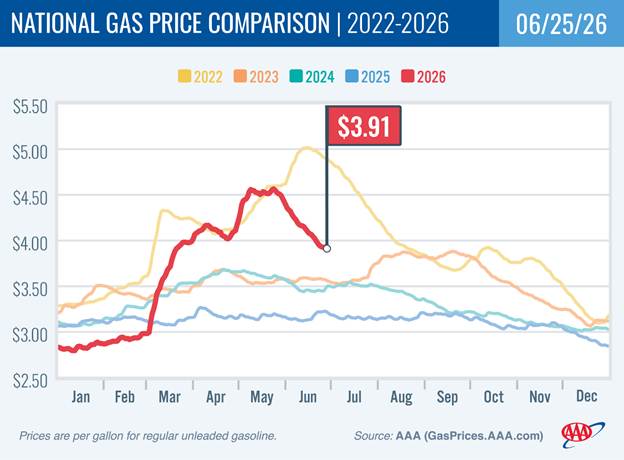
As drivers prepare for a bustling Independence Day weekend, they are welcomed by significant relief at the gas pump. The national average gas price has dipped below $4 for the second consecutive week, currently standing at $3.91 per gallon. This decrease marks a continued trend as the average price has fallen for five straight weeks, providing a positive outlook for both consumers and small business owners alike.
The recent price drop is credited to plummeting crude oil costs, influenced by ongoing negotiations between the U.S. and Iran aimed at establishing a long-term deal. While prices are falling, demand may rise, with a record 72.2 million Americans expected to travel for the upcoming holiday, 85% of whom are planning to drive.
For small business owners, these trends hold important implications. Lower fuel prices can alleviate operational costs tied to transportation and logistics, especially for businesses reliant on the movement of goods or services. Even a small decrease in fuel expenses can result in significant savings for businesses that have fleets or frequent delivery needs, ultimately allowing them to reinvest those savings to improve services, hire staff, or lower customer prices.
The Energy Information Administration (EIA) reports a reduction in gasoline demand last week, down from 9.21 million barrels per day to 8.77 million, while domestic gasoline supplies increased from 214.2 million barrels to 216.3 million barrels. However, production also fell slightly to an average of 9.5 million barrels per day. This balancing act between supply and demand is critical for business owners to monitor, as fluctuations can affect pricing volatility.
With West Texas Intermediate crude oil settling at $70.34 per barrel, a significant drop from recent highs, the overall oil market dynamics remain tenuous. The EIA’s data reveals a decrease in crude oil inventories by over 6 million barrels last week, positioning storage levels approximately 7% below the five-year average for this time of year. For small business owners, keeping an eye on these rates is essential, as any sudden changes can impact operational costs and pricing strategies.
While gas prices are encouraging, small business owners should also keep electric vehicle (EV) trends on their radar. The cost of electricity at public EV charging stations remains steady at 41 cents per kilowatt-hour, indicating a kind of price stability that could influence businesses that use electric vehicles. As businesses become more environmentally conscious and look to reduce their carbon footprints, EVs may play an increasing role in their operations.
Regional variations in both gasoline and electric charging prices should not be overlooked. For instance, states such as Hawaii and California top the list as the most expensive markets for gasoline, with prices at $5.53 and $5.50 per gallon, respectively. In contrast, states like Indiana and Texas have much lower gas prices, at $3.30 and $3.36 per gallon. This information is particularly valuable for business owners who operate in multistate regions, as they should adjust their budgeting and pricing strategies accordingly based on local market conditions.
EV charging prices also show considerable regional variability. The ten states with the highest charging costs include West Virginia and Hawaii, while states like Kansas and Missouri offer significantly lower rates. Businesses that engage in state-to-state transactions may find these discrepancies important, especially as they evaluate their logistics and transportation options.
As this Independence Day approaches, many drivers will be seeking the most economical routes and recharge options, making tools like the AAA TripTik Travel Planner invaluable. This resource allows businesses to guide customers towards the best fuel and charging prices along their travel routes, enhancing customer engagement while providing an added value service.
For small business owners, understanding these dynamics not only helps in making informed decisions but also prepares them to navigate an evolving market landscape. Balancing fuel and operational costs with the need for efficiency will be crucial as the summer season unfolds and consumer travel spikes. As prices fluctuate and demand shifts, remaining adaptable and well-informed will enable businesses to thrive in an ever-changing economic environment.
For detailed statistics and insights, check out the original post from AAA here.
Image Via Gas Price