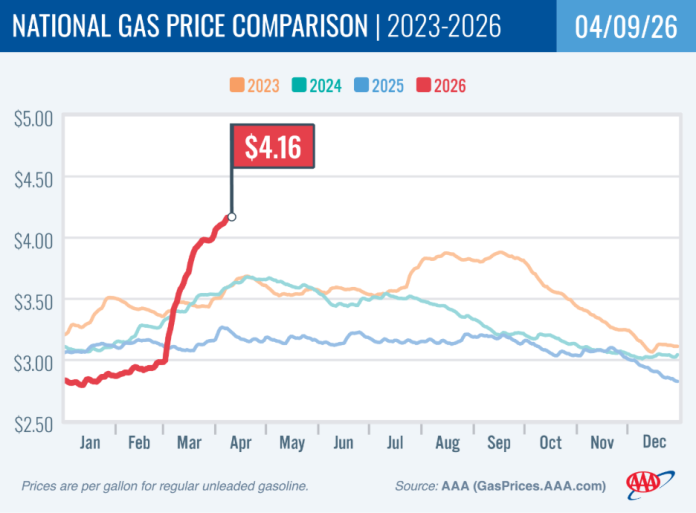
The national average for a gallon of regular gasoline has surged to $4.16, marking an 8-cent increase from last week and hitting levels not seen since August 2022. This price hike comes amidst ongoing fluctuations in crude oil prices, which have sharply risen and fallen in reaction to geopolitical developments involving the U.S. and Iran. Small business owners, particularly those relying heavily on transportation, should take note of these trends as they can significantly impact operational costs and bottom lines.
As of now, the Energy Information Administration (EIA) reported a decrease in gasoline demand, falling from 8.68 million barrels per day (b/d) to 8.56 million. Total domestic gasoline supply also saw a dip from 240.9 million barrels to 239.3 million barrels. Given this backdrop, businesses that depend on fuel for delivery or transport may need to reevaluate their logistics and pricing structures as rising fuel costs translate into higher operational expenses.
One factor contributing to the current rise in gasoline prices is the volatility of crude oil prices. Recently, West Texas Intermediate (WTI) crude fell sharply but has since settled at approximately $94.41 per barrel. The EIA has also reported an increase in U.S. crude oil inventories by 3.1 million barrels, now slightly above the five-year average. This inconsistent behavior in oil markets makes forecasting future fuel costs particularly challenging, which could strain budgeting for small businesses.
The rise in gasoline prices also raises the stakes for small businesses that utilize electric vehicles. The national average price per kilowatt-hour at public EV charging stations remained steady at 41 cents. While the cost of charging has not fluctuated recently, businesses looking to invest in electric vehicles must consider the long-term implications of electric vs. traditional fuel expenses, especially as gas costs rise.
It’s particularly crucial for small business owners in states impacted most by rising gas prices, such as California ($5.92) and Hawaii ($5.63), to think strategically about where they operate. Conversely, those located in states with cheaper gas prices, like Oklahoma ($3.47) and Kansas ($3.48), may have more leeway in managing fuel costs, but they are not immune to the overall market trends that could affect their supply chains.
Quotes from industry experts suggest a cautious approach. "The forces driving current oil and gasoline prices are complex and intertwined with geopolitical events. Small business owners should consider building flexibility into their budgets to adapt to these changes," advises a spokesperson from the EIA.
For businesses grappling with increased fuel costs, reevaluating delivery routes, optimizing vehicle loads, and even expanding to remote working options where feasible can mitigate some of the financial strain. Additionally, businesses may want to investigate partnerships with local suppliers to reduce dependence on long-haul deliveries, which are often the most vulnerable to gas price fluctuations.
As the situation evolves, small business owners will need to stay abreast of fuel pricing trends and adjust their strategies accordingly. Tools like the AAA TripTik Travel planner can assist owners in finding current gas and electric charging prices along their routes, making it easier to plan logistics and manage expenses effectively.
In a marketplace characterized by uncertainty, adapting to rising fuel costs will require agility and foresight. As the rise in gasoline prices continues, the operational decisions made today can significantly influence a small business’s resilience in the face of economic fluctuations.
For further updates, you can read the original report here.
Image Via Gas Price