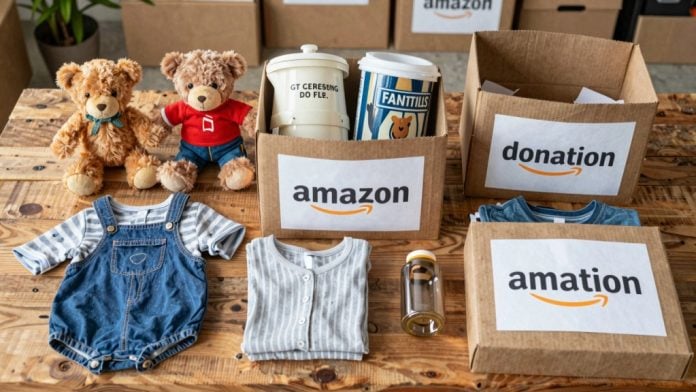
Amazon’s latest initiative, Amazon Dona, has made significant strides in alleviating food scarcity and providing essential goods to vulnerable households across Italy. To date, the program has successfully donated over 600,000 products valued at more than 8 million euros, benefiting more than 35,000 families. This innovative approach not only addresses immediate needs but also champions sustainability by giving a second life to surplus items.
At the heart of Amazon Dona is a collaboration with 1,400 nonprofit organizations nationwide, enabling the distribution of various products including food, personal care items, toys, and school supplies. These goods are often in excellent condition but cannot be sold due to damaged packaging or incomplete multipacks. This initiative exemplifies a fresh model of cooperation between Amazon, its third-party sellers, and local organizations.
Giorgio Busnelli, Amazon’s Country Manager for Italy, stated, “We want Amazon’s presence in Italy to represent a positive force for the communities we serve and the planet we live on. This commitment is demonstrated every day through programs like Amazon Dona, which minimize waste and maximize the impact of our resources.”
The model includes logistical support, with Amazon providing transportation for goods directly to charity organizations. This operational framework ensures that donations reach those in need efficiently, utilizing regional logistics hubs established specifically for the redistribution process.
On. Maria Chiara Gadda, a key supporter of the anti-waste legislation known as Law 166, emphasized the broader implications of the initiative. “The law against food waste was enacted ten years ago, but it encompasses a wider range of goods. As community needs evolve, it’s crucial that businesses adapt their practices. Amazon’s collaboration allows surplus items to find renewed value within the fabric of social solidarity,” she remarked.
Through this program, Amazon not only tackles product excess but also emphasizes sustainability in its operations. The integration of logistics among various stakeholders has proven successful, allowing Amazon to clear surplus inventory while alleviating the burden on society’s most vulnerable.
Small business owners can take valuable lessons from this model. For instance, embracing sustainability initiatives can resonate positively with consumers who prioritize environmentally friendly practices. By partnering with local charities, businesses can also enhance their community engagement and build a stronger brand identity.
However, challenges may arise as small businesses consider adopting similar models. Collaborating with charities requires a structured approach to ensure that logistical support is in place. Additionally, legal and regulatory compliance, such as navigating the nuances of donation laws, may demand attention. Small businesses should prepare to invest time and resources into developing partnerships and streamlining their logistics.
In Europe, Amazon has extended its reach beyond Italy, donating over 35 million products across the continent. The company has implemented various strategies to manage returns and unsold goods efficiently, repurposing most items either through resale or donation. Amazon’s regenerative efforts aim not just to reduce waste but also to cultivate a sustainable market ecosystem.
For small business owners, this offers a significant opportunity to align their operations with broader sustainability goals. Technologies like artificial intelligence and machine learning can play a pivotal role in reducing return rates, helping businesses analyze consumer preferences and improve their product offerings.
As Amazon continues to solidify its role within these communities, their approach serves as a compelling case study for small businesses to consider integrating social responsibility into their own operational frameworks. By fostering mutually beneficial partnerships, companies can amplify their contributions to society while also enhancing their reputations.
In an era where ethical consumption is gaining traction, initiatives like Amazon Dona stand as a reminder of the potential impact small businesses can have when they choose to align their missions with community well-being. By exploring similar avenues, they can emerge not only as successful enterprises but also as significant contributors to a more sustainable future.
For more details about this initiative, please refer to the original post: Amazon Press Release.
Image Via BizSugar