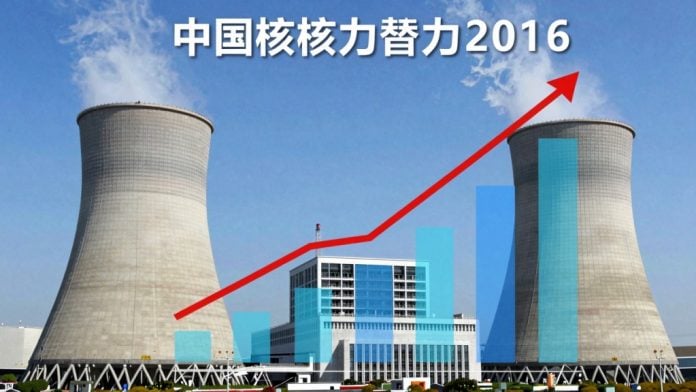
China is rapidly expanding its nuclear energy capabilities, a move that could have significant implications for small business owners globally. With a 76% increase in nuclear generation capacity from 2016 to 2024, China is leading the charge in harnessing nuclear power as a stable and efficient energy source. As of May 2026, China operates 60 reactors contributing to a total capacity of 58.7 GW across 18 sites, and it continues to invest heavily in nuclear technology.
One of the standout features of China’s nuclear expansion is its approach to project management. The standardized processes in design, licensing, and construction allow for nuclear reactors to be built in batches of six to ten, maximizing economies of scale. This is particularly pertinent for small business owners who rely on consistent energy pricing and availability, as it may lead to lower energy bills in the long run.
The benefits of this strategic expansion are manifold. As the world increasingly recognizes the need for sustainable energy solutions, China’s advancements may inspire other nations to bolster their own nuclear powers, potentially stabilizing global energy markets. For small businesses, this could mean more reliable energy sources at competitive rates.
Moreover, China’s ability to decrease dependence on foreign vendors by developing its nuclear supply chain stands to enhance the resilience of its energy sector. Domestic manufacturing of critical components not only fosters job creation within China but may also lead to technological advancements that could be beneficial on a global scale. Small business owners may find opportunities in this ecosystem, whether through partnerships, supply chains, or technological innovations that arise from this growth.
Another fascinating aspect is the significantly lower build time for nuclear facilities in China. The average construction time for a reactor in China is about six years, considerably faster than the global average of nine years. This efficiency could potentially lead to quicker returns on investments and more energy coming online sooner. For small businesses in energy-intensive sectors, this could mean a faster transition to more affordable and stable energy sources.
China is also embarking on a new path with its small modular reactor (SMR), the Linglong-1. This project—a 100 MWe pressurized water reactor designed for multifunctional use—could revolutionize the energy landscape. It can generate power, desalinate water, and provide district heating, giving small business owners more options in energy procurement. Indeed, businesses in water-intensive industries may find particular advantages in access to desalinated water, potentially alleviating some of their operating costs.
However, the rapid development of nuclear power in China isn’t without challenges. Regulatory environments will need to adapt to accommodate the swift expansion and ensure safety. Furthermore, small business owners need to remain aware of potential fluctuations in energy markets resulting from changes in supply dynamics, especially as China becomes a larger player in global energy.
As nuclear energy garners increased attention worldwide, the engagement of small business owners in this conversation becomes crucial. While China continues to set the pace, savvy businesses can seize opportunities arising from technological advancements and shifts in the international energy framework. There’s an essential balancing act between benefiting from these developments and staying informed of evolving market conditions.
For more information, including detailed statistics about China’s ambitious energy initiatives, you can read the original article from the U.S. Energy Information Administration here.
Image Via BizSugar