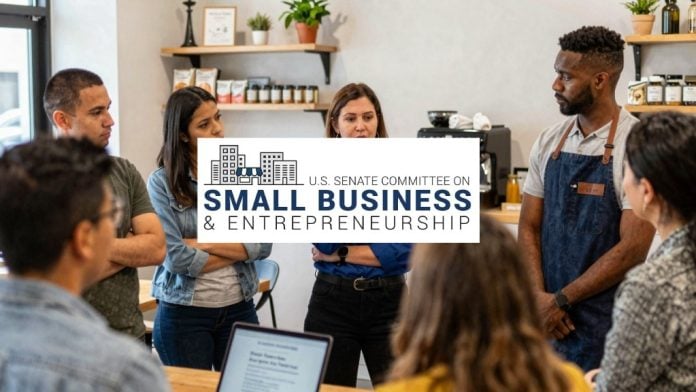
A recent listening session in Boston brought together more than 20 small business owners, lenders, and community stakeholders to discuss the adverse effects of anti-immigrant policies on local economies. Hosted by Ranking Member Edward J. Markey (D-Mass.), the event highlighted the pivotal role immigrant entrepreneurs play in Massachusetts, a point he emphasized in his opening remarks: “You are the backbone of our Main Streets… The American Dream is NOT for the few, it is for ALL.”
The meeting resonated with current concerns regarding the Small Business Administration’s (SBA) policy changes excluding legal permanent residents from accessing critical loans. The impacts of these changes are particularly pronounced in immigrant communities, where fear and confusion have stifled economic growth.
During the session, attendees shared stories highlighting the disruption caused by the Trump administration’s recent policies. These changes have included aggressive immigration enforcement and the sharing of sensitive tax information with Immigration and Customs Enforcement (ICE). As an example, in Fiscal Year 2025, an estimated 237 SBA loans, amounting to nearly $100 million and supporting 1,100 jobs, were issued to green card holders in Massachusetts.
Dr. Yves Salomon-Fernández, President of the Urban College of Boston, noted, “Immigrant entrepreneurs are the economic backbone of so many of our neighborhoods.” This sentiment reflected the consensus among attendees that supporting immigrant businesses is not just an ethical imperative but is also a sound economic strategy.
Elizabeth Sweet, Executive Director of the Massachusetts Immigrant and Refugee Advocacy Coalition (MIRA), reinforced this perspective. "Immigrant entrepreneurship is the engine which powers our communities," she stated, advocating for Markey’s Investing in the American Dream Act, which aims to restore eligibility for noncitizens in SBA loan programs.
The economic stakes are high. Martin Kim, Director of Immigration Advocacy at Asian Americans Advancing Justice (AAJC), highlighted that AANHPI small businesses contribute millions of jobs and over a trillion dollars in sales. However, the recent restrictions threaten this progress. “When that access is restricted, it threatens not only the small businesses themselves but also the communities they serve," he added.
From the perspective of small business owners, the stakes couldn’t be clearer. Jen Ziskin, co-owner of La Morra and Punch Bowl in Brookline, voiced the frustrations faced by many. “SBA loans can be the difference between opening a business or walking away from a dream,” she expressed. Her experience underscores that many immigrants, who are integral to the hospitality sector, are deserving equitable pathways to business ownership and growth.
The sentiment was echoed by Andrew Melendez, Founder and CEO of the Latino Economic Development Corporation, who emphasized that many entrepreneurs yearn for the opportunity to expand their businesses and invest back into their communities. However, recent access restrictions have left many unsure of how to secure the necessary capital.
Raymond Lanza-Weil, President of Common Capital, criticized the current SBA policies as “unwelcome, immoral, and antithetical” to the vibrant spirit of Massachusetts’ diverse communities. He believes that the government’s efforts should focus on facilitating the participation of immigrant entrepreneurs rather than erecting barriers.
Harold Blanco, Executive Director of ECCHO-Latino, highlighted the day-to-day impact of these policies, especially in essential services like childcare. “When the SBA denies a loan to a legal resident ready to expand her childcare capacity,” he argued, “they are killing childcare access for entire communities.”
Echoing the urgency of the situation, Howard Wial, Director of Research at ICIC, pointed out that immigrant entrepreneurs are key drivers of job creation and economic growth. According to him, limiting opportunities for these business owners ultimately curtails economic potential for all.
Markey’s commitment to elevating the voices of those impacted sounds a hopeful note amid the uncertainty. He encouraged participants to remain engaged, promising to bring their stories back to Washington to advocate against detrimental policies.
The ramifications of the SBA’s decisions extend far beyond individual businesses; they affect entire communities and the economy at large. For small business owners, understanding the broader implications of these policies is crucial for navigating current challenges and advocating for reforms.
The full details of the meeting and Markey’s ongoing efforts can be found in the official press release here.
Image Via BizSugar