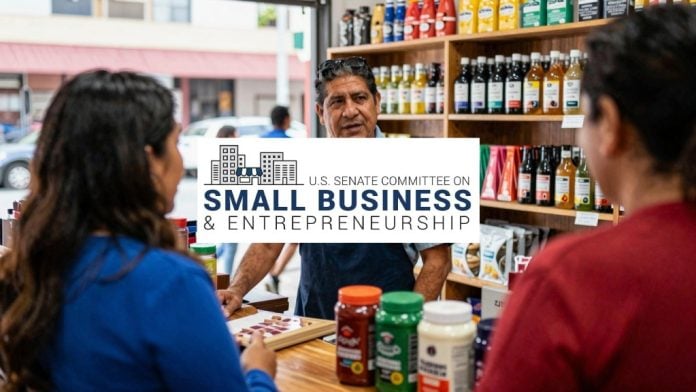
Last Friday in Boston, Ranking Member Edward J. Markey hosted a critical gathering for over 20 Massachusetts small business owners, lenders, and community leaders to address the adverse effects of current immigration policies on local economies. Highlighting the important role of immigrant entrepreneurs in the state and nationwide, the session brought to light concerns about recent governmental changes that may jeopardize the economic viability of many small businesses.
Markey began his remarks by emphasizing the essential contributions of immigrant entrepreneurs: "You are the backbone of our Main Streets—from Boston to Brockton," he stated. "The American Dream is NOT for the few; it is for ALL." His statement underscored the collective sentiment that immigrant-owned businesses are vital for community growth and prosperity, especially in Massachusetts, where over 91,000 immigrant entrepreneurs reside.
A significant focus of the discussion was the impact of recent policy changes, particularly a new Small Business Administration (SBA) rule that excludes legal permanent residents from access to critical lending programs. This change could have far-reaching consequences; in FY 2025 alone, it is estimated that nearly $100 million in loans that supported 1,100 jobs would be denied to green card holders in the state. This unprecedented restriction adds to the confusion and fear prevalent in many immigrant communities, resulting in lost opportunities for aspiring business owners.
Feedback from session participants highlighted the economic repercussions stemming from these policies. Dr. Yves Salomon-Fernández, President of the Urban College of Boston, stated, “Immigrant entrepreneurs are the economic backbone of so many of our neighborhoods.” He praised Markey for his leadership and commitment to uplifting the immigrant business community’s voices.
The real-world implications of these policies were reiterated by Elizabeth Sweet, Executive Director of the Massachusetts Immigrant and Refugee Advocacy (MIRA) Coalition. She noted that, "Immigrant entrepreneurship is the engine which powers our communities." Sweet considers Markey’s proposed Investing in the American Dream Act essential for ensuring that that engine keeps running smoothly.
Martin Kim, Director of Immigration Advocacy at Asian Americans Advancing Justice (AAJC), added to the concerns expressed during the listening session. He explained that access to capital is often make-or-break for AANHPI (Asian American, Native Hawaiian, and Pacific Islander) entrepreneurs. “When that access is restricted, it threatens not only the small businesses themselves but also the communities they serve,” he emphasized.
The session also featured testimonials from business owners. Jen Ziskin, co-owner of La Morra and Punch Bowl in Brookline, remarked, “As a restaurant owner, I know firsthand that SBA loans can be the difference between opening a business or walking away from a dream.” She stressed that creating pathways of opportunity for immigrants is crucial for the future of the hospitality industry.
For small business owners, the implications are clear. Limited access to capital hampers growth potential, drives up uncertainty, and may complicate long-term planning. These challenges are especially acute in sectors reliant on immigrant labor, such as hospitality and childcare. Harold Blanco, Executive Director of ECCHO-Latino, Inc., illustrated this point: “When the SBA denies a loan to a legal resident ready to expand her childcare capacity, they are not just blocking a business; they are killing childcare access for entire communities.”
Markey took the feedback from the session back to Capitol Hill, pledging to advocate against what participants described as unwelcome and detrimental policies. He urged business owners to maintain communication with his office to foster ongoing dialogue about these pressing issues in the community.
The economic significance of immigrant entrepreneurship cannot be overstated. Howard Wial, Director of Research at ICIC, encapsulated the sentiment well: “When we limit opportunity for immigrant business owners, we limit economic growth for all of us.”
For small business owners in Massachusetts and beyond, the stakes are high. Understanding the current landscape of lending policies, advocating for supportive measures, and remaining informed about ongoing legislative efforts will be crucial as they navigate these challenges. For those interested in further details, the original press release can be found here.
Image Via BizSugar