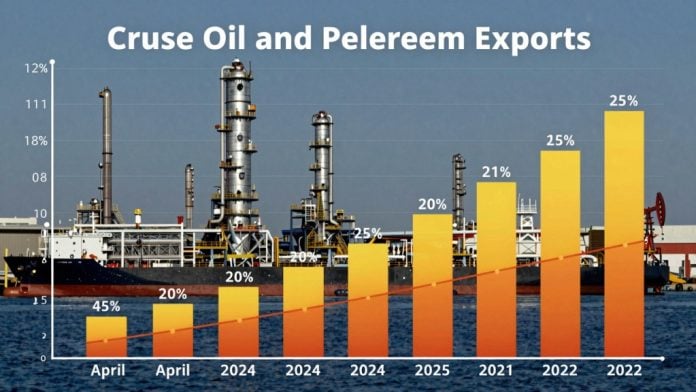
In a striking development for the U.S. energy sector, petroleum exports soared to an unprecedented level in April 2026, reaching a staggering 13.6 million barrels per day (b/d). This marks a significant 15% increase over the previous record set just a month prior, underscoring not only the growing demand for U.S. oil on the global stage but also the evolving dynamics of international energy supply chains.
The rise in exports is primarily driven by disruptions in crude oil and refined product flows through the strategically critical Strait of Hormuz. Small business owners in the energy sector, especially those engaged in production, logistics, or distribution, should pay close attention to this change, as it can provide new opportunities but also poses challenges.
Key among the exported products, crude oil comprises the largest share, averaging 5.6 million b/d in April—a 21% increase over the previous record. Propane exports have crossed a significant milestone as well, exceeding 2.0 million b/d for the first time, while distillate fuel oil exports have reached levels not seen since July 2017, climbing to 1.6 million b/d.
This uptick in exports presents essential considerations for small businesses. For companies involved in the oil and gas market, this increase may translate to new business opportunities. Local suppliers, service providers, and businesses involved in refining or transportation could see a boon. The need for logistics support, enhanced shipping capabilities, and partnerships with larger players in the energy market can be pivotal for small businesses looking to expand their operations.
During the same period, U.S. exports of finished petroleum products—which include diverse categories like motor gasoline, jet fuel, and petroleum coke—have also reached their highest levels since December 2024. While exports of motor gasoline remained average, the overall trend suggests a robust market for U.S. petroleum products. This could signal a shift toward greater self-sufficiency and a focused approach to energy exports that might benefit smaller operators capable of responding swiftly to changing market dynamics.
The recent trends are a double-edged sword for small business owners. On one hand, increased demand creates opportunities; on the other, businesses will face significant competition. As larger companies ramp up production and exports, smaller businesses may need to innovate or differentiate their offerings to remain competitive. Strategies such as improving efficiency, investing in technology, or establishing niche markets could prove advantageous.
Moreover, data suggests that exports of other products, including jet fuel and unfinished oils, have also remained robust, although slightly below their respective record highs. This is an indicator of a resilient market, and small businesses might consider diversifying into these less discussed but potentially lucrative avenues.
Business owners should also keep an eye on future developments. As crude oil, distillate fuel, jet fuel, and propane exports remained above five-year seasonal averages from May to June, it becomes critical to stay abreast of market trends and logistical shifts. Networking with industry contacts and participating in relevant trade organizations can provide valuable insights and help navigate this increasingly complex landscape.
In summary, the record levels of U.S. petroleum exports signal a promising but intricate time for small businesses within the energy sector. The evolving market dynamics present opportunities for innovation and collaboration but also signal the need for strategic agility in a competitive environment. Small business owners are encouraged to assess their operations in light of these developments, taking proactive steps to align with the shifting energy landscape.
For further details, the original analysis can be found here.
Image Via BizSugar