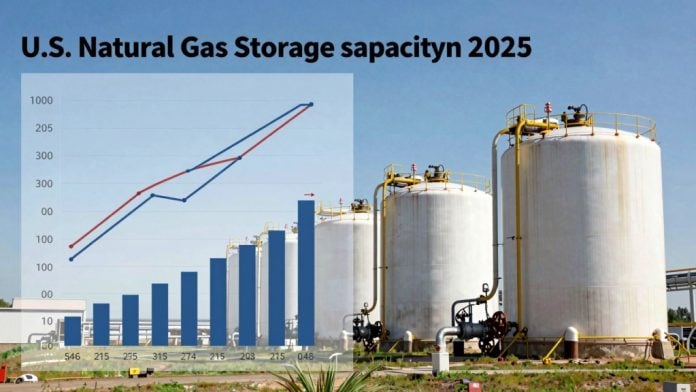
In a notable development for small business owners across the U.S., the Energy Information Administration (EIA) reported a slight increase in underground working natural gas storage capacity in the Lower 48 states for 2025. This growth, primarily concentrated in the South Central and Mountain regions, holds significant implications for businesses looking to manage their energy costs and optimize resource allocation.
Natural gas has become a vital component of energy supply, particularly during peak demand periods. For small business owners who rely heavily on consistent energy resources, understanding these developments is crucial. With natural gas storage capacity on the rise, companies may find greater stability in energy prices, potentially translating to lower operational costs.
According to the EIA, the total demonstrated peak capacity for the Lower 48 states increased by 0.1%—or an additional 6 billion cubic feet (Bcf)—marking the third consecutive year of growth in this area. Notably, the South Central and Mountain regions led this expansion with respective additions of 16 Bcf and 18 Bcf. Conversely, some areas, including the Midwest, Pacific, and East regions, experienced declines in demonstrated peak capacity.
This dichotomy highlights the regional variability in natural gas storage, which small business owners must consider when strategizing energy procurement. For businesses operating in areas with increased capacity, there may be more options for negotiating better rates, as suppliers might now have a more robust back-up to support fluctuating demand.
Moreover, the EIA also cites an increase in working gas design capacity—up by 26 Bcf to a total of 4,683 Bcf in 2025. This design capacity refers to the physical characteristics of storage facilities certified by federal or state regulators. The South Central region added 21 Bcf, while the Mountain region contributed another 6 Bcf to this total, enhancing energy availability for growing businesses in these areas. Meanwhile, a slight decrease in the East region’s design capacity may suggest tighter market conditions for companies in that sector.
For small business owners, rising storage capacity not only promises better supply management but also poses certain challenges. While increased capacity can stabilize supply, businesses must remain vigilant about energy price fluctuations, especially if regional capacities are not uniform. Understanding the implications of these changes can empower companies to make informed decisions regarding energy contracts and budgeting.
"With increased working gas storage capacity, there is potential for greater flexibility in managing energy resources," says Jose Villar, the principal contributor for the EIA. "Firms should closely monitor regional developments to leverage any advantages in energy pricing."
Energy efficiency is essential for small businesses aiming to minimize costs. As natural gas storage capacity expands, companies can invest in energy-efficient systems and technologies that reduce reliance on peak pricing periods, translating to sustainable operational strategies.
However, the benefits derived from increased natural gas storage do not come without complications. Small businesses may need to assess how fluctuations in availability can impact their operations. Seasonal variations and the possibility of reduced supplies in certain regions could affect planning and budgeting.
As energy dynamics shift, small business owners are encouraged to examine their energy portfolios and anticipate how these developments may affect their operational costs and strategic planning. By engaging with energy consultants or facilitating discussions around energy procurement, businesses can navigate the complexities posed by the fluctuating landscape.
In summary, while the increase in underground natural gas storage capacity presents positive prospects for small businesses, it also necessitates a proactive approach in energy management. To learn more about these developments, visit the original report from the EIA here.
Image Via BizSugar