
When creating an SOP document for customer service, it’s crucial to focus on standardized procedures that guarantee consistency and quality in service delivery. A well-structured SOP outlines the purpose, key components, and step-by-step processes for handling customer inquiries. It clarifies roles and responsibilities as it incorporates tools like flowcharts for better comprehension. Grasping these elements can greatly improve customer interactions, but there’s more to take into account when developing an effective SOP.
Key Takeaways

- An SOP document should include a clear purpose statement outlining the goal of consistent service quality.
- It must specify the scope, detailing responsible employees and types of customer interactions covered.
- Major steps should be detailed, such as logging inquiries and documenting resolutions.
- Key terms and acronyms relevant to the process should be defined for clarity.
- A revision history section is essential for tracking updates and modifications to the SOP.
Purpose of a Customer Service SOP

The purpose of a Customer Service SOP is to establish a clear and consistent framework for how customer inquiries and complaints are handled.
This SOP for customer service guarantees standardized practices, promoting consistent service quality across all interactions. It outlines specific procedures for logging customer issues and categorizing them by urgency, which improves accountability and tracking.
Additionally, the SOP provides clear guidelines for escalation processes, making certain that complex issues are addressed by the appropriate personnel in a timely manner.
By defining roles and responsibilities within the customer service team, it facilitates efficient workflow and keeps everyone aligned with service expectations.
Regular training on the customer service standard operating procedures is crucial, as it helps staff stay updated on best practices.
In the end, this example of an SOP document aims to improve overall customer satisfaction and retention rates by guaranteeing all team members are equipped to handle customer needs effectively.
Importance of Standardized Procedures

Even though many organizations may overlook the significance of standardized procedures, they play a crucial role in guaranteeing consistent quality across all operations. By implementing these procedures, you can reduce errors and improve efficiency, leading to cost savings and increased productivity. Standardized procedures likewise help maintain compliance with industry regulations, minimizing deviations in processes.
Here’s a quick overview of the importance of standardized procedures:
| Benefit | Description |
|---|---|
| Consistency | Guarantees every task is performed uniformly. |
| Error Reduction | Decreases mistakes, enhancing overall efficiency. |
| Training Tool | Serves as a foundational resource for new employees. |
| Accountability | Provides a reference for expected performance. |
Using a sample SOP format helps document these procedures clearly, guaranteeing everyone understands their roles and responsibilities. This clarity nurtures a culture of accountability, where employees know what’s expected of them.
Key Components of a Customer Service SOP

Creating a robust Customer Service SOP is essential for delivering consistent and effective support to customers. First, you should include a clear purpose statement that defines your goal of providing high-quality service.
Next, the scope section must specify which employees are responsible for the SOP and the types of customer interactions it covers, such as inquiries, complaints, and escalations.
Moreover, detail the major steps in the SOP, like logging customer inquiries, responding within a set time frame, and documenting resolutions to guarantee accountability.
It’s also significant to provide definitions of key terms and acronyms relevant to customer service, making certain that staff understands the language used.
Lastly, include a revision history section to track updates and modifications, ensuring employees always follow the most current procedures.
This structure will help maintain clarity and effectiveness in your customer service operations.
Step-by-Step Process for Handling Inquiries

When you receive an inquiry, start by greeting the customer warmly and acknowledging their concern.
It’s vital to actively listen to their questions, as this helps you understand their needs clearly before providing information or solutions.
Documenting the interaction in your customer service system is important for future reference and guarantees you follow up effectively if needed.
Inquiry Reception Procedures
Effective inquiry reception procedures are vital for maintaining a high standard of customer service and guaranteeing inquiries are handled efficiently.
Start by greeting the inquirer without delay and courteously, setting a positive tone for the interaction. Actively listen to their inquiry, making sure you fully understand their needs before providing any information.
It’s important to log the details of the inquiry accurately, as this helps with tracking and follow-up, which can improve customer satisfaction. Follow standard procedures by offering clear, concise information or directing the inquiry to the appropriate department.
Finally, make sure follow-up communication occurs within a specified timeframe to verify that the inquiry has been satisfactorily resolved. This structured approach cultivates trust and enhances overall service quality.
Response Protocols and Guidelines
A structured approach for handling inquiries not just guarantees consistency but also improves the overall effectiveness of communication.
First, quickly acknowledge the inquiry to confirm receipt and provide an estimated timeframe for a detailed response. Next, identify the nature of the inquiry, categorizing it appropriately to determine the required action or information needed for resolution.
It’s essential to keep the inquirer updated throughout the process, ensuring consistent follow-up actions. Always provide solutions within the established timeframe to maintain trust.
Furthermore, document all inquiries and responses carefully; this helps in tracking progress, ensuring quality control, and facilitating continuous improvement of the response process.
Roles and Responsibilities in Customer Service

In customer service, awareness of the roles and responsibilities of each team member is essential for delivering effective support and maintaining customer satisfaction.
As a customer service representative, you’re responsible for quickly addressing inquiries, complaints, and requests. Logging each customer interaction and resolution in the system is important, as it helps maintain accurate records and identify recurring issues.
Following established protocols and SOPs for handling escalations guarantees that complex problems receive consistent and effective resolutions. Moreover, staying informed about the company’s products and services is crucial, as it enables you to provide accurate information and support to customers.
Regular training and performance evaluations are significant for enhancing your skills and knowledge, which eventually leads to improved service quality and a better customer experience.
Use of Flowcharts and Priority Matrices
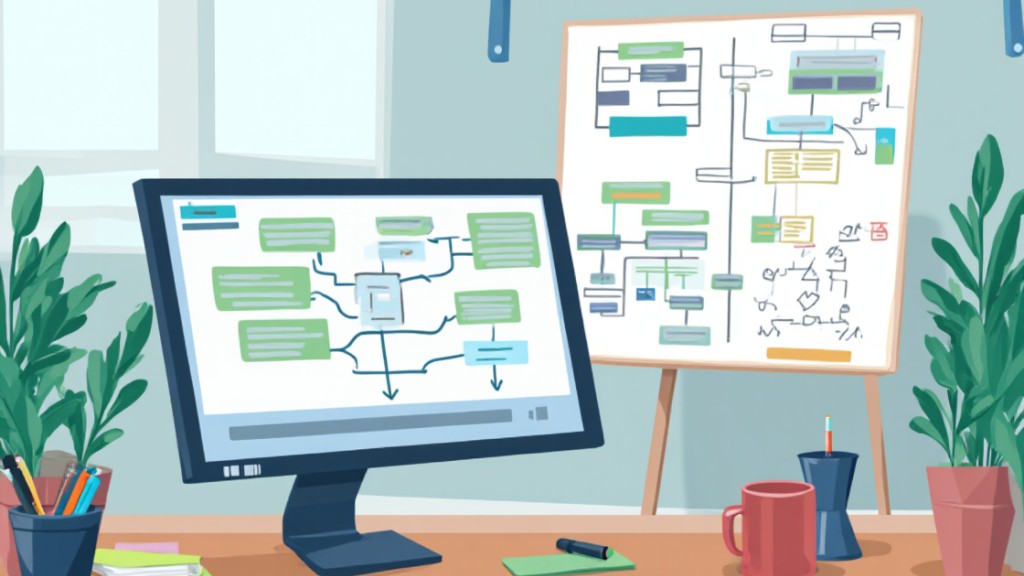
Even though many processes in customer service can seem overwhelming, using flowcharts and priority matrices simplifies complex tasks and boosts efficiency.
Flowcharts visually represent intricate processes and decision points, allowing you to quickly grasp the sequence of actions and potential outcomes involved in a task. By incorporating flowcharts in your SOPs, you can improve employee training, providing a clear, visual overview of procedures that reduces ambiguity and enhances retention.
Priority matrices, in contrast, help categorize tasks or issues based on urgency and importance. This allows you and your team to prioritize responses effectively, ensuring resources are allocated where they’re most needed.
Utilizing priority matrices in your SOPs streamlines problem-solving processes by guiding users on how to address issues according to their priority level. Together, flowcharts and priority matrices contribute to process clarity and efficiency, making it easier for employees to follow established procedures and maintain compliance with organizational standards.
Best Practices for Effective Customer Service SOPs

Building on the use of flowcharts and priority matrices, implementing best practices for effective customer service SOPs is fundamental for maintaining high standards in service delivery.
First, guarantee your SOP clearly outlines steps for handling customer inquiries and complaints, which promotes consistency across all interactions. Incorporating a priority matrix allows you to classify issues by urgency, enabling timely responses customized to each concern’s level.
Next, include detailed examples and flowcharts to help your team visualize processes, enhancing their comprehension of proper procedures. Regular training and testing on the SOP content is vital, as it improves employee retention of customer service protocols, leading to higher satisfaction and loyalty.
Finally, include sections for logging inquiries and documenting resolutions to track performance metrics, helping you identify areas for improvement in your customer service practices. These best practices will cultivate a more effective and efficient customer service environment.
Evolving the Customer Service SOP

To keep your Customer Service SOP effective, it’s crucial to adapt to new trends and technologies that impact customer interactions.
Incorporating tools like social media and chatbots can improve your service delivery as continuous staff training guarantees everyone stays aligned with updated procedures.
Adapting to New Trends
As customer expectations evolve, adapting your Customer Service Standard Operating Procedure (SOP) becomes essential to meet these changing demands effectively.
Regularly review and update your SOP to include emerging trends, ensuring it reflects real-world experiences. Gather feedback from both customers and service representatives to pinpoint pain points and areas for improvement.
Monitor industry benchmarks and customer service metrics, like response times and resolution rates, to improve competitiveness. Implement training sessions that focus on new tools and techniques introduced in the updated SOP, equipping your team to address customer needs.
Incorporating Technology Tools
Incorporating technology tools into your Customer Service Standard Operating Procedure (SOP) can greatly improve operational efficiency and customer satisfaction. Tools like CRM software streamline communication and track customer interactions, improving service efficiency. You can likewise utilize chatbots for initial inquiries, cutting down response times and allowing agents to handle complex issues. Implementing ticketing systems organizes and prioritizes customer issues, guaranteeing timely resolutions. Furthermore, analytics tools offer insights into customer behavior, enabling you to proactively adjust your service approach.
| Technology Tool | Benefit | Impact on Service |
|---|---|---|
| CRM Software | Streamlines communication | Improves efficiency |
| Chatbots | Reduces response times | Boosts customer satisfaction |
| Ticketing Systems | Organizes customer issues | Guarantees timely resolutions |
Continuous Staff Training
Continuous staff training plays an essential role in enhancing the effectiveness of your customer service operations, ensuring representatives remain well-versed in the latest company policies and product knowledge.
By implementing regular training sessions, you can reduce customer complaints by up to 30%, as employees become more adept at handling inquiries and resolving issues effectively.
Incorporating role-playing scenarios during training boosts employee confidence and communication skills, leading to a more positive customer experience.
Regularly analyzing feedback from customer service interactions helps identify training needs, allowing your programs to evolve and address real-time challenges.
Furthermore, using technology like online training modules and performance tracking systems streamlines ongoing education, providing measurable outcomes for staff development in customer service roles.
Resources for Creating a Customer Service SOP

Creating a Customer Service Standard Operating Procedure (SOP) requires careful consideration of various resources that can streamline the process.
To develop an effective SOP, you’ll want to focus on several key components that guarantee consistency and clarity in your customer service delivery.
- Clear Procedures: Include steps for logging customer inquiries, defining resolution processes, and documenting escalation protocols. This helps staff handle issues consistently.
- Visual Aids: Utilize flowcharts and example scenarios to improve comprehension. Visuals can simplify complex processes, making them easier for team members to understand.
- Regular Updates: Make it a priority to regularly revise the SOP. This guarantees it reflects any changes in procedures, customer feedback, and evolving business needs, maintaining its effectiveness and relevance.
Frequently Asked Questions

What Is an Example of an SOP?
An SOP, or Standard Operating Procedure, is a documented process that outlines specific steps to complete tasks within an organization.
For instance, it can detail how to manage customer inquiries, ensuring consistency and quality in service.
Typically, an SOP includes sections for logging interactions, defining resolution methods, and outlining escalation protocols.
It may as well feature a priority matrix to categorize issues, helping you address urgent concerns efficiently and improving overall operational effectiveness.
How Do You Write a SOP Document?
To write an SOP document, start by clearly defining its purpose and scope.
Organize it using a structured format, including a title page and table of contents.
Write step-by-step instructions in concise language, avoiding ambiguity.
Incorporate visual aids like flowcharts for complex processes.
Regularly review and update the document to reflect any changes in procedures or regulations.
This guarantees the SOP remains relevant and effective for all employees who’ll use it.
What Are the 5 Parts of an SOP?
The five parts of an SOP typically include: a header for identification and version control, a purpose section that outlines the document’s intent, a scope that specifies who and what the SOP applies to, major steps that provide a roadmap for achieving the objectives, and individual action steps that detail the specific tasks required.
Each part plays an essential role in ensuring clarity and effective execution for users.
How to Do a SOP Sample?
To create an SOP sample, start by including a title page with crucial information like the title, unique number, and approval signatures.
Next, clearly define the purpose in a couple of sentences.
Follow this with detailed step-by-step instructions, ensuring clarity for users.
Don’t forget to add a review and revision history to track updates.
Finally, consider using visual aids, like flowcharts, to simplify complex processes and improve comprehension.
Conclusion

To conclude, a well-structured Customer Service SOP is crucial for maintaining high-quality service standards. By clearly defining processes, roles, and best practices, you can guarantee that staff handle inquiries efficiently and consistently. Regularly updating the SOP allows your organization to adapt to changing customer needs and improve service delivery. With the right resources and commitment to excellence, you can create an effective framework that improves customer satisfaction and supports your team in their daily tasks.
Image via Google Gemini